
REVIEW · SHOW
Ginga Tropical Show – Brazilian Rhythms
Ready for Rio’s music in one small theater?
The Ginga Tropical Show mixes live drumming with regional dance styles like samba, bossa nova, forró, lambada, capoeira, and more, so you get a fun, fast tour of how different parts of Brazil move. I especially like how the show keeps switching tempos and textures, so it never turns into one long routine. One possible drawback to keep in mind is that when the venue is busy, seating can feel tight and less than ideal.
I like the easy logistics. You get a professional guide and hotel pickup and drop-off from Rio’s South Zone, which matters because the theater is in a mall setting and you do not want to stress over timing. Add the optional Brazilian barbecue dinner, and you turn this into a full night out instead of a quick in-and-out event.
Plan for 2 to 3 hours, and plan to be involved. The pacing is high energy, and the performers do encourage audience participation. If you would rather watch quietly the whole time, you may want to decide in advance how you will handle that invitation to get up and dance.
In This Review
- Key things to know before you go
- What the Ginga Tropical Show is really about
- Getting there smoothly: pickup, the ride, and Centro Cultural Veneza
- Inside the show: live drumming, costumes, and “get up and dance” energy
- Samba, bossa nova, lambada, and the partner-dance momentum shift
- Capoeira, forró, and the folklore and rituals segments you can recognize
- Theater reality checks: seating, pacing, and what to do if you care about comfort
- Optional Brazilian barbecue dinner: when the add-on is worth it
- Price and value: is $97.82 a smart use of an evening?
- Who should book, and who should skip
- Should you book the Ginga Tropical Show?
- FAQ
- How long is the Ginga Tropical Show experience?
- What is the price per person?
- What is included with the ticket?
- Is food included in the show price?
- What does the optional Brazilian barbecue dinner include?
- Where does the ticket-only option pick-up happen?
- Does this tour provide hotel pickup and drop-off?
- What is the minimum age for the show?
- What is the maximum group size?
- What is the cancellation policy?
Key things to know before you go
- Live drumming plus dance you can follow: The rhythms drive the whole show, from samba to capoeira.
- Regional Brazilian styles, not just one genre: Expect multiple dances and musical traditions in sequence.
- Audience participation is part of the product: You are not only paying to sit and clap.
- Hotel pickup helps with Rio timing: Fewer stress points on a night schedule.
- Optional dinner is a real add-on, not a token snack: A buffet with lots of choices is offered.
Stage nights and dinner shows
What the Ginga Tropical Show is really about
This is not a museum lecture. This is Brazilian music and dance performed like a party, with history and folklore woven into what you see. The core idea is simple: you watch dancers and musicians move through different styles tied to different regions of Brazil, and you get just enough explanation to help you connect the dots.
From the start, the show positions Rio as a dance culture city, with the social dance hall at the center of the story. That matters because samba and other partnered dances are more than entertainment. They are also a way people gather, talk, and belong. The program leans into that feeling, so even if you do not speak Portuguese, the energy and choreography do the work for you.
I also like the variety of disciplines packed into one running time. You get smooth, lyrical moments linked to bossa nova, then you shift into higher-drive partner styles like forró and lambada, and later you see capoeira as athletic performance. If you are the kind of person who gets bored when a show repeats itself too long, this format is designed to keep changing the emotional gear.
The best part for value is that your ticket includes not just entry, but a guide’s narration that ties the pieces together. Even short commentary can make the difference between watching random dance clips and understanding why each style has its own vibe.
Getting there smoothly: pickup, the ride, and Centro Cultural Veneza
Your evening starts with pickup at your hotel in central Rio de Janeiro, typically in the South Zone. The idea is to reduce the friction of moving around a big city at night, especially when the show is inside a mall theater environment.
After pickup, you head toward the show area linked with Centro Cultural Veneza. The program itself is staged at a theater connected with a mall venue (Fashion Mall Theater is named), and that setup influences how you should think about comfort. Mall theaters can be efficient, but they are not always the most forgiving if you end up with less comfortable seating or if acoustics and air conditioning are not perfect.
Timing can also be a factor. One practical detail that shows up repeatedly is that confirmation and pickup times can differ from what you first see. The show start time is later than the pickup, so do not panic if your pickup feels early. The night needs that travel buffer.
Another logistics advantage is the small group size cap. The tour is set up for a maximum of 40 travelers, which keeps the experience from feeling like a cattle call. Still, a theater has limited space, so if you book for the most rigid seating comfort, be mentally flexible.
If you want the easiest day, treat the show as your anchor. Eat earlier, give yourself buffer time, and then let pickup and drop-off handle the rest.
Inside the show: live drumming, costumes, and “get up and dance” energy
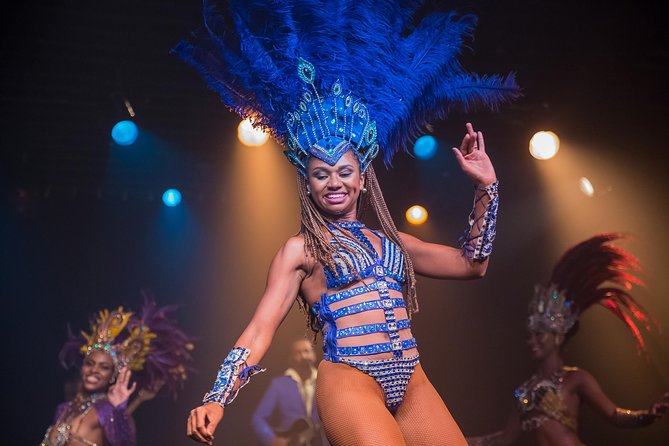
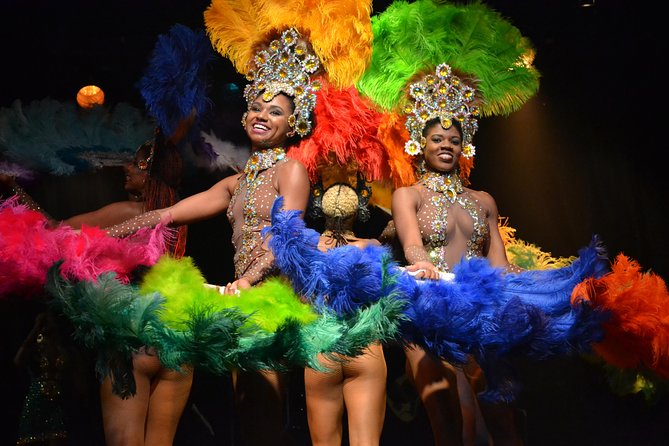
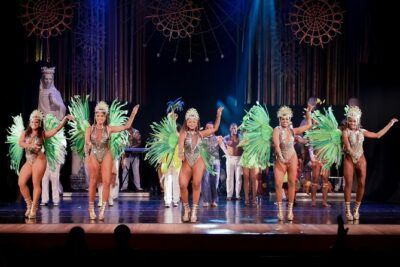
The show runs about 2 to 3 hours, and it moves fast. Live musicians and drummers keep the energy rising, then dancers carry it forward with costumes that lean into Carnival-style spectacle. The costumes matter because they help you instantly tell when you are in a new region or new rhythm, even if you cannot follow every spoken explanation.
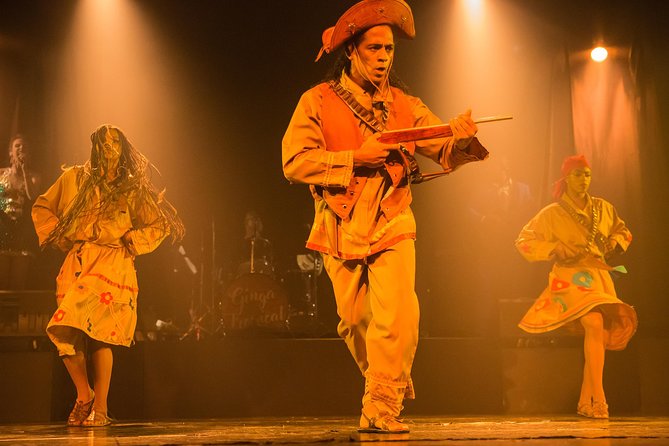
You should also expect a guided storytelling approach. The program is described as a rhythmic tour through Brazilian traditions, with the guide helping you understand what you are seeing as the dancers shift between styles. The show includes dance of forró, lambada, capoeira displays, and segments linked to rituals and folklore from different Brazilian regions such as the Amazon, the Pampas, Lapa, and Bahia.
A highlight is how the drumming and dance are linked together. You are not watching music from the sidelines. The beat shapes what the dancers do, and the show builds momentum toward the moments where the performers bring audience members into the action. One of the joys of this kind of show is that it is hard to be a wallflower when the room starts clapping on the downbeat.
Costume quality is another area with strong positive feedback. People often mention how detailed and fun the costumes look, and that can boost your enjoyment because you are watching a performance, not a slideshow.
Now, the reality check. A few negative experiences point to overbooking issues where some people had less comfortable seating or were delayed getting inside. That is not guaranteed to happen, but it is worth noting if you are sensitive to discomfort or if you are traveling with kids and need predictable seating. If you do book, plan to arrive with calm energy and be flexible.
- Rio de Janeiro: 6-Stop Highlights of Rio with Lunch
★ 4.4 · 5,157 reviews - Christ the Redeemer Entry Ticket by Corcovado Train
★ 4.4 · 4,476 reviews - Rio de Janeiro: Rocinha Favela Walking Tour with Local Guide
★ 4.8 · 3,052 reviews - Rio: Christ the Redeemer, Sugarloaf, Selaron & BBQ Lunch
★ 4.5 · 2,428 reviews - Rio De Janeiro: Half-Day Rocinha Favela Walking Tour
★ 4.7 · 2,272 reviews
Samba, bossa nova, lambada, and the partner-dance momentum shift
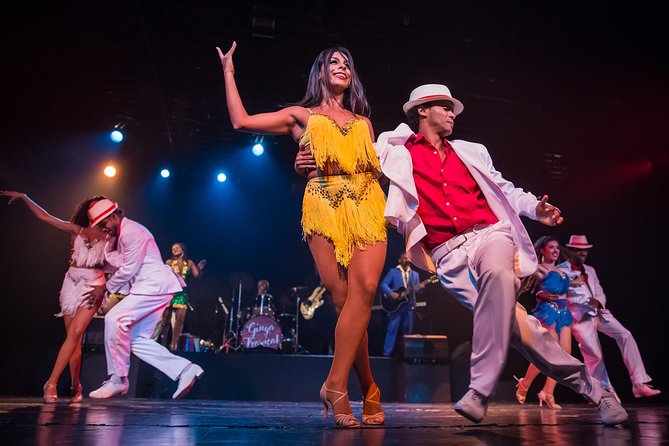
One reason this show works for many visitors is how it sequences styles. You get bossa nova and samba rhythms as part of the musical palette, then you move through partner dances with different rhythms and body language. That sequence helps you understand how varied Brazilian dance culture can be without needing a long class.
Here is what that feels like in practice:
- Samba segments typically feel percussive and crowd-friendly, with strong hip and footwork emphasis.
- Bossa nova moments lean smoother and more lyrical, which helps you reset before the show ramps up again.
- Lambada is described as sultry and high-energy, and the choreography is athletic enough that even from a seat you can appreciate the difficulty.
- Forró shows up as a themed part of the program, which makes the partner-dance story feel connected rather than random.
The show also includes specific dance categories like samba de gafieira and mentions carnival in the mix. Even if you do not know these terms now, the guide’s narration can give you a simple mental label for each style.
I especially like when a show does not treat samba as the whole story. When samba is just the final piece, you tend to leave with more than one memory. You start thinking about how different regions and communities developed their own dance language.
If you enjoy learning by watching, the interactive segments can help. Some guests describe being taught samba steps during the show, which is a big part of why it feels like a night activity instead of a passive performance.
If you come with someone you can dance with, this is also the type of show where shared laughter and a little embarrassment can become the best part.
Capoeira, forró, and the folklore and rituals segments you can recognize
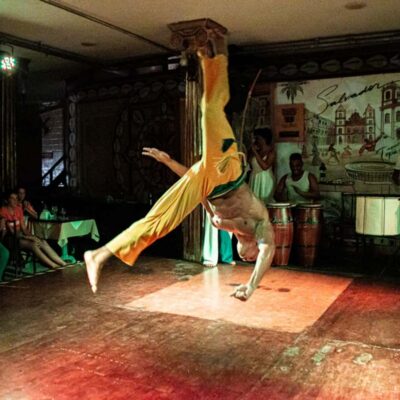
Beyond the popular partner dances, the show includes capoeira, and that changes the mood in a good way. Capoeira is not only “a dance.” It has fighting-game athleticism, and it takes real skill to perform cleanly on a stage. When it shows up in the program, it gives you a moment that feels more like movement art than like choreography to a song you already know.
You also get a forró segment and multiple region-tied traditions. The show’s narration references folklore and rituals tied to areas such as the Amazon and Bahia. It also names several Brazilian dance and festival traditions by name: Parintins Festival, Lambada, Carimbó, Xaxado, Frevo, Maculelê, Dance of Orixás, and more.
Do you need to memorize those names? No. But the list matters because it signals the intent. This is designed to represent different cultural building blocks rather than staying in one neighborhood style.
The guide explanation can help you connect the meaning of those dances to social life. One of the more praised parts of the experience is the chance to talk with the guide about the role of the social dance hall in Rio’s history. That sort of context turns a performance into a stronger cultural souvenir for your brain.
One practical tip for you: if you want to catch the details the guide shares, pay attention early in the show rather than waiting for the big dance moments. The earlier explanation can make the later capoeira and ritual-linked segments easier to interpret.
And if you are traveling with kids or teens who get restless, the show’s variety helps. There is usually something visually different every few minutes, which keeps attention from collapsing.
Theater reality checks: seating, pacing, and what to do if you care about comfort
The show happens in a small theater setting inside a mall. That affects a few things: visibility, sound, and how seating feels. Many people love the intimacy and the high energy. Some people also complain about uncomfortable seating when crowds get heavy or if seating becomes overbooked.
Here is how to protect yourself:
- Choose practical expectations. This is a show that encourages movement and audience energy, not a quiet sit-down concert with perfect chairs.
- If you are booking for a group, communicate early with the operator about your needs and arrive a bit ahead so you are not stuck rushing to find your spot.
- If you are sensitive to loud sound, remember that live drumming is part of the package, so it will be intense.
Acoustics and climate can be mixed. One comment notes the theater had better acoustics and air conditioning needs, so it is smart to dress in breathable layers. You will likely be in a room where you feel the performance heat and the crowd energy.
Also, do not ignore timing messages. Some guests mention confusion between a booking time and an actual pickup time, and that can create stress if you wait too long to get ready. Once you reconfirm, treat the final pickup time as the truth.
If you are the type who hates chaos, go in with calm. This show is meant to feel like Carnival energy. A few minutes of pushy crowd dynamics can happen in any popular small theater event.
Optional Brazilian barbecue dinner: when the add-on is worth it
The dinner upgrade is a sit-down buffet described as Brazilian barbecue. It includes barbecued meats, local specialties, seafood, and salads. Dessert is available, and drinks can be purchased separately.
So, is it worth it? Usually, yes, if you want one ticket that handles food and entertainment. The show alone is 2 to 3 hours, and many visitors do not want to hunt for dinner afterward. This add-on solves that “what now” feeling that can drain energy after a day of sightseeing.
A couple of practical notes for you:
- The dinner portion has been described as more than just plain barbecue. One account says the name bbq does not capture the full variety, with many meats and a formal-style dining setup where meats are brought to your table.
- Another note says dinner was delayed or not delivered as promised when the show moved to a shopping mall theater. In that case, refunds were discussed for the dinner portion.
So if you are booking dinner, keep an eye on the details in your final confirmation and do not assume that every operational day will run exactly the same. If something changes, get it sorted quickly rather than waiting.
If you prefer a lighter meal, you might skip the dinner add-on and just eat earlier. That keeps you from feeling stuffed while you are trying to dance.
Price and value: is $97.82 a smart use of an evening?
At $97.82 per person, you are paying for more than a theater ticket. Your price includes admission plus a professional guide, and it can include hotel pickup and drop-off if you select that option. You are also buying a night with live music, multiple regional dance styles, and audience participation.
The best value angle here is packing. For one evening, you get a sampler of Brazilian movement styles rather than paying for separate activities. If you are only in Rio for a short time and you want a cultural night that does not require a deep background, this format can be a good deal.
The risk angle is mainly operational. A few negative experiences mention no-show or pickup failures, and some mention overbooking and seating comfort. That is why your preparation matters. Verify the reconfirmed departure time, and keep your contact details handy.
My “value math” advice:
- If you like dancing or you want an energetic cultural show, this price can feel fair.
- If you only want to sit quietly and do not handle crowds well, you may be happier with a different style of performance where seating and comfort are guaranteed.
- If you add dinner and you actually plan to eat it, you are likely getting stronger value than buying dinner separately.
Also remember: show duration is 2 to 3 hours, so you are getting a complete evening activity without losing an entire night to travel and delays.
Who should book, and who should skip
This experience suits you if:
- You want a high-energy introduction to Brazilian dance and music.
- You enjoy live drumming and are okay with audience participation.
- You like shows with both performance and a guide explaining what you are seeing.
- You want a Rio night that is easier logistically thanks to hotel pickup and drop-off.
You might skip it if:
- You are very picky about seating comfort or hate uncertainty around where you will sit.
- You want a quiet, seated concert with minimal crowd involvement.
- You are booking late and do not have time to verify reconfirmed times if pickup schedules change.
If you do book for a family, the minimum age is 6 years, so it can work for older kids. For younger kids, you might consider whether the show’s intensity and audience invitation will match their tolerance.
Finally, if you are a dancer, you will likely have the most fun because the show is partly designed to get you moving. If you are not a dancer, you can still enjoy it fully, but go in ready to clap, watch, and maybe join in.
Should you book the Ginga Tropical Show?
My take: if you want a fun, energetic cultural night that introduces you to Brazilian rhythms beyond just one style, this show is an easy yes. The combination of live drumming, multiple regional dance traditions, and a guide’s narration is the core value.
Book it if you can handle crowds and you are okay with theater comfort not being perfect every night. Skip or choose carefully if you need guaranteed seating comfort or if you are traveling with someone who gets stressed by possible schedule mix-ups.
If you book, do three things: confirm your pickup time after reconfirmation, dress for a small theater (layers help), and arrive with the attitude that this is Carnival-style entertainment. You will get more out of it that way.
FAQ
How long is the Ginga Tropical Show experience?
The experience runs about 2 to 3 hours.
What is the price per person?
The price is $97.82 per person.
What is included with the ticket?
Included options include the entrance ticket to the show, a professional guide, and hotel pickup and drop-off if you select that option.
Is food included in the show price?
Food and beverages are not included unless you choose the optional Brazilian barbecue dinner upgrade.
What does the optional Brazilian barbecue dinner include?
The upgrade is a buffet with a variety of barbecued meats, local specialties, seafood, and salads. Dessert and drinks are available for purchase.
Where does the ticket-only option pick-up happen?
For the ticket-only option, ticket pick-up is at Centro Cultural Veneza, Avenida Pasteur, 184, Botafogo, Rio de Janeiro, using your reservation name and voucher number.
Does this tour provide hotel pickup and drop-off?
Yes, it includes pickup and drop-off from centrally located Rio de Janeiro hotels in the South Zone if you choose that option.
What is the minimum age for the show?
The minimum age to participate is 6 years.
What is the maximum group size?
The tour has a maximum of 40 travelers.
What is the cancellation policy?
You can cancel up to 24 hours in advance for a full refund. If you cancel less than 24 hours before the experience start time, you are not refunded.
Dinner and a Stage in Rio de Janeiro
More Tour Reviews in Rio de Janeiro
More Tour Reviews in Rio de Janeiro
Latest from our Rio de Janeiro notebook
- Unforgettable Boat Party★ 5.0 · 3 reviews
- Tijuca National Park and all its wonders!★ 5.0 · 3 reviews
- Rocinha Jeep Tour: A Journey into the Soul of the Favela!★ 3.8 · 3 reviews
- Rio: Favela Walking Tour of Rocinha with a Resident Guide★ 4.7 · 3 reviews
- Rio: Private, Custom express, Main Attractions!★ 5.0 · 3 reviews
- Rio: Museum of Tomorrow, Yup Star & Olympic Boulevard★ 3.7 · 3 reviews
Show, compared.
 ★ 4.7Ginga Tropical Samba and Folklore Show TicketFrom $61231 reviews
 ★ 4.5Ginga Tropical – Brazilian Samba and Folklore ShowFrom $65216 reviews
 ★ 4.7Salvador by Night: Cultural Dinner and ShowFrom $15027 reviews
 ★ 3.7Samba Show Admission & TransferFrom $11724 reviews
 ★ 4.4Salvador by Night: Cultural Show and Dinner.From $11317 reviews
 ★ 3.5Ginga Tropical Folkloric Show & Optional DinnerFrom $3229 reviews
 ★ 4.0By Night Tour: Roxy Dinner Show & TransferFrom $1748 reviews
 ★ 4.3Rafain Palace: Barbecue Dinner ShowFrom $1205 reviews