
REVIEW · BRAZIL
Paraguay Experience
Paraguay feels close, but it changes everything. This Paraguay day trip from Foz do Iguaçu hits Guarani roots, then shifts to the massive Itaipu Dam and ends with waterfalls and local life across the border. It runs as a small-group outing that tries to make the long morning worth it.
I like this tour for two big reasons: the Itaipu Dam panoramic visit is built around more than photos, and the Saltos del Monday stop gives you a nature break that feels clearly different from Iguazu. You also get real context from your guide, not just a checklist of stops.
One thing to plan for is border queues. Even with an early start, the crossing can stretch the timeline and occasionally forces the day to run tighter.
In This Review
- Key highlights in plain terms
- Why this Paraguay day trip works from Foz do Iguaçu
- Price and what you really get for $120
- 7:30 am start, border queues, and how the day stays fun
- Museo de la Tierra Guarani: Guarani roots to Itaipu-era change
- Represa Hidroelectrica Itaipu Binacional: what to watch during the panoramic visit
- Saltos del Monday: the waterfall stop that complements Iguazu
- Mercado de Abastos: where you meet daily life, even if it is brief
- When the itinerary adjusts: wildlife, triple frontier, and extra viewpoints
- The small-group format and guides like Bruna, Diego, and others
- Comfort, timing, and the reality of a full day
- So, should you book this Paraguay day trip?
- FAQ
- How long is the Paraguay tour from Foz do Iguaçu?
- What time does the tour start?
- Where does the tour take place?
- How much does it cost?
- What is included in the price?
- Is lunch included?
- Are admission tickets included?
- What is the group size limit?
- Do I need to be very fit?
- Is free cancellation available?
Key highlights in plain terms

- Small group (max 15) so the day feels organized, not chaotic.
- Air-conditioned vehicle + guide to connect the dots as you travel.
- Museum and Itaipu entries are free on the itinerary days.
- Saltos del Monday admission is included, so you do not waste time buying tickets.
- The day is designed to add Paraguay culture, not just another dam and another waterfall.
- Swaps can happen if a site is closed or timing shifts, like an animal sanctuary in some cases.
Not sold yet? Here is what else scored well across Foz do Iguacu.




Why this Paraguay day trip works from Foz do Iguaçu
Foz do Iguaçu is famous for Iguazu Falls, so most people only scratch the surface of the region. This is the rare day trip that gets you into Paraguay without turning the day into a shopping mission. You’re not chasing hours of museum time. You’re getting a guided route that explains how this border area connects history, energy, and everyday life.
The value is in how the stops talk to each other. You start with human history tied to the Guarani area, then you look at the engineering that reshaped the landscape through hydropower, and then you cool off at Saltos del Monday. Finally, you touch down in a market setting so you can feel what Paraguay looks and sounds like beyond the sights.
Price and what you really get for $120
At $120 per person for about 7 hours, the price only feels fair if you think of it as transport plus guided interpretation, with several admissions handled for you.
Here’s the simple math the itinerary supports:
- Air-conditioned vehicle + guide are included.
- Museo de la Tierra Guarani is listed as free.
- Itaipu Binacional panoramic visit is also listed as free.
- Saltos del Monday includes admission.
- Lunch is not included.
So you are mainly paying for the guided day structure and the cross-border logistics, not for ticket costs. If you’ve ever tried to do this border hopping on your own, you know how much time and frustration can disappear once someone else plans the sequence and keeps the group moving.
7:30 am start, border queues, and how the day stays fun
The tour starts at 7:30 am, which is smart. The border can be a time sink, and the early departure gives you a better shot at fewer delays. Still, build in patience. Some days are smooth, some are slow.
What helps is the way the day is paced. When you hit a longer wait at the border, your guide can keep the information flowing, and the route is set up so you still reach the main highlights. In at least a few experiences described, guides like Bruna and Diego used the waiting time to talk about geography, biology, and local history, so the queue stopped feeling like dead time.
Practical tip: start the day with snacks or an easy breakfast, because lunch is not included. Also, bring a water bottle. You’ll likely want it if you end up spending any extra time standing in sun around marketplaces or viewpoints.
- From Foz do Iguaçu: Iguazú Falls Boat Ride Argentina
★ 4.9 · 274 reviews - From Foz do Iguaçu: Argentinean Falls Tour with Pickup
★ 4.6 · 269 reviews - From Foz do Iguaçu: Argentinian Iguazu Falls with Boat Ride
★ 4.5 · 185 reviews - Day Trip to the Argentinian Side of Iguassu Falls from Foz do Iguaçu
★ 4.0 · 177 reviews - Itaipu Dam Tour with Admission Ticket from Foz do Iguaçu
★ 4.3 · 155 reviews
Museo de la Tierra Guarani: Guarani roots to Itaipu-era change
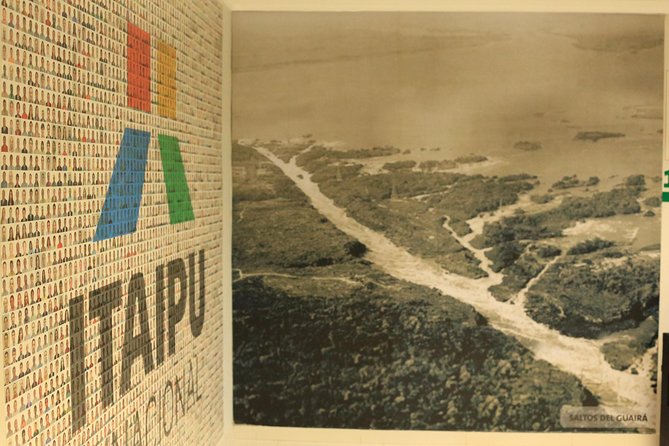
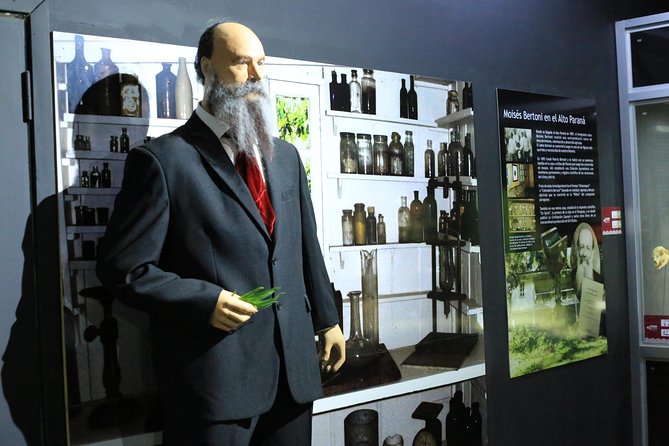
The day begins at Museo de la Tierra Guarani, where you get the story of the tribes that lived in the region, then the arrival of colonizers, and finally the construction work around the monumental Itaipu. It’s a short stop, listed at about 40 minutes, but it sets the tone for the rest of the day.
What I like about this kind of start is that it prevents the “dam as a random photo stop” problem. Once you understand why the region mattered, the Itaipu visit makes more sense. The museum also gives you shared vocabulary, so you’re not just staring at structures and waterfalls, you’re hearing what they represent.
A consideration: some experiences have mentioned that the museum may be closed at certain times. When that happens, the swap can shift the day toward wildlife or sanctuary-style stops. If you are the type who really wants the museum specifically, check close to departure whether an alternative is planned, and keep expectations flexible.
Represa Hidroelectrica Itaipu Binacional: what to watch during the panoramic visit
Next up is Represa Hidroelectrica Itaipu Binacional, a panoramic visit to what the itinerary describes as the world’s largest hydroelectric power plant in energy production. It runs about an hour and the entry is listed as free.
This stop works when you treat it like a scale lesson. You want to notice how the facility is laid out and how big the operational spaces feel, even if you are only viewing from designated areas. The best part is not just the size, it’s the way the guide connects the project to regional change and the history around it.
Language note: the dam tour itself may be in Spanish, and several accounts describe English translation or guidance by the tour guide during the day. So if you want the best experience, listen closely during transitions, not just at the main viewing points.
If you’ve visited Iguazu Falls already, the dam can be surprisingly satisfying. It’s the same kind of awe, just aimed at engineering rather than water.
Saltos del Monday: the waterfall stop that complements Iguazu
After the high-impact dam stop, the day turns to Saltos del Monday. This is the nature and water break, listed for about an hour, and admission is included.
Here’s the honest comparison logic I’d use when deciding: Saltos del Monday is not trying to outshine Iguazu. It’s more of a “different chapter” waterfall experience. You get a change of scenery, and you’re usually able to enjoy the area without it feeling like another full-day crowd marathon.
One practical bonus from descriptions of the day: people have noted butterflies around the falls area. That’s the kind of small detail that makes the stop feel alive, not just scenic from a distance.
Mercado de Abastos: where you meet daily life, even if it is brief
The final cultural stop is Mercado de Abastos, where you get a chance to connect with people and city culture. In some versions of the day, the market time can be more like a drive-by or a quick pass, especially if timing gets tight or weather is rough. In others, it can feel like you’re actually seeing the rhythms of trade.
Either way, what matters is mindset. This is not a curated souvenir bazaar. It’s a place locals use. If you’re looking for handcrafted gifts, food products, or just the feel of how Paraguay moves day to day, this stop gives you a real taste.
If you want to shop, I suggest keeping purchases small and practical. Carrying bags through a full-day route is annoying, and you still need to be comfortable during the border crossing on the return.
When the itinerary adjusts: wildlife, triple frontier, and extra viewpoints
This tour is built to show Paraguay highlights around the border zone, but the exact flow can shift with closures and timing. From descriptions of real days:
- If the museum is closed, the group may visit an animal sanctuary such as the Tekotopa wildlife centre, with chances to see animals like puma, jaguar, toucan, blue macaw, and tapir.
- Some routes include the Tres Fronteras lookout from the Paraguay side, where you can see Brazil and Argentina across the river.
- You may have additional drive-by stops, like a mosque or cathedral, depending on routing.
- Meals are not included, but guides have arranged or recommended local food stops, including vegetarian options, in at least a couple of accounts.
This flexibility is a double-edged sword. It can be great because the day doesn’t collapse if one site is unavailable. It can also mean the day feels different than what you imagined from the strictest reading of the itinerary.
That said, in this region, flexibility is often the difference between a memorable day and a disappointing one. The guides often work hard to keep your major stops covered.
The small-group format and guides like Bruna, Diego, and others
With a max group size of 15, you get a more human pace. You’re less likely to feel like cargo. You can ask quick questions. Your guide can slow down when someone spots something interesting, like a plant, animal, or a detail around the dam.
Several accounts highlight guides by name, including Bruna, Diego, Roberto, Ana, Adriano, and Ena. The common thread is not just facts, it’s momentum. A good guide keeps commentary going during travel and during waiting time at the border, so the day feels like a connected story.
If you care about history and culture, that matters. If you want a quiet, sit-back day with zero talking, this might not be your style, because the tour’s core value is interpretation.
Comfort, timing, and the reality of a full day
This experience is listed as requiring moderate physical fitness. That usually means you should be fine with walking short distances, standing for views, and moving through museum and waterfall areas. It’s not described as an endurance hike.
Comfort-wise, you’re riding in an air-conditioned vehicle, which is a real deal in this climate, especially if your market stop happens in strong midday heat. People have also mentioned that some market time can move quickly due to weather, so the trip may feel long even when the walking is light.
Timeline reality check: this is a 7-hour day. If you’re the type who needs long meal breaks, plan to eat before you get hungry. Lunch is not included, so you’ll be deciding what to do with that gap.
So, should you book this Paraguay day trip?
I’d book it if you have an extra day in Foz do Iguaçu and you want a real Paraguay taste without adding a complex itinerary. It’s ideal when you like:
- Short, guided cultural context
- The contrast of power engineering and waterfall nature
- A border-zone day trip that feels more local than commercial
I’d think twice if:
- Border queues make you miserable
- You want a long, sit-and-read museum experience rather than a guided overview
- You want lunch included in the price and don’t want to manage food plans
My bottom line: this is a strong value day trip because several major parts are covered or free, and the guide makes the difference between seeing sights and understanding them. If you go in with flexible timing and a curiosity for how Paraguay and the Itaipu region connect, you’ll likely have a memorable day.
FAQ
How long is the Paraguay tour from Foz do Iguaçu?
It runs for approximately 7 hours.
What time does the tour start?
The start time is 7:30 am.
Where does the tour take place?
The tour is based in the Foz do Iguaçu area and visits places in Paraguay across the border.
How much does it cost?
It costs $120.00 per person.
What is included in the price?
You get an air-conditioned vehicle and a guide.
Is lunch included?
No, lunch is not included.
Are admission tickets included?
Admission tickets are listed as free for Museo de la Tierra Guarani and Represa Hidroelectrica Itaipu Binacional. Admission for Saltos del Monday is included.
What is the group size limit?
The tour has a maximum of 15 travelers.
Do I need to be very fit?
You should have a moderate physical fitness level.
Is free cancellation available?
Yes, you can cancel for a full refund up to 24 hours in advance. The tour can also be canceled if a minimum number of travelers is not met, with an offer of a different date/experience or a full refund.
More Tour Reviews in Foz do Iguacu
More Tour Reviews in Foz do Iguacu
Latest from our Foz do Iguacu notebook
- Foz do Iguacu: Skydiving Experience with Photos and Videos★ 5.0 · 3 reviews
- Brazilian Falls & Macuco Safari: transfer with ticket★ 3.7 · 3 reviews
- Rafain Palace: Barbecue Dinner Show★ 4.3 · 5 reviews
- From Foz do Iguaçu: Sunset at the Falls★ 4.5 · 5 reviews
- from Foz do Iguaçu: Private Tour on Argentinean Falls★ 5.0 · 5 reviews
- Foz do Iguaçu: Brazilian Side of the Falls★ 4.1 · 5 reviews