

REVIEW · STREET ART
Rio Street Art Tour
Graffiti in Rio has a story. This 3-hour Rio Street Art Tour turns street art into a real way to understand neighborhoods, politics, and architecture, using public transit to move you efficiently. I especially liked how the route connects murals to Rio’s cultural and political themes, and how the plan keeps you seeing major landmarks without feeling stuck on a big bus.
One thing to plan for: it is mostly walking plus subway and VLT time, so if your feet run hot, bring water and take breaks when offered. Also, this experience needs good weather, so you might see date changes if conditions are rough.
In This Review
- Key Highlights I Would Not Skip
- Starting at the Municipal Theater and getting your Rio bearings
- Glória, first legalized graffiti, and the architecture clues
- The Selarón Staircase, not just a photo stop
- Cinelândia’s libraries and theater square
- Olympic Boulevard museums and how transit keeps the pace sane
- Porto Maravilha and the etinia panel, with a neighborhood lens
- Why Wellington/Berimbautour is the real value add
- What to wear, bring, and expect in a mostly-on-your-feet tour
- Should you book this Rio Street Art Tour?
- FAQ
- How long is the Rio Street Art Tour?
- What does the Rio Street Art Tour cost?
- Where do I meet for the tour?
- Where does the tour end?
- Is this a private tour?
- Do I need to pay admission tickets at the stops?
- What transit do you use during the tour?
- Is this tour suitable for most travelers?
- What happens if the weather is bad?
- What is the cancellation policy?
Key Highlights I Would Not Skip

- Wellington leads it personally with history, meaning, and character behind the graffiti you see, and he explains things in clear English.
- Street art meets major landmarks, from the Selarón Staircase to cinelândia’s libraries and theater square.
- You ride Rio’s transit for context, with subway and VLT time built into the flow so the tour does not feel like one long trek.
- Porto Maravilha includes the etinia panel area, highlighted as the world’s largest graffiti mural.
- You get a private-group feel, so solo travelers and families can ask questions without feeling rushed.
More painted walls worth finding
Starting at the Municipal Theater and getting your Rio bearings

I like tours that help you understand the city fast, and this one starts right in Centro at the Municipal Theater of Rio de Janeiro. It is a smart anchor point because it puts you near big civic buildings and sets you up for the day’s theme: Rio street art is not isolated, it is connected to how the city builds, celebrates, and argues.
The early transit rhythm matters here. You are not just walking from one wall to another. You mix walking with subway and VLT rides, which is a big deal in a city where distances add up quickly. The tour is also private, so the pace tends to fit your group, rather than being set for a crowd.
If you want a street art day that also teaches you how Rio moves and thinks, this start helps. You begin with the feeling of being in the center of it all, then you gradually shift into the neighborhoods and backdrops behind the murals.
Glória, first legalized graffiti, and the architecture clues
The day’s early stop puts you in Glória, and it sets the context for why graffiti in Rio matters beyond decoration. The tour starts with the idea of the first legalized graffiti in Rio, which helps you understand that street art here is not only a side hobby. It can be a public voice, shaped by permission, conflict, and time.
I also liked the way this part connects art to how the city looks. You are guided past European architectural influence in the City of Rio, so you start spotting contrasts. You see how older styles and newer identities coexist, and you realize murals often respond to what is already there.
There is also a connection built in to later icons. You pass by the Selaron Staircase area during this stretch, which gives you an early taste of what you will focus on more directly later. That helps you avoid the classic problem of seeing a famous photo spot with no meaning attached.
If you dislike long explanations, this portion may feel heavier than a pure photo walk. But if you enjoy learning what is behind the images, this is where the tour earns its price.
The Selarón Staircase, not just a photo stop

Then you slow down for time at the Escadaria Selaron, one of the city’s best-known “walk up and look up” streetscapes. The stairs are famous, but the tour treatment is what makes the difference. Instead of treating it like a backdrop, you get guided attention to how the artwork became a destination and what the staircase represents inside Rio’s public culture.
There is also something practical here. Spending real time at the stairs means you can appreciate the scale, the details, and how the area feels as a lived-in tourist hub. You are not rushing through. The goal is to help you read the art as you move, and to connect it back to the larger street art story the guide has been building.
One note: because this spot is a top tourist draw, expect crowds nearby depending on time of day. The tour format helps because you are not choosing your own path through the busiest corners.
- Rio de Janeiro: 6-Stop Highlights of Rio with Lunch
★ 4.4 · 5,157 reviews - Christ the Redeemer Entry Ticket by Corcovado Train
★ 4.4 · 4,476 reviews - Rio de Janeiro: Rocinha Favela Walking Tour with Local Guide
★ 4.8 · 3,052 reviews - Rio: Christ the Redeemer, Sugarloaf, Selaron & BBQ Lunch
★ 4.5 · 2,428 reviews - Rio De Janeiro: Half-Day Rocinha Favela Walking Tour
★ 4.7 · 2,272 reviews
Cinelândia’s libraries and theater square
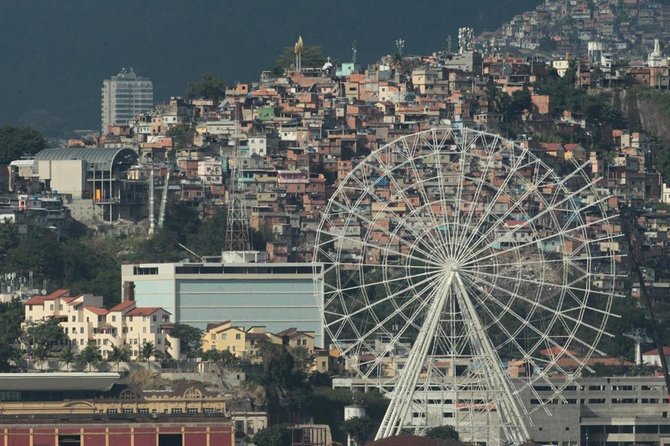
Next you head to cinelândia, and it is a good change of pace. This is not only walls and tags. It is the city’s cultural institutions and a landmark zone associated with reading, performance, and big public architecture.
The tour focuses on cinelândia’s main libraries and main theater of the city, and then you transition onward using the VLT. I like this pairing because it reinforces a key idea: street art in Rio is not floating in a vacuum. It sits near the places where culture gets formal recognition, and it challenges you to compare who gets to speak and how.
This stop also helps you see the broader urban plan. You start noticing where art appears, where it is protected or argued over, and how public squares become canvases for collective identity.
If you are the kind of traveler who thinks murals should have context, this is a strong moment. If you only want fresh street art, you might find the emphasis on Rio’s structures and meaning more time-consuming than expected. Still, it makes the day feel like a coherent story.
Olympic Boulevard museums and how transit keeps the pace sane
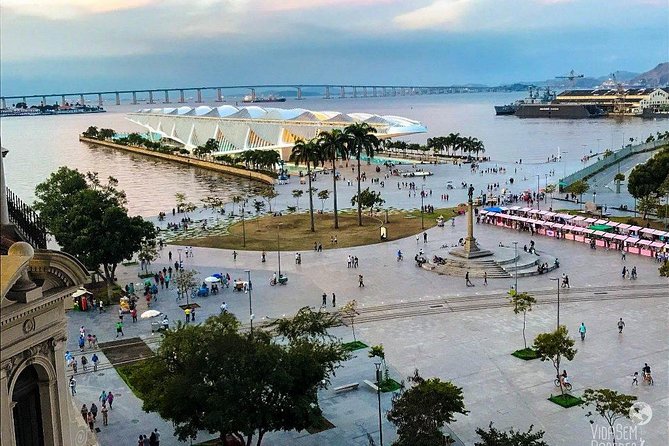
After cinelândia, you take the VLT to the Olympic Boulevard area. This stretch is about connecting street art themes to the museum zone, the kind of place people visit for big, official culture. Here the tour notes that the Boulevard Olimpico is home to the city’s main museums.
You get a guided look that helps you understand why street art and museums can share the same conversation. Museums often preserve, explain, and frame. Street art often reacts, interrupts, and speaks in the language of the street. Putting them in the same afternoon gives you a more complete picture.
This is also where the tour’s timing works for value. You are not waiting around at one stop for too long. You see enough to learn and enough to keep moving. It is still a 3-hour experience, so you need momentum more than you need lingering.
The practical upside: the route uses public transportation rather than a private car. You get to feel the city’s systems while you learn, and you also get less “dead time” between murals.
Porto Maravilha and the etinia panel, with a neighborhood lens
Finally, you land in Porto Maravilha, where the tour focuses on one of its headline street art moments. The stop is described as finishing in the area associated with the largest graffiti mural in the world, and your highlight is the etinia panel.
This is where the street art story takes on a bigger scale. You are no longer only reading individual characters and small walls. You are looking at public art treated like a major landmark. The guide’s role here is crucial. When the meaning is explained, the mural feels less like a spectacle and more like a statement tied to identity, community, and the history of the spaces around it.
I also appreciate that this ending place supports a shift from “tour mode” to “wander mode.” Porto Maravilha tends to be a place where you can keep exploring after the official finish, especially if you are already in a museum corridor mindset.
One more tip from the tour’s spirit: if you care about Rio’s Afro-Brazilian connections and the story behind neighborhoods like Little Africa, ask Wellington to frame what you are seeing in that direction. In past tours, Wellington has been known to connect the route to broader social history tied to enslaved Africans and local culture. Even when that focus is not the default, his instinct is to connect murals to real people and real events.
Why Wellington/Berimbautour is the real value add
Yes, the murals are the headline. But the consistent praise here is about how the guide connects dots.
Wellington has a way of explaining the history and perspective behind the graffiti characters, not just the what. He also ties the artwork to cultural and political meaning while keeping it fun, which is a rare mix. You also get practical human details. People highlight that he speaks excellent English, and some guests even mention he made room for Portuguese practice during the walk.
Another thing I like for a city like Rio: the tour helps you avoid getting tangled in transit. One guest described Wellington helping with train tickets to avoid potential issues like fines. Even if your group does everything correctly on your own, having a guide who handles those tiny friction points makes the tour feel smoother.
The best part, though, is that the tour does not feel like a script. Even as a private experience, it feels interactive. If you ask questions, you get answers that connect the mural to the city.
What to wear, bring, and expect in a mostly-on-your-feet tour
This is a short half-day tour at about 3 hours, but it is active. You are walking between viewpoints and murals, with subway and VLT segments that keep you from exhausting yourself. Still, the walking is real. One guest noted they appreciated the effort and did not mind the steps, but they also mentioned it is a walking tour.
So here is my practical advice:
- Wear shoes you trust for uneven sidewalks.
- Bring water, especially if the weather turns hot.
- If you get tired, ask for a quick break. A private tour format makes that easier.
- Bring your camera, but also be ready to pause. The meaning comes when you stop and listen.
Weather matters too. The tour requires good weather, and if it is canceled for poor conditions, you should expect a different date or a full refund.
If you are traveling with family, this tour can work well because the pacing is flexible and focused. If you are solo, it can feel like exploring with a friend who knows the city’s street art and its context, not just its Instagram spots.
Should you book this Rio Street Art Tour?
I think it is a strong pick if you want more than a photo scavenger hunt. This tour is priced at $68.61 per person for about 3 hours, and the value comes from two places: you get a guided story across multiple neighborhoods, plus you use Rio’s subway and VLT instead of doing everything on foot.
It is also a good match if you care about how street art connects to history, architecture, and public life. The Selarón Staircase, cinelândia cultural landmarks, and the Porto Maravilha mural areas give you variety without turning the day into a travel marathon.
I would skip or rethink it if you only want the newest, fastest-changing graffiti with minimal explanations. The tour leans into meaning and context, so plan to enjoy learning as part of the experience.
If you like street art as a form of city language, book it. With a 4.9 rating and 100% recommended from the ratings data provided, it is one of the better chances to see Rio’s murals with real direction and a guide who ties it all together.
FAQ
How long is the Rio Street Art Tour?
The tour is about 3 hours.
What does the Rio Street Art Tour cost?
It costs $68.61 per person.
Where do I meet for the tour?
You start at the Municipal Theater of Rio de Janeiro, Praça Floriano, S/N – Centro, Rio de Janeiro – RJ, 20031-050, Brazil.
Where does the tour end?
The activity ends in a different location. See the end details provided by the activity on your booking.
Is this a private tour?
Yes. It is a private tour or activity, and only your group participates.
Do I need to pay admission tickets at the stops?
All listed stops show admission ticket free.
What transit do you use during the tour?
You use Rio’s subway and VLT, plus walking between sights.
Is this tour suitable for most travelers?
Yes, most travelers can participate.
What happens if the weather is bad?
This experience requires good weather. If canceled due to poor weather, you will be offered a different date or a full refund.
What is the cancellation policy?
Free cancellation is available up to 24 hours in advance for a full refund. If you cancel less than 24 hours before the start time, the amount paid will not be refunded.
Everything Else We Rated in Rio de Janeiro
More Tour Reviews in Rio de Janeiro
More Tour Reviews in Rio de Janeiro
Latest from our Rio de Janeiro notebook
- Unforgettable Boat Party★ 5.0 · 3 reviews
- Tijuca National Park and all its wonders!★ 5.0 · 3 reviews
- Rocinha Jeep Tour: A Journey into the Soul of the Favela!★ 3.8 · 3 reviews
- Rio: Favela Walking Tour of Rocinha with a Resident Guide★ 4.7 · 3 reviews
- Rio: Private, Custom express, Main Attractions!★ 5.0 · 3 reviews
- Rio: Museum of Tomorrow, Yup Star & Olympic Boulevard★ 3.7 · 3 reviews
Street Art, compared.
 ★ 4.9Bar and Street Art Crawl with Local GuideFrom $43102 reviews
 ★ 5.0Rio Street Art TourFrom $7576 reviews
 ★ 5.0Street Art and Park Bike TourFrom $8556 reviews
 ★ 5.0Private Street Art Tour of São Paulo with Batman´s Alley VisitFrom $14330 reviews
 ★ 5.0Street Art Bike TourFrom $16019 reviews
 ★ 5.0São Paulo Street Art TourFrom $2656 reviews
Browse the lists this tour appears in