
REVIEW · FLORIANOPOLIS & SANTA CATARINA
Florianopolis: Walking Tour – History, Art and Gastronomy
Florianópolis has a story you can walk. This history-and-art route in the historic center connects major monuments to the people who shaped the island, with food and drink stops that keep it fun instead of classroom-dry.
I like how the tour explains the social and economic formation of Brazil and Florianópolis, starting with indigenous groups and then jumping to the 17th century, when Portuguese colonizers arrived alongside enslaved Africans. I also like the practical, eat-while-you-learn rhythm, with chances to try pastéis and coxinhas, plus sugar cane juice and local beers (food and drinks are not included).
One possible drawback is simply the pace. You’ll walk for around 2 hours, so bring comfortable shoes and plan to move at city-street speed.
In This Review
- Key highlights worth planning for
- Walking Tour of Florianópolis: History, Art, and Gastronomy
- Finding the tour start at Café|Bar do Largo da Alfândega
- Cathedral to palace: how the 17th century shows up in real buildings
- Praça XV de Novembro and the story behind Magic Island
- Theatre stop: Álvaro de Carvalho and the value of art in a walking route
- Landmarks for Florianópolis’ black community and the power of context
- Avenida Hercílio Luz and Forte de Santa Bárbara: city scale, sea-adjacent energy
- Bar do Noel and the snack-and-sip portion of the experience
- Public Market finale: a satisfying last stop with a surprise
- Price and value: what $18 buys you in real travel terms
- What to wear and bring so the walk feels easy
- Who should book this Florianópolis walk
- Should you book? My honest call
- FAQ
- Where do we meet for the Florianópolis walking tour?
- How long is the tour and how much walking is involved?
- What languages are available with the live guide?
- What is included in the $18 price?
- Are food and drinks included?
- What should I bring?
- Where does the tour end?
Key highlights worth planning for
- A route built around meaning, not just photos: you’ll connect monuments to indigenous life, Portuguese colonization, and African presence.
- Art and architecture stops that actually matter: Cruz e Sousa Palace and Álvaro de Carvalho Theatre are treated like key chapters.
- Landmarks tied to Florianópolis’ black community: the walk includes specific stops connected to that story.
- Snacks and drinks you can budget on the spot: pastéis, coxinhas, sugar cane juice, and beer moments are part of the experience.
- Public Market finale with a surprise: the ending is designed to feel like a reward, not a drop-off.
- Good guide energy and clear English: one guide named Isaac has been praised for friendly, organized delivery.
More island days out of Floripa
Walking Tour of Florianópolis: History, Art, and Gastronomy
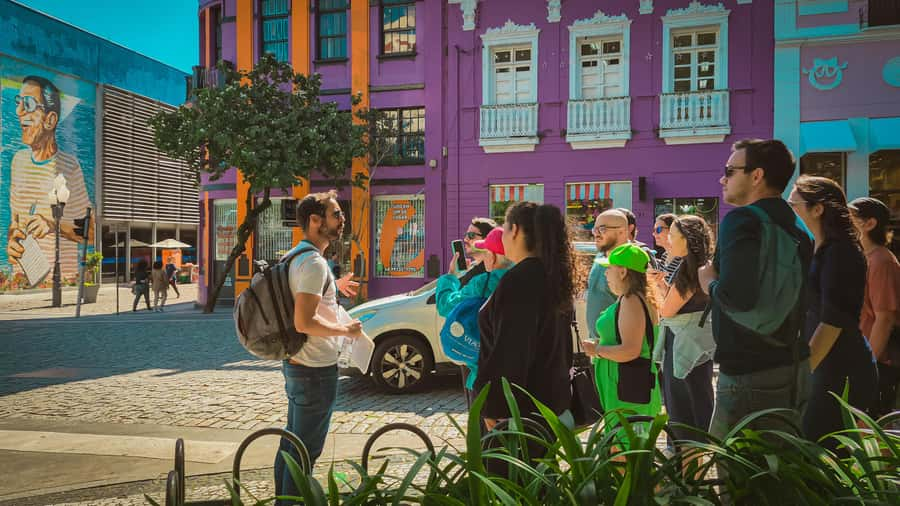
If you want Florianópolis in one smooth pull, this is a smart pick. The tour stays in the historic center and strings together a story that starts before the colonial era, then moves through major turning points, and ends where people actually shop and eat. You’re not just memorizing dates. You’re learning how the city became what it is, and why certain buildings and squares got the attention they did.
And because it’s built as a walking tour, you get that street-level feel fast. You’ll move from churchfront to palace steps to theatre sightlines to market bustle without needing multiple tickets or transit plans. It’s also timed like a half-day activity, around 2 hours and 150 minutes, so it fits cleanly into an arrival day or a day-trip schedule.
Finding the tour start at Café|Bar do Largo da Alfândega
Everything begins at the local coffee shop Café|Bar do Largo d’Alfândega. That’s helpful because you can grab a coffee and use the restroom before you start, rather than rushing and hoping you find facilities on the fly.
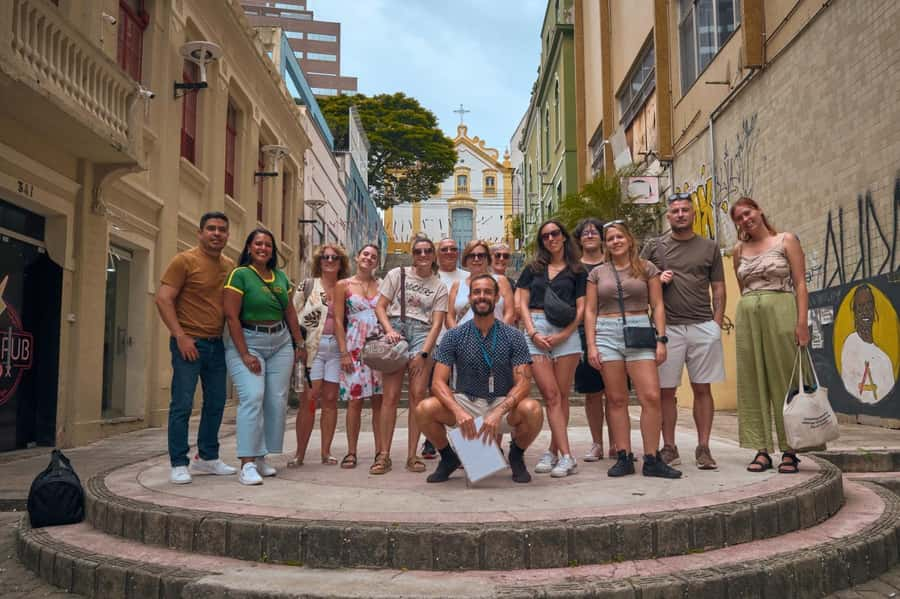
Look for the guide outside, wearing a white T-shirt that says The Best of Florianopolis, with a tour guide credential. There’s also a small colorful umbrella, so you can spot the group as you walk toward the historic center. This is a small detail, but it matters. When a tour is in a central area, the first 5 minutes can either feel easy or stressful, and this setup is clearly built to reduce stress.
The tour runs with an English, Portuguese, or Spanish live guide. In the feedback, the delivery has been praised for being easy to understand, including great English. That’s not a minor point. When the subject is history, clarity helps you keep up instead of tuning out halfway through.
Cathedral to palace: how the 17th century shows up in real buildings
The first major stop is the Catedral Metropolitana de Florianópolis Nossa Senhora do Desterro e Santa Catarina de Alexandria. You get a guided orientation there, around 20 minutes. A cathedral stop can sometimes feel like a quick exterior glance, but here it’s the start of your timeline. It sets the tone for the historic center, and it gives you a reference point for everything that follows.
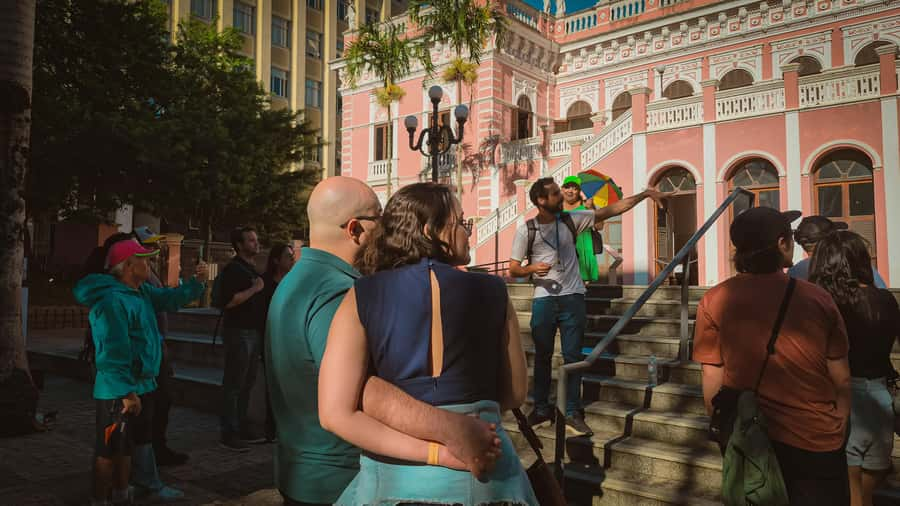
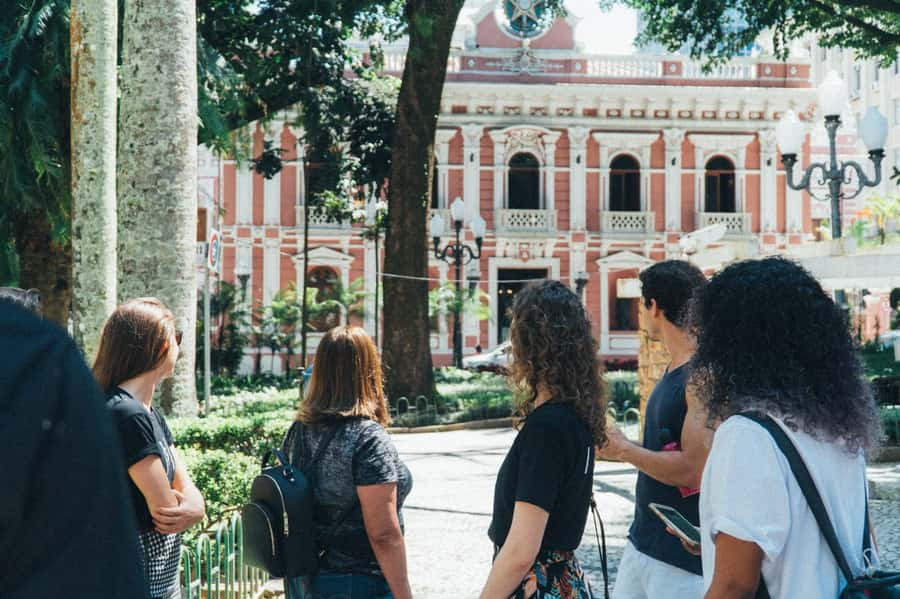
Then the tour moves to the Palácio Cruz e Sousa (about 10 minutes). This is where the art-and-architecture angle takes over. Cruz e Sousa Palace isn’t just pretty. It’s part of how Florianópolis displayed power, culture, and identity through stone, ornament, and civic presence.
One reason I like this sequence is that it transitions from broad history to visible symbols fast. You start with a religious landmark, then you move into a palace tied to the city’s identity. That helps you “see” what you’re learning, instead of only hearing it.
A consideration: if you’re expecting a lot of time inside buildings, the schedule is more about walking, short guided stops, and then moving on. You’ll learn a lot, but you’ll keep moving.
- European Valley – Blumenau and Pomerode
★ 4.5 · 101 reviews - Balneário Camboriú tour and cable car ride from Florianópolis
★ 4.5 · 74 reviews - Balneário Camboriú, Unipraias and Laranjeiras – Exit Floripa
★ 4.5 · 67 reviews - Florianópolis: Camboriu & Unipraias Park with Cable Car Ride
★ 4.4 · 63 reviews - Floripa Total – Leaving Florianópolis by Itaguasul Turismo
★ 4.5 · 56 reviews
Praça XV de Novembro and the story behind Magic Island

Next comes Praça XV de Novembro (about 10 minutes). Squares are where cities negotiate public life, and this one is treated as a meaningful pause in the route, not dead time. From here, the tour continues toward another key public space: Praça Fernando Machado (around 10 minutes).
This is also where the tour’s narrative gets more specific about identity. The walk covers the founders of the nicknamed Magic Island, and it connects that idea to the social and economic formation of Florianópolis. If you’re wondering what that nickname means in practice, the tour doesn’t leave you hanging. It ties local naming and community development to what happened across different eras.
Why this works for you: public squares are where you can look around and imagine daily life. You can picture markets, speeches, gatherings, and everyday movement. When the guide explains what to watch for, you start noticing the city’s layout and power centers instead of treating them like random streets.
Theatre stop: Álvaro de Carvalho and the value of art in a walking route
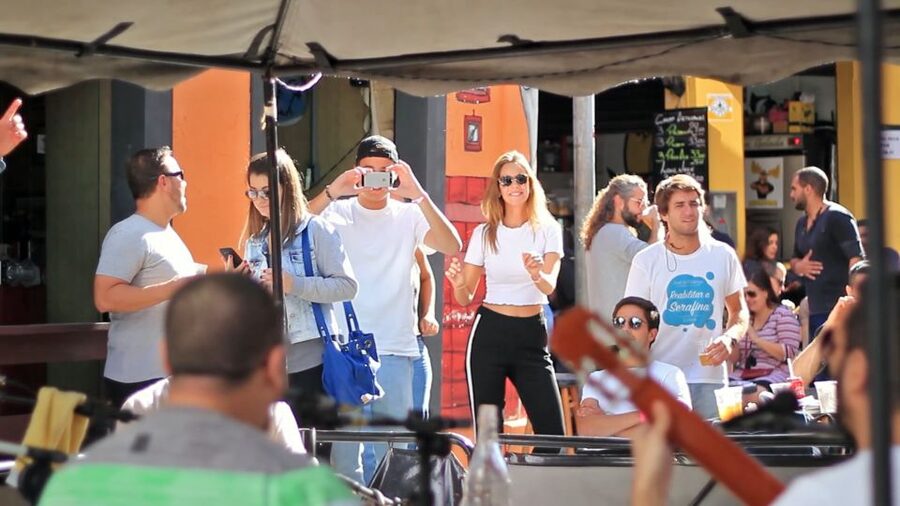
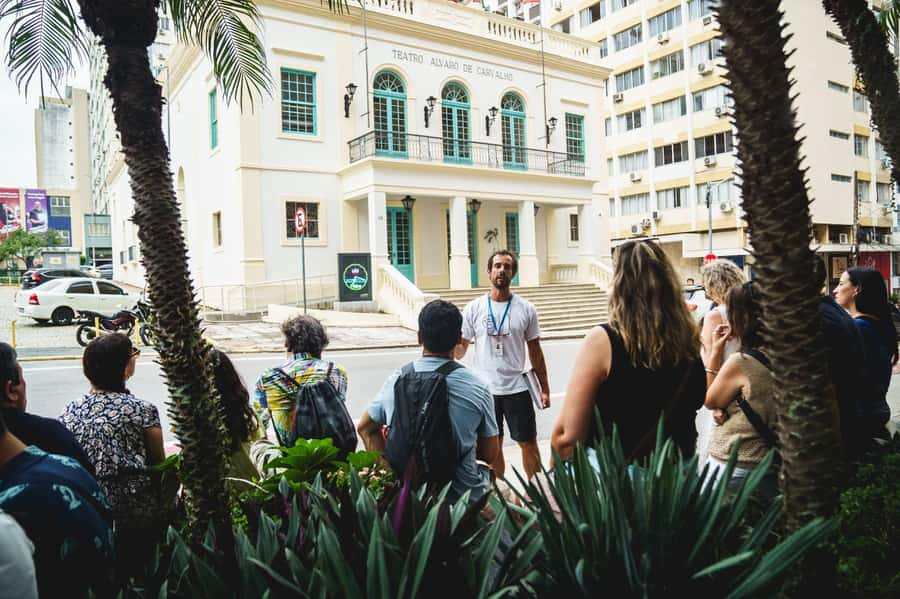
One of the highlights on the itinerary is a pass by Álvaro de Carvalho Theatre, described as one of the most beautiful monuments in Florianópolis. You get around 10 minutes guided at the theatre itself.
Even if you’re not the kind of person who seeks out architecture tours, a theatre stop works because it’s tied to cultural life. Theatre buildings usually signal more than art. They signal the presence of patrons, civic ambitions, and a public space people could share. In a short guided segment, the guide helps you understand why that matters.
The trade-off is time. The tour is designed around multiple stops, so you won’t get an hours-long cultural deep dive at any one building. If you’re obsessed with theatre architecture and want long interior visits, you might want additional plans after the tour. But for most people, this is a satisfying taste that keeps the pacing lively.
Landmarks for Florianópolis’ black community and the power of context
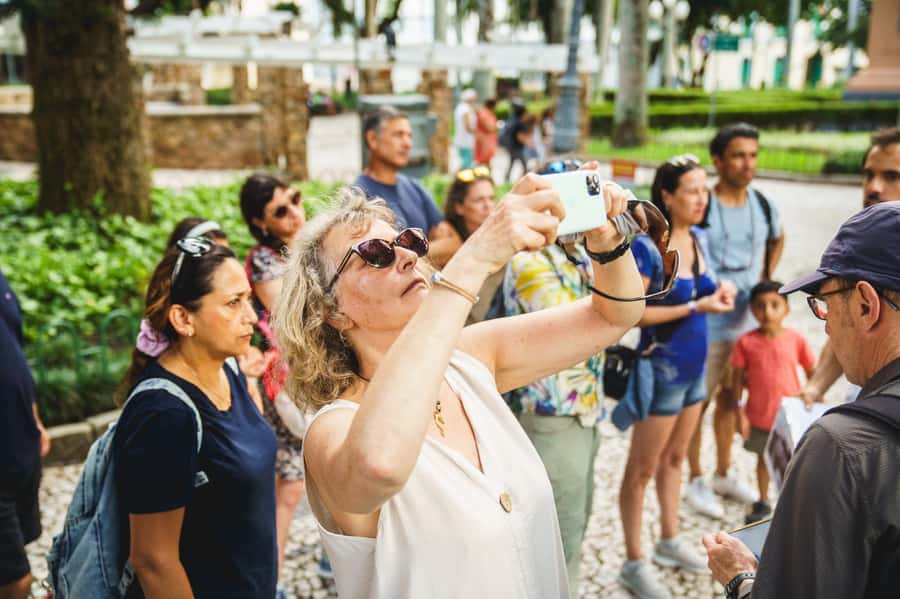
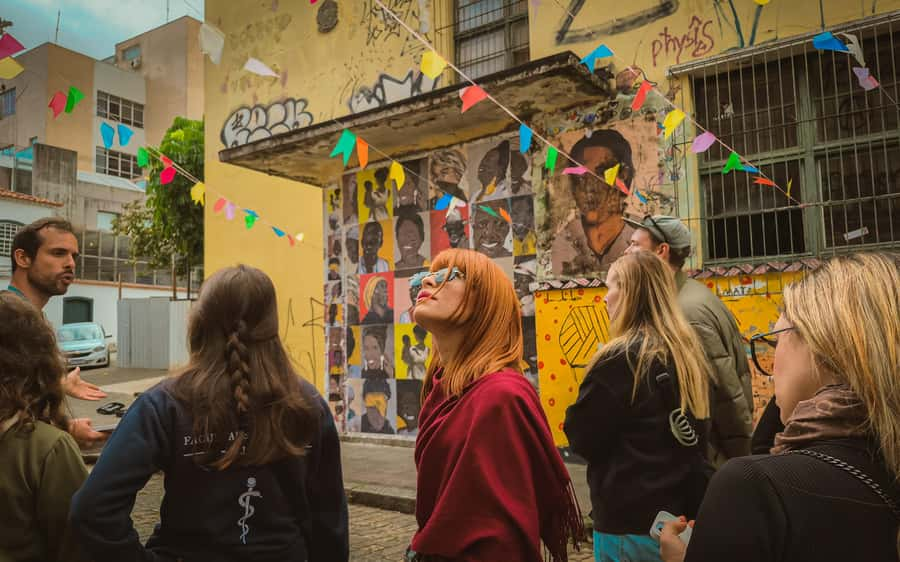
A standout focus of the route is exploring important landmarks for the black community in Florianópolis. You’ll also pass landmarks connected to key historical periods, including the 17th century arrival of Portuguese colonizers and African enslaved people.
This part is valuable because it changes the way you read the city. Instead of learning history as something sealed in books, you start recognizing it in the streets, the memorials, and the spaces people used for community life. When you travel, context is what turns a city into a story you can remember.
Practical note: these stops are built into a walking flow. Expect to stand, look, and listen. If you need frequent seating, plan for shorter listening moments and adjust your pace.
Avenida Hercílio Luz and Forte de Santa Bárbara: city scale, sea-adjacent energy

Next up: Avenida Hercílio Luz (about 10 minutes). Broad avenues are where you feel the city’s scale. They also help you understand how people historically moved through the area, and how modern traffic shapes what you see today.
Then the route includes Forte de Santa Bárbara (about 10 minutes). Forts are never just about walls. They’re about strategy. They show how a community thought about protection, control, and the geography around it.
Even with a short guided visit, forts tend to stick in your head because they force you to orient your mental map. You’ll likely get a sense of where the fort sits in relation to the rest of the historic area, and that makes the rest of your walk easier to follow.
Bar do Noel and the snack-and-sip portion of the experience
After the fortified and civic stops, the tour shifts into a more social phase with a longer segment at Bar do Noel (about 40 minutes). This is where the experience leans into local everyday life.
This is also where snack moments make sense. The tour highlights local favorites like pastéis, coxinhas, sugar cane juice, and local beers. Since food and drinks are not included, you’ll be choosing and paying on your own. The average pint is around $4, so you can budget fairly easily if you want to try a beer.
Why the longer bar time is smart: it gives you a breather and time to chat. And the tour description promises fun with people from all around the world. When you share a table, learn a few words, and taste local snacks together, history lands differently.
A small consideration: bar time can be noisy. If you’re sensitive to sound, bring patience. You can still follow the guide and enjoy the vibe, but you may rely more on quick listening and the direction of what to try.
Public Market finale: a satisfying last stop with a surprise
The tour wraps up at Mercado Público de Florianópolis, with a guided market segment of about 30 minutes, plus a little tour and a surprise near the end.
Markets are where food culture shows up in plain sight. Even without formal cooking lessons, you learn how people shop and what they reach for. For you, the value here is that the snack theme becomes more grounded. You can turn what you’ve tasted into a real meal plan for later, using the market as your reference point.
And since the guide provides a city map with local recommendations, the market finale often becomes a springboard. You’ll leave knowing where to go next, instead of guessing.
One more practical benefit: market endings tend to be easy to transition out of. You finish in a place where you can browse, grab water, and decide your next move without needing additional logistics.
Price and value: what $18 buys you in real travel terms
At $18 per person for roughly 2 hours and 150 minutes, this tour is priced like a budget-friendly way to get structure, not like a pricey museum add-on. The big value is that your money covers guided storytelling, plus practical items that improve the experience.
Included perks:
- Rain coats in case of rain
- A city map with local recommendations
Not included:
- Alcoholic beverages
- Food and drinks
That last line matters. You’ll want to budget for snacks and possibly a beer or two. The typical pint price is listed at around $4. If you only drink water and maybe one snack, your total spend could stay low. If you make it a mini food tour, you’ll pay more, but you’ll also get exactly what the highlights promise.
I also think it’s good value because the tour covers multiple landmark categories in one walk: churchfront history, palace and theatre arts, public squares, community-related landmarks, forts, and finally the market. You’re not buying separate entrances or building a route yourself from scratch.
What to wear and bring so the walk feels easy
This is a comfortable clothes kind of day. The key is shoes. The tour is about 2 hours of walking, and uneven sidewalks are common in historic centers. Bring something you can move in without worrying about blisters.
Also, the guide provides rain coats if weather is damp. That’s a nice safety net, especially in South Brazil where conditions can change quickly.
If you like taking photos, you’ll have chances at the cathedral, palace area, theatre exterior, squares, and market. Just don’t let camera time slow the group too much, because the route depends on a steady pace.
Who should book this Florianópolis walk
This tour is a great match if you want:
- A guided history overview that connects people and power, not just buildings
- An art stop that feels relevant, especially with Cruz e Sousa Palace and Álvaro de Carvalho Theatre
- Food culture that stays practical, with local snacks like pastéis and coxinhas you can try on the route
- A social atmosphere where you might end up chatting with people from other countries
It’s also a good fit for first-timers. You’ll get orientation around the historic center and you’ll leave with recommendations from the map and the guide.
You might skip it if you prefer long stays inside buildings, or if you strongly dislike walking. The experience is designed for movement and short guided segments, not extended museum time.
Should you book? My honest call
I’d book this tour if you want Florianópolis to make sense quickly, through a walk that connects indigenous roots, Portuguese colonization, African presence, art landmarks, and community history. The most praised part is the guide delivery: clear explanations, strong English, friendliness, and good organization. That combination is exactly what you want when history is the main ingredient.
Just go in with one expectation set: food and drinks are on you. The tour helps you find the right moments to taste local favorites, but you’ll need to budget for them. If you’re okay with that, you’ll get a high-value cultural route for a reasonable price.
FAQ
Where do we meet for the Florianópolis walking tour?
You meet outside Café|Bar do Largo d’Alfândega. The guide is outside the coffee shop, wearing a white T-shirt that says The Best of Florianopolis, using a small colorful umbrella, and carrying a tour guide credential.
How long is the tour and how much walking is involved?
The tour lasts about 2 hours, listed as 2 hours – 150 minutes. You should expect to walk for around 2 hours.
What languages are available with the live guide?
The live tour guide offers English, Portuguese, and Spanish.
What is included in the $18 price?
The price includes rain coats in case of rain and a city map with local recommendations.
Are food and drinks included?
Food and drinks are not included. The average price for a pint is listed at around $4. Alcoholic beverages are also not included.
What should I bring?
Wear comfortable clothes and, most importantly, comfortable shoes for a walk of around 2 hours.
Where does the tour end?
The tour finishes at the Mercado Público de Florianópolis. The experience also includes a market segment before saying goodbye.
More Tour Reviews in Florianopolis
More Island Days on Floripa
More Tour Reviews in Florianopolis
Latest from our Florianopolis notebook
- Florianópolis: Balneario Camboriu and Unipraias Park Tour★ 4.2 · 7 reviews
- Florianópolis: Blumenau and Pomerode Germanic Route Day Trip★ 4.0 · 11 reviews
- City Tour Florianópolis★ 4.3 · 13 reviews
- Florianopolis: Gravata Beach Trail with Picnic★ 4.9 · 14 reviews
- Florianopolis: Walking Tour – History, Art and Gastronomy★ 5.0 · 21 reviews
- Florianópolis: Historical Center, Beach & Nature Tour★ 3.3 · 25 reviews
Florianopolis & Santa Catarina, compared.
 ★ 4.5Balneário Camboriú tour and cable car ride from FlorianópolisFrom $4674 reviews
 ★ 4.5Balneário Camboriú, Unipraias and Laranjeiras – Exit FloripaFrom $2967 reviews
 ★ 4.4Florianópolis: Camboriu & Unipraias Park with Cable Car RideFrom $3663 reviews
 ★ 4.5Floripa Total – Leaving Florianópolis by Itaguasul TurismoFrom $2556 reviews
 ★ 5.0Diving with Turtles in FloripaFrom $9753 reviews
 ★ 4.5Paragliding flight with instructor in FlorianópolisFrom $10749 reviews
 ★ 4.0Discover Florianópolis: Full Day City Tour and Local HighlightsFrom $3147 reviews
 ★ 4.9Florianópolis: RAFTING AVENTURAFrom $5841 reviews
Browse the lists this tour appears in