
REVIEW · SAO PAULO CITY TOURS
Sao Paulo: Downtown-Center History Walking Tour – in English
São Paulo’s Centro tells stories fast. In about two hours and a 3 km walk, you’ll hit major landmarks like Edifício Itália, the Copan Building, and the Sé Cathedral, then finish in Liberdade’s street market area. What I love most is the small group size (10 or fewer) and how your guide ties each building to the city’s real turning points, like coffee money, modern art, and colonial beginnings.
The one consideration is timing and weather. This tour depends on good weather, so if the forecast looks grim, have a flexible plan for that morning and wear shoes made for city sidewalks.
In This Review
- Key highlights you should care about
- Getting your bearings in São Paulo’s Centro
- Price and what feels like a fair deal
- The walk starts at Edifício Itália, where São Paulo grew upward
- Copan Building: brutalism curves and Oscar Niemeyer’s fingerprints
- Gallery of Rock: shopping corridors with vinyl and manga energy
- Theatro Municipal: European grandeur meets Brazilian identity
- Centro Cultural Banco do Brasil and the coffee golden age
- Pátio do Colégio: Jesuits, Tupi-Guarani, and the city’s starting point
- Sé Cathedral: protest, protest energy, and symbolic ground zero
- Liberdade finish: Japanese neighborhood life outside Japan
- What makes the guide’s storytelling feel different
- How safe does it feel, and how should you act?
- Who should book this São Paulo Centro History walk?
- Should you book this tour?
- FAQ
- FAQ
- Is the tour offered in English?
- How long is the walk, and about how far do you cover?
- How many people are in the group?
- Where does the tour start and where does it end?
- What time does the tour begin?
- Are there admission tickets needed for the stops?
- Is it near public transportation?
- Do most travelers be able to participate?
- Is a service animal allowed?
- What happens if the weather is bad?
- Is there free cancellation?
Key highlights you should care about
A tight downtown loop, 3 km, with frequent photo and question stops
Architecture explained through bigger forces, coffee, religion, and artistic change
Gallery of Rock, vinyl, manga, antiques, and pop culture shopping corridors
Theatro Municipal, with the 1922 Week of Modern Art and Brazilian identity
Liberdade finish, lanterns and market life in the city’s biggest Japanese area
Giuliano style guide energy, friendly pace, and practical food and coffee tips
Another angle on Sao Paulo
Getting your bearings in São Paulo’s Centro
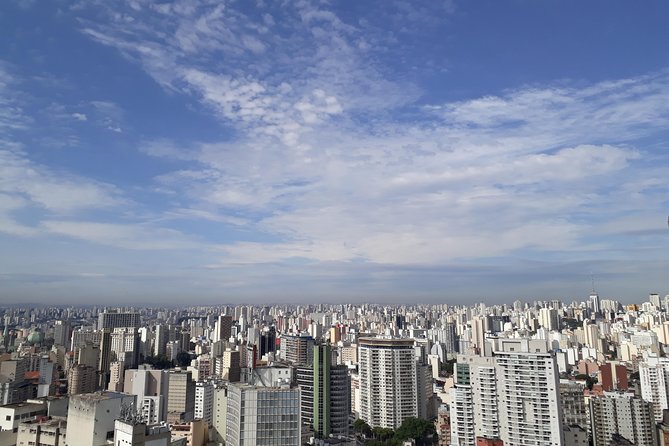
If this is your first time in São Paulo, the Centro can feel like a maze of tall buildings, one-way streets, and big, complicated history. This walking tour is a smart way to get oriented without spending your day hopping between random sites.
I like that it stays focused on the parts of downtown that actually connect, not just a list of famous addresses. You start near the core of Central São Paulo’s skyline and cultural institutions, then work your way toward Sé, and finally into Liberdade, which is where the city’s immigrant story comes into full view.
And yes, you will be walking. It’s about 3 km, so think “morning stroll with purpose,” not a hardcore hike. Your job is to show up with comfortable footwear and a willingness to look up, because a lot of the best moments here are façade details and street-level symbols.
Price and what feels like a fair deal
The price is $31.24 per person for about 2 hours. That’s not “cheap cheap,” but it also isn’t inflated for a small-group, guided walk. When the guide is doing real interpretation, you’re paying for someone to translate the city’s architecture and social history into plain English, and to keep the pacing humane.
Also, admission tickets at the listed stops are free, so you’re not being hit with extra fees just to stand in front of buildings. In other words, the cost goes mostly to the guide and the route.
If you’re deciding between this and a self-guided walk, the difference is the stories. The tour gives you explanations you likely would not find by just Googling photos of the same buildings.
The walk starts at Edifício Itália, where São Paulo grew upward
Your day begins at Av. Ipiranga, 344, right in Centro Histórico. The meeting point is near Edifício Itália, an instantly recognizable landmark. It was once the tallest building in São Paulo and it still reads like a symbol of ambition from a time when the city’s confidence was rising fast.
This first stop matters because it sets your “lens.” Instead of treating the downtown as random landmarks, you learn to see it as a layered timeline. You’re not just looking at a pretty tower. You’re looking at a statement: São Paulo deciding to verticalize, to modernize, and to attract attention.
Photo-wise, Edifício Itália is a solid start. You can get oriented quickly, and you’re in the center of the action before the rest of the route pulls you deeper into the architectural story.
Kept it on foot? So did these
- Sao Paulo: Downtown-Center History Walking Tour – in English
★ 5.0 · 91 reviews - Sao Paulo: Downtown-Center Walking Tour | 2 Hours – English
★ 4.9 · 84 reviews - Ecological walk in sao paulo
★ 5.0 · 61 reviews - Night Walking Tour through the Bars of São Paulo
★ 5.0 · 51 reviews - São Paulo : Must-See Sites Walking Tour With A Guide
★ 4.4 · 25 reviews
Copan Building: brutalism curves and Oscar Niemeyer’s fingerprints
Next comes the Edifício Copan, designed by Oscar Niemeyer. This is your architecture moment, but it’s not only about style. The Copan is described as mid-century Brazilian modernism with brutalist energy, and that mix is exactly why it feels so São Paulo.
You’ll learn how the city’s mid-century vertical growth came with optimism and chaos at the same time. That’s the key idea your guide seems to push throughout the walk: buildings reflect the social mood of their era.
Practical note: the sidewalks can get busy in this part of town. Keep your phone ready, but keep your head up too. You’ll want photos, but the best views often come from stepping back a few paces to catch the full curve.
Gallery of Rock: shopping corridors with vinyl and manga energy
Then you shift from major monuments into a more lived-in downtown world: Gallery of Rock. This stop is about underground shopping corridors where pop culture stuff has a long shelf life. You can expect vinyl records, antiques, manga, and other collector-oriented items.
Why I think this stop is smart: it balances the heavy architecture and religious symbolism with everyday city culture. It shows that downtown is not only government and churches. It’s also subcultures, music collectors, and people hunting for the kind of objects you cannot easily find elsewhere.
If you like browsing, this part of the tour gives you a real reason to slow down. If you prefer photos over shopping, you still get plenty of visual texture from the corridor vibe and signs.
Theatro Municipal: European grandeur meets Brazilian identity
At the Theatro Municipal de São Paulo, you get a major cultural pivot. This building is inspired by European architecture, but your guide connects it to a uniquely Brazilian moment: the 1922 Week of Modern Art.
That event is treated here as a turning point, when artists pushed back against tradition to express something distinctly Brazilian. So you’re looking at elegance, yes, but with a backstory of rebellion.
This stop is a good “breather” too, because it helps you understand how São Paulo has long been a crossroads for ideas. The guide’s explanations can make the theater feel less like a remote monument and more like a stage for real cultural change.
If you’re short on time in São Paulo, this is the one stop where you might feel like the city’s big themes suddenly become understandable.
Centro Cultural Banco do Brasil and the coffee golden age
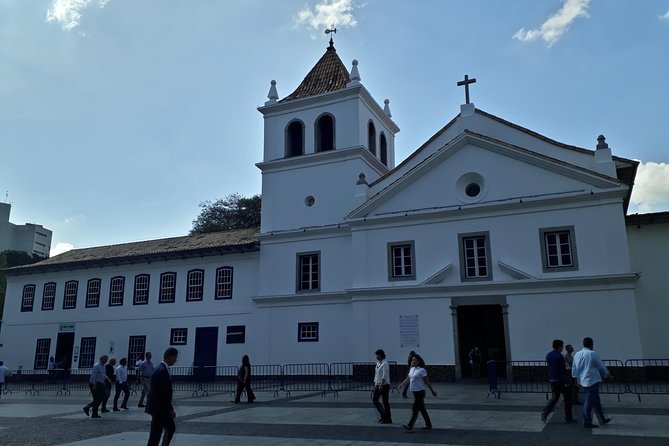
Next is the Centro Cultural Banco do Brasil, where you’ll see art déco style and grand façades connected to São Paulo’s coffee boom era.
The tour’s angle here is social and economic, not just architectural appreciation. Coffee money financed infrastructure and cultural life, and it also fueled deep social contrasts that still show up in the city’s layout and institutions.
This is one of the most valuable stops for people who want meaning, not just sightseeing. You learn how wealth built certain spaces, and how that wealth shaped what downtown “became.”
Even if you don’t usually care about art deco buildings, this stop works because your guide puts the style in context. You start noticing patterns: who built, why they built, and what the city decided was worthy of attention.
Pátio do Colégio: Jesuits, Tupi-Guarani, and the city’s starting point
Then it’s time for one of the most historically loaded moments: Pátio do Colégio. This is where São Paulo was officially founded in 1554.
Your guide brings in the role of Jesuit missionaries and Tupi-Guarani peoples, and emphasizes that the founding story isn’t only one side’s success. It’s tied to colonization and resistance, religion and power. The tour even mentions that the plaza holds layers of tension beneath the surface.
This stop changes the pace in your head. You’ll likely start connecting the modern monuments around you to older foundations, realizing how São Paulo’s story didn’t start with skyscrapers. It started with struggle over land, belief, and authority.
If you want the Centro to feel more human, this is where it happens.
Sé Cathedral: protest, protest energy, and symbolic ground zero
Right after that foundation stop is the Catedral da Se de São Paulo, the Sé Cathedral. It’s described as one of the world’s largest neo-Gothic churches, and it stands as a kind of symbolic ground zero in the city.
The tour explanation goes beyond religion as architecture. You’ll hear it framed as a space of protest, gathering, and identity, with the cathedral used as a lens for understanding how the city expresses itself in public.
This stop is strong for two reasons. First, the scale is hard to ignore. Second, the guide helps you see why the building matters to people, not only to tourists.
If you’re sensitive to crowds or want a quieter photo, arrive mentally ready to move with the group and keep your timing flexible. The area around Sé can be active.
Liberdade finish: Japanese neighborhood life outside Japan
You end in Liberdade, at Base da PM, Praça da Liberdade, 125. The tour frames it as the largest Japanese neighborhood outside Japan, and you’ll see lanterns, markets, and multicultural street life.
This ending works because it’s not a random “gift shop district.” It ties directly to the tour’s theme of São Paulo constantly redefining itself through immigration. You get a living example of the city’s hybrid DNA, where traditions and everyday commerce mix in the open.
If you’re hungry, this is a great place to continue on your own after the tour. The atmosphere makes it easy to transition from guided history into real street time.
What makes the guide’s storytelling feel different
The best part of this tour is how the guide connects dots. In the reviews, a recurring theme is that guides like Giuliano keep things light and fun while still packing in solid context. People also mention that he answers questions easily and adjusts his pace so you can actually keep up.
I also like the practical side. More than one person wrote that the guide suggested food and coffee nearby, and one example included El Pablo Juan for dinner and a show at Teatro Oficina. That kind of tip matters because it turns a guided walk into a better day, not just a two-hour lecture.
Another pattern that comes through: the guide seems to care about comfort. One review specifically mentioned he tried to keep the group in shade, which sounds small until you realize how hot or sun-exposed downtown sidewalks can get.
So when you’re deciding whether this tour is worth it, don’t only ask, “Will I see buildings?” Ask, “Will I understand why these buildings exist and what they mean for how the city works?”
How safe does it feel, and how should you act?
Some people worry about the Centro area in São Paulo, and the tour does not pretend that cities are risk-free. Still, the experience is run as an organized group walk with frequent stops, and the reviews include the point that the area felt different than expected once they were actually there.
My advice is simple, the way it should be everywhere in a big city: stay alert, keep your phone secured when crossing busy streets, and don’t act like you’re in a movie. Use the guide as your anchor. When the group stops, stop. When you move, move together.
If you’ve never been to São Paulo, this tour can be a confidence builder, as long as you keep normal city common sense.
Who should book this São Paulo Centro History walk?
This is a great fit if:
You want a first-day orientation to São Paulo’s downtown and cultural landmarks.
You like architecture, but you also want the human story behind it.
You want a small group tour where you can ask questions without shouting across a crowd.
You’ll appreciate a stop that includes shopping culture, not just statues and churches.
It might be less ideal if:
You dislike walking in the city streets for about 3 km.
You need a fully indoor experience, because this is still an outdoor walk.
You’re traveling during unsettled weather, since the tour requires good weather.
Should you book this tour?
Yes, I’d book it if you want the Centro to click fast. This tour has that sweet spot: major landmarks, plus enough context to make them meaningful, plus a finish in Liberdade that feels like you’re ending in a real neighborhood, not a dead end.
If you’re already comfortable with São Paulo and you want something very specific, you might choose a narrower topic tour. But for most people, especially on a first visit, this is a smart way to get bearings, learn the city’s turning points, and leave with names and stories you can actually use the rest of your trip.
FAQ
FAQ
Is the tour offered in English?
Yes. The tour is listed as being in English.
How long is the walk, and about how far do you cover?
The tour lasts about 2 hours and includes a walk of about 3 km.
How many people are in the group?
It is limited to a maximum of 10 travelers.
Where does the tour start and where does it end?
It starts at Av. Ipiranga, 344, Centro Histórico de São Paulo, and ends at Base da PM, Praça da Liberdade, 125, in Liberdade.
What time does the tour begin?
The start time is 10:00 am.
Are there admission tickets needed for the stops?
The itinerary lists admission tickets as free for the stops.
Is it near public transportation?
Yes, the tour is stated to be near public transportation.
Do most travelers be able to participate?
Yes, the info says most travelers can participate.
Is a service animal allowed?
Yes, service animals are allowed.
What happens if the weather is bad?
The tour requires good weather. If it’s canceled due to poor weather, you’ll be offered a different date or a full refund.
Is there free cancellation?
Yes. You can cancel for a full refund up to 24 hours in advance of the experience start time.
More Tour Reviews in Sao Paulo
Sao Paulo, Neighbourhood by Neighbourhood
More Tour Reviews in Sao Paulo
Latest from our Sao Paulo notebook
- Special tour 8 hour (walking tour + nightlife )★ 5.0 · 3 reviews
- São Paulo: Jewish History Downtown Private Walking Tour★ 3.7 · 3 reviews
- São Paulo Food Tour: The Flavors of Brazil★ 4.9 · 3 reviews
- São Paulo: Full-Day Guided City Tour from the Port of Santos★ 5.0 · 3 reviews
- Sao Paulo: City Highlights and LGBTQIA+ Scene Private Tour★ 5.0 · 3 reviews
- São Paulo Carnival Seating with Food, Drinks, & Transfer★ 5.0 · 3 reviews
Sao Paulo City Tours, compared.
 ★ 4.9Main City Sights in 7 Hours – Shared Group TourFrom $85587 reviews
 ★ 4.5City Highlights Guided TourFrom $66307 reviews
 ★ 4.8Private São Paulo City TourFrom $300264 reviews
 ★ 4.9Downtown Historical Bike TourFrom $85191 reviews
 ★ 4.7Santos, São Vicente & Guarujá Day TripFrom $110165 reviews
 ★ 4.5City Tour Meet São Paulo Half-DayFrom $67150 reviews
 ★ 4.9Bar and Street Art Crawl with Local GuideFrom $43102 reviews
 ★ 5.0São Paulo 5 Hour Private Tour With Fruit TastingFrom $16193 reviews
Browse the lists this tour appears in