
REVIEW · CYCLING TOURS
Fatima Neighborhood and Church Unit Bike Tour
Brasília feels designed for walking, but it clicks fast on two wheels. This Fatima Neighborhood and Church Unit Bike Tour links big-name modern architecture to daily life, from the TV Tower area down to the Igrejinha de Nossa Senhora de Fátima and the Santuario São João Bosco. I really like the way the guide ties the streetscape to the city’s planning ideas, and I love the tactile details you notice up close, especially Athos Bulcão’s tile work. One thing to consider, though, is that it depends on good weather since most of it happens outdoors with short stops.
You’re riding with a maximum of 15 people, and the stops are short enough to keep things moving without feeling rushed. The tour runs about 3 hours for $62.73 per person, and the listed admissions at each stop are free, which helps the value.
In This Review
- Key points to know before you pedal off
- Why this Fatima neighborhood ride makes Brasília make sense
- Start at Torre de Televisão, then listen for the Choro Club connection
- Parque da Cidade Sarah Kubitschek, where a park feels like a plan
- Burle Marx Garden: the small time stop that still pays off
- SQS 308 Superquadra model: the residential block that teaches the city
- Cultural stops at Cine Brasília and Renato Russo Hall
- Igrejinha Nossa Senhora de Fátima: the church where design tells a story
- End at Santuario São João Bosco, Brasília’s patron saint stop
- Price, pacing, and what you should bring
- Who should book this tour, and who might skip it
- Should you book the Fatima neighborhood and church unit bike tour?
- FAQ
- How long is the Fatima Neighborhood and Church Unit Bike Tour?
- How much does the tour cost?
- Where does the tour start?
- Is admission required for the stops?
- What stops are included on the route?
- Is the tour family-friendly?
- What if the weather is poor?
Key points to know before you pedal off
- Modern Brasília, explained for real people: You’ll connect the architecture to how neighborhoods actually function.
- A tight focus on the residential scale: You spend real time around the superquadra model area, not just downtown icons.
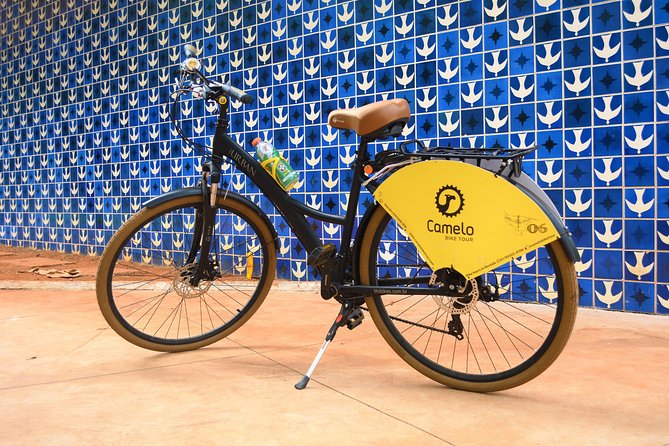
- Church details you can see, not just headlines: Athos Bulcão tiles and the Fatima church story are the kind of specifics that make the tour memorable.
- Park time with Brazilian culture references: Praça Eduardo e Mônica nods to Legião Urbana and adds a pop of music history.
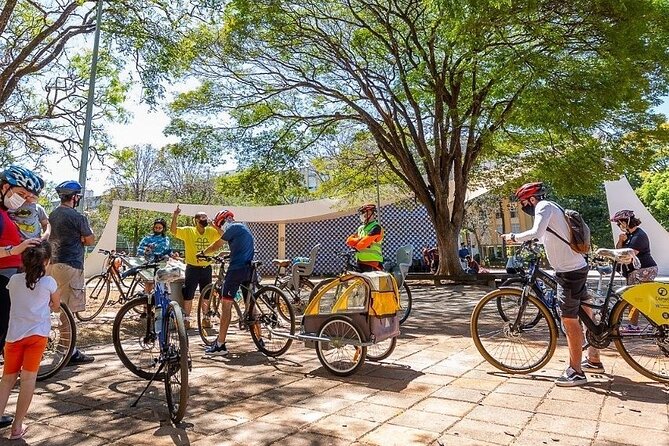
- Small-group feel: With up to 15 riders, the guide can slow down for questions.
- Family option if you plan ahead: There’s an articulated tandem passenger bike trailer for children (ask in advance).
Saddle time around Brasilia
Why this Fatima neighborhood ride makes Brasília make sense
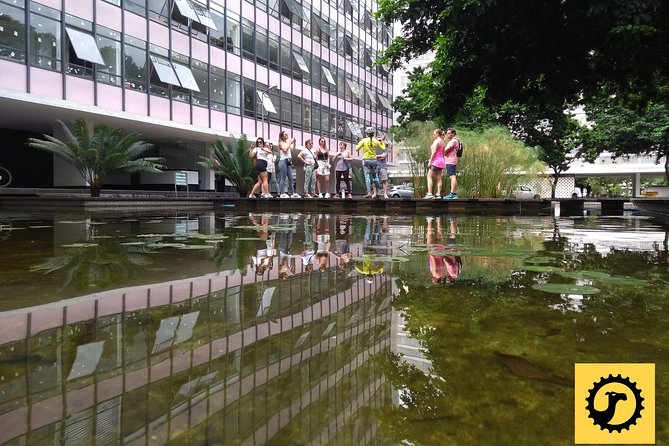
Brasília can feel abstract until you see the human-sized version of it. This tour is built around the city’s residential planning, so instead of only looking at monuments, you learn how the superquadras, churches, and cultural venues fit together as a lived-in system.
I also appreciated how the route mixes styles without turning into a checklist. You get parks and designed gardens, then you get the logic of the neighborhood blocks, then you end with two religious landmarks that reflect the city’s founding-era priorities.
There is a practical tradeoff. The stops are intentionally short, so if you want long museum-style time inside buildings, you may wish you had booked a different kind of tour.
Start at Torre de Televisão, then listen for the Choro Club connection
The ride starts at the Camelo Bike Tour base in Asa Sul, at SHS Quadra 06 Conjunto A, Bloco A, Loja 17, Centro Empresarial Brasil 21. From there, the Torre de Televisão is the first stop, with quick explanation and time for photos.
This is a smart warm-up. The TV Tower area gives you a big “this is what Brasília looks like” moment before you shift to the neighborhood scale. It also helps you get oriented because later stops make more sense when you remember what the city looks like from key reference points.
Right around this area, you also get context tied to Brazilian music culture and Oscar Niemeyer’s approach. There’s mention of a space inspired by the idealism of Reco do Bandolim, connected to the Choro Club of Brasília and its concert hall. Even if you are not a choro specialist, the point is clear: Brasília was designed with cultural identity in mind, not just roads and buildings.
Tip for your first minutes: take a slow set of photos here. Once you start moving through the superquadra areas, the visuals change fast and it helps to have one solid reference image in your camera roll.
Parque da Cidade Sarah Kubitschek, where a park feels like a plan
After you ride out, you hit Parque da Cidade Sarah Kubitschek. This park is described as one of the largest urban parks in the world, and it is credited to landscape artist Burle Marx. That matters because you are not just stopping for scenery, you’re seeing the “designed outdoors” side of Brasília.
Inside the park, the tour visits Praça Eduardo e Mônica. The square was created in honor of the music of the same name by Legião Urbana. This is the kind of cultural detail that makes the city feel local, not staged. You’re still in a modern urban landscape, but it’s grounded by a Brazilian band people actually listened to.
What I like about this park stop is that it gives you a break from architecture study without being random. It’s a breather that still fits the theme of how Brasília builds shared public space.
Short stop reality check: it’s around 25 minutes, so you won’t do a slow stroll forever. If you want longer time, plan it as a separate park visit on another day.
- Civic, Legal and Architectural Citytour
★ 4.5 · 81 reviews - Private city tour in Portuguese, English and Spanish.
★ 5.0 · 73 reviews - City Tour Brasilia
★ 5.0 · 40 reviews - Brasilia : Private Custom Tour with a Local Guide
★ 4.7 · 30 reviews
Burle Marx Garden: the small time stop that still pays off
Next up is Jardim Burle Marx. It’s brief, about 10 minutes, and ticket-free.
This stop works because you see how Burle Marx’s design language shows up not only in huge spaces, but also in smaller, more controlled garden environments. Even with limited time, you can spot the planning behind the paths and the way the garden is shaped for strolling and pausing.
If you love design, this quick garden moment is one of those “I’m glad we stopped” parts of the itinerary, because it makes you aware of patterns you might otherwise miss while cycling.
SQS 308 Superquadra model: the residential block that teaches the city
The heart of the tour is around SQS 308, a Superquadra Sul 308 Court in Asa Sul. This quadra is described as the model court for Brasília, so it is not just another neighborhood stop.
Here’s what makes it click: Lúcio Costa designed the concept of the residential scale, Burle Marx handled urbanism and landscaping, and Banco do Brasil built it. The area was inaugurated on February 19, 1962. Those names are not trivia. They are the point of your walk and ride. You’re seeing the collaboration that shaped how the superquadras function as self-contained neighborhood units.
You’ll have around 45 minutes here, which is plenty of time to slow down and look. In practice, this stop helps you understand things like why the layout feels organized, why public space matters, and why the church and cultural spots fit so naturally nearby.
Also, I found it useful that this is not only “look at buildings.” From the superquadra model area, you can get a sense of daily life nearby, including a nearby shopping area, school, and cinema, even if you are viewing them as part of the ride-by context rather than a full-on interior tour.
One caution: if you are traveling with someone who only wants famous landmarks and does not care about planning logic, this segment may feel heavier than the park stops. But if you do care, this is where the value lives.
Cultural stops at Cine Brasília and Renato Russo Hall
After the superquadra model time, the tour includes stops tied to Cine Brasília and Renato Russo Hall.
Cine Brasília is described as a venue for the Brasilia Film Festival, plus it hosts national film releases, foreign shows, thematic weeks, debates, book launches, and painting and photography exhibitions. It also features posters and other cultural activities, with exchanges and cooperation involving embassies, public schools, and universities. The goal is audience formation projects, which is a nice reminder that culture in Brasília is meant to reach beyond a small niche.
Renato Russo Hall is the other named stop here. Even if you don’t know the details behind it, the tour’s inclusion signals what this route tries to do: show you how arts and community spaces orbit the residential scale.
Because you’re on a bike tour, don’t expect this to feel like a movie-going afternoon. You’re likely getting a visual and contextual stop, a way to connect what happens inside these venues to the neighborhood you just learned about.
Igrejinha Nossa Senhora de Fátima: the church where design tells a story
Now we get to the most emotionally specific stop on the route: Igrejinha Nossa Senhora de Fátima.
This church was inaugurated in June 1958 and is described as the first church located in the residential sector. It was raised at the request of Dona Sarah Kubitschek, connected to a grace achieved in favor of the cure of her daughter. That backstory does something important. It turns the church from architecture into a personal piece of Brasília’s origin narrative.
And then the outside details hit you in the face, in a good way. Athos Bulcão’s tiles line the outer walls. They include stylized figures of the Dove of the Divine and the Star of the Nativity.
I love stops like this because you can actually see symbolism working in everyday space. It’s not a distant monument. It’s a working church area that sits inside the neighborhood plan.
This is also one of the stops with enough time to notice. You’ll have around 20 minutes, which is long enough to take photos and really look at the tile designs rather than rushing past them.
End at Santuario São João Bosco, Brasília’s patron saint stop
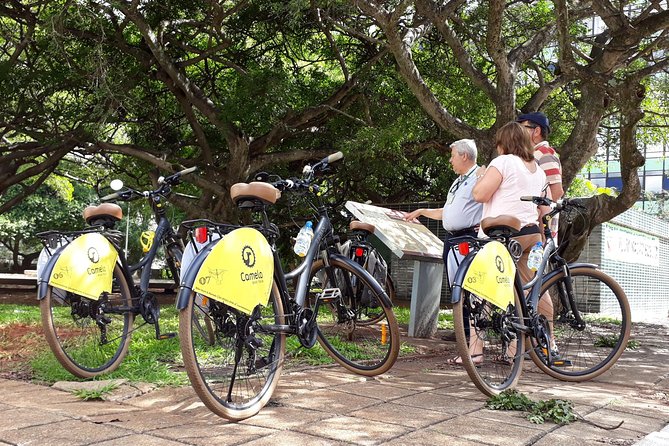
The final major stop is Santuario São João Bosco, built in honor of the patron saint of Brasília, St. John Bosco. The tour sets aside about 10 minutes here.
Short stop, but it matters because it closes the loop on the theme. You started with a structure tied to how the city presents itself from a distance, then you moved through neighborhoods and public spaces, and you finish with a religious landmark that is explicitly framed as part of Brasília’s identity.
If you’re the type who wants a clear ending point that feels meaningful, this stop gives you that. It’s not just “another church.” It’s presented as a key patron-saint marker for the whole city.
Price, pacing, and what you should bring
At $62.73 for about 3 hours, this tour is priced in a way that makes sense when you think about what you get: multiple planned stops, guided explanations, a small group size (max 15), and free admissions at the places listed.
You’re not paying mostly for a bus ride. You’re paying for access to context, plus the benefit of seeing things in the right order. And the order is not random. It’s organized around modern Brasília planning, then tied to cultural and religious anchors.
Pacing is another value point. The schedule is built from short segments, which helps you stay attentive. You get photo time, brief garden time, and longer neighborhood time where you can process what you’re seeing.
What you should bring is simple:
- Sun protection, because the “photo and walk” style stops will be brighter than you expect.
- Comfortable cycling clothes and shoes.
- A camera, because tile work and designed squares are the kind of details that reward close shots.
Also, if you’re thinking family-friendly, plan ahead. There is an articulated tandem passenger trailer/bike for children from 4 to 10/12 years old, but you need to ask in advance.
Who should book this tour, and who might skip it
I recommend this tour if you want Brasília to feel understandable instead of intimidating. If you like architecture, city planning, public space design, or you simply enjoy learning why places are where they are, this hits the sweet spot.
You’ll also like it if you want a mix of parks and neighborhood life. Praça Eduardo e Mônica and the Burle Marx garden breaks up the heavier planning details so the day doesn’t turn into pure theory.
I’d say skip or swap to a different tour type if you need lots of indoor time, or if you want long, slow museum-style visits. This one is about seeing the city in motion, then stopping just long enough to make it meaningful.
Should you book the Fatima neighborhood and church unit bike tour?
Yes, if your travel style matches a guided, small-group ride with a clear theme. For the money, the mix of free stops, the focus on the residential planning model around SQS 308, and the close look at Igrejinha Nossa Senhora de Fátima tiles make it feel like more than a casual sightseeing bike loop.
Book it especially if you’ll be in Brasília with limited time and you want your first impression to include how people live in the superquadras, not only what the city looks like from the outside.
FAQ
How long is the Fatima Neighborhood and Church Unit Bike Tour?
It runs for about 3 hours.
How much does the tour cost?
The price is $62.73 per person.
Where does the tour start?
The meeting point is Camelo Bike Tour Brasília at SHS Quadra 06 Conjunto A, Bloco A, Loja 17, Centro Empresarial Brasil 21, Asa Sul, Brasília, DF 70316-102, Brazil.
Is admission required for the stops?
The listed stops include free admissions, with ticket entry noted as free at each stop.
What stops are included on the route?
The tour includes Torre de Televisão, Parque da Cidade Sarah Kubitschek (including Praça Eduardo e Mônica), Jardim Burle Marx, SQS 308 Quadra modelo, Cine Brasília, Renato Russo Hall, Igrejinha Nossa Senhora de Fátima, and Santuario São João Bosco.
Is the tour family-friendly?
It can be. There is an articulated tandem passenger trailer/bike for children from 4 to 10/12 years old, but you need to ask in advance.
What if the weather is poor?
The tour requires good weather. If it’s canceled due to poor weather, you’ll be offered a different date or a full refund. Also, the cancellation policy allows free cancellation up to 24 hours before the experience’s start time.
Everything Else We Rated in Brasilia
More Tour Reviews in Brasilia
More Tour Reviews in Brasilia
Latest from our Brasilia notebook
- Brasilia : Private Custom Tour with a Local Guide★ 4.7 · 30 reviews
- Pirenópolis, the charming baroque city inaugurated in 1723 in the gold cycle★ 4.5 · 40 reviews
- City Tour Brasilia★ 5.0 · 40 reviews
- Bike Tour of the 4 Scales of Lucio★ 5.0 · 49 reviews
- Fatima Neighborhood and Church Unit Bike Tour★ 5.0 · 58 reviews
- Civic, Legal and Architectural Citytour★ 4.5 · 81 reviews
Cycling Tours, compared.
 ★ 4.9Downtown Historical Bike TourFrom $85191 reviews
 ★ 4.5Guided Bike Tours in Small GroupsFrom $36133 reviews
 ★ 5.0Street Art and Park Bike TourFrom $8556 reviews
 ★ 5.0Half Day Private E-Bike Tour in RioFrom $12050 reviews
 ★ 5.0Bike Tour of the 4 Scales of LucioFrom $9749 reviews
 ★ 5.0Private Bike Tour in ParatyFrom $6343 reviews
 ★ 5.0Small-Group Urban Bike Tour in Rio de JaneiroFrom $3941 reviews
 ★ 4.5Pirenópolis, the charming baroque city inaugurated in 1723 in the gold cycleFrom $22040 reviews
Browse the lists this tour appears in