
REVIEW · TIJUCA FOREST TOURS
Hiking in the Tijuca Forest : Waterfalls and Caves
Rio hides a rainforest adventure near downtown. This guided walk through Tijuca National Park mixes iconic waterfalls, a Bat Cave stop, wildlife-spotting, and sweeping views over Rio. I also like that you start with panoramic city overlooks and end with more of them, so the day feels like more than just hiking. One consideration: parts of the route can feel rougher than a city stroll, and the waterfall area can mean bugs, so pack for comfort.
You’ll be picked up in an air-conditioned vehicle from the South Zone (Copacabana, Ipanema, Leblon, San Conrado). Then you settle into a half-day rhythm that is paced for light-to-moderate hiking, usually finishing early enough to still enjoy the rest of your afternoon.
In This Review
- Key highlights you should know
- Tijuca Forest in a half-day: what this hike is really like
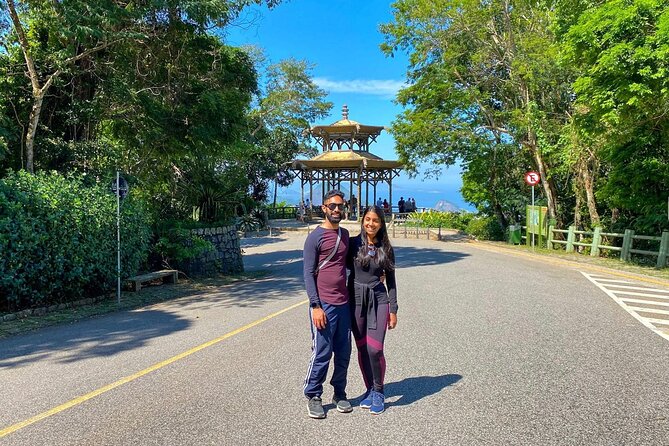
- Starting at Mirante das Canoas: São Conrado views first
- Taunay Waterfall and the Cascatinha stops: cool air, big water
- Your guided Atlantic Rainforest hike: spotting animals and learning fast
- The Bat Cave stop and natural viewpoints: a break from the usual
- Emperor’s Table and the Chinese View Lookout: panoramic payoff
- Price and value: what $62 really covers
- Who this Tijuca waterfalls and caves tour is best for
- Should you book the Tijuca waterfalls and caves hike?
Key highlights you should know
- World-class urban rainforest, right in Rio: You’re in the world’s largest urban rainforest area with real trail time.
- Taunay Waterfall plus forest cascades: You get both a park icon and smaller cooling-off spots.
- Bat Cave stop: This adds a fun, different vibe beyond the typical waterfall hike.
- Small groups (max 15): Easier to hear your guide and move as a unit on narrow paths.
- Big viewpoint finishes: Emperor’s Table and the Chinese View Lookout give you the money shot over Rio.
Deeper into the Tijuca, trip by trip
Tijuca Forest in a half-day: what this hike is really like
This tour is built for people who want nature without losing the plot of Rio. In roughly five hours, you get waterfalls, caves, and viewpoints, plus a guided walk through Atlantic rainforest. It is not a long trek day, but it is also not a flat, easy sightseeing loop.
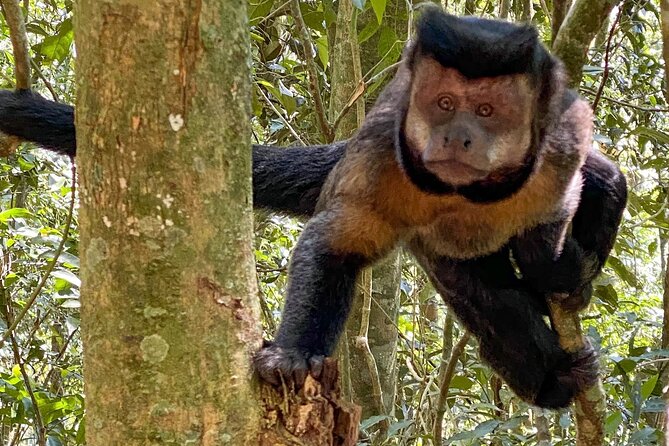
The best part is the variety. You start above the city, then step into the forest where the air feels cooler and the scenery changes fast. Along the trail, your guide points out plants and animals you might otherwise miss. In many groups, that includes monkeys, marmosets, toucans, and coatis. Sometimes you may even get a sloth sighting, but wildlife is wildlife, so go in ready to appreciate the forest even if animals stay quiet.
Also, the trail can be primitive in places. One guide’s group tracking came in at about 4.5 miles for the day, and there was light rock climbing described as easy by a participant. Translation: you should be comfortable walking on uneven ground, and you should expect some steps that feel more like a hike than a stroll.
Starting at Mirante das Canoas: São Conrado views first
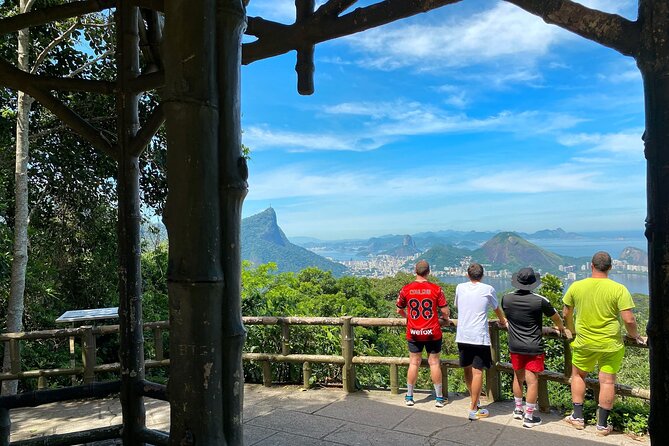
The day kicks off at Mirante das Canoas, a viewpoint that gives you wide views over São Conrado. I like this setup because it gives you a fast sense of scale for Rio. Before you even hit the forest, you get the geography lesson, ocean nearby, neighborhoods spreading out, and mountains shaping the city.
Practically, this also helps you warm up. A viewpoint start means you’re not instantly committing to a long stretch of downhill or uphill. It is a gentle intro while your guide sets context for where you’re going inside Tijuca National Park.
If you’re the type who likes photos, this is where you can grab the first batch. But even if you skip pictures, the view helps you understand what the later overlooks are showing you.
Taunay Waterfall and the Cascatinha stops: cool air, big water
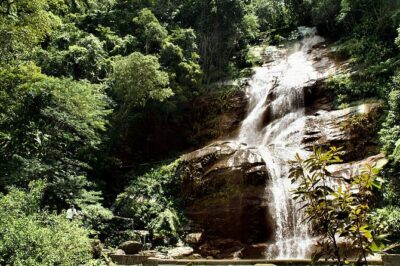
From the city overlook, the tour moves into the park at Parque Nacional da Tijuca and toward the waterfall stops. The highlight is Cascatinha Taunay, described as the park’s largest waterfall and one of its most iconic landmarks.
This is where the tour earns its name. Water noise changes the whole experience. The forest feels denser, your senses dial in, and it is the part of the day that most people remember even months later. You also get time to cool off around forest cascades.
There is one real consideration here. A review from the group included a warning about black flies near the waterfall, especially when water washed out repellent. If you’re sensitive to bites, plan for insect protection. I’d also wear clothing that covers enough so you feel comfortable spending a bit of time close to water.
More falls worth the drive
- Rio: Tijuca Forest & Horto Waterfalls Circuit Tour
★ 4.7 · 99 reviews - Hiking in the Tijuca Forest : Waterfalls and Caves
★ 5.0 · 72 reviews - Garganta do Céu and Waterfall hike in Pedra da Gávea
★ 5.0 · 71 reviews - Tijuca Forest Hike – Waterfalls & Caves, Nature & Wild Life!
★ 5.0 · 51 reviews - Rio de Janeiro: Tijuca Forest Waterfall of Souls Hike
★ 4.5 · 24 reviews
Your guided Atlantic Rainforest hike: spotting animals and learning fast
Once you’re walking, the tour becomes what you came for: a guided nature experience in the Atlantic Rainforest. This is where your guide matters most.
Multiple guides have been praised for a mix of real enthusiasm and practical storytelling. Names you’ll likely hear include Eduardo, Victor, Julio, Yun, and Eric, with some groups also mentioning a friendly assistant named Larissa. What they all seem to have in common is simple: they point things out. That might be how to identify a tree, what certain animals are likely to be doing, or how the forest ecosystem ties back to Rio’s history.
As you hike, you may see:
- Monkeys up in the branches
- Marmosets
- Toucans
- Coatis
Again, sightings are never guaranteed. But the route is designed to maximize chances without turning into a frantic animal safari. Even if you see nothing, the guided walk helps you notice the forest texture, bird calls, and the way light filters through the canopy.
Difficulty-wise, this fits people looking for a light-to-moderate hike. Most travelers can participate, which suggests the pace is thoughtful, not punishing. Just keep your shoes solid, because humid trails can be slippery and the ground can be uneven.
The Bat Cave stop and natural viewpoints: a break from the usual
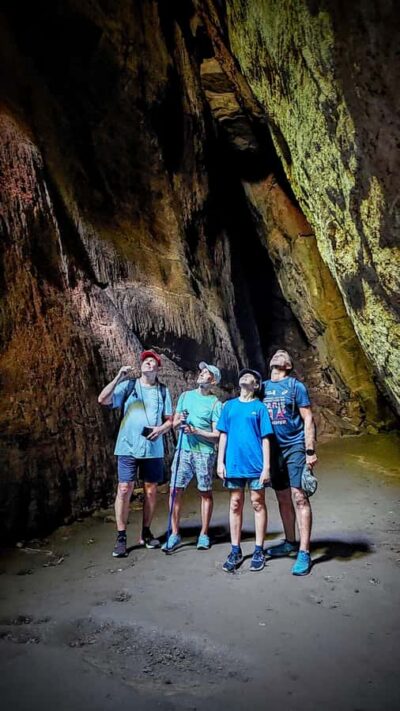
One of the tour’s standout quirks is the Bat Cave stop. It changes the mood from waterfall sound to something more mysterious and still. Even if you do not see bats, the cave adds that sense of exploring a real part of the park, not just moving from viewpoint to viewpoint.
Between the cave and other natural viewpoints, the route keeps interrupting the “just walk” feeling. Those short pauses matter. They give you time to catch your breath, take a few photos, and let your guide translate what you’re seeing into plain language.
If you like guided moments where you’re not just watching, these stops are a big plus. They also make the day feel longer in a good way, even though the whole thing stays around five hours.
Emperor’s Table and the Chinese View Lookout: panoramic payoff

After hours of forest time, the tour ends with big viewpoints. First comes the historic Emperor’s Table, then the famous Chinese View Lookout.
This finish is smart. The forest gives you the sound of nature, the viewpoints give you the scale of the city. You can look out over Rio’s neighborhoods, mountains, and coastline, and suddenly everything you saw at the start makes more sense. It is also a great moment to compare what you remember from the morning overlook with where you are now, deeper into the park’s perspective.
In short, you do not just leave the forest and call it a day. You land the plane with the best wide-angle views. That matters if you have limited time and want one activity that ties together the city and the jungle.
Price and value: what $62 really covers
At $62 per person for about five hours, this is not a bargain deal. But it is also not priced like a luxury private experience. For the value, the big factors are what’s included:
Included:
- Experienced guide focused on natural attractions
- Air-conditioned round-trip transportation from your hotel in parts of the South Zone (Copacabana, Ipanema, Leblon, San Conrado)
- Tijuca National Park entrance fee
- Multilingual tour
- Hotel pickup and drop-off tied to your meeting point area
Not included:
- Snacks/food and drinks
- Extra charges
Here is how I’d think about the math: you’re paying for a guide who can interpret the forest, plus transport that saves you from figuring out timing on your own. Entrance fees are often the kind of cost people forget, so having them covered makes the price feel cleaner.
Just budget for your own water and snacks. And bring what you need for the waterfall part, like insect protection and comfortable clothing. One review noted that repellent may get less effective around water, so plan to reapply or use something that works better in wet conditions.
Who this Tijuca waterfalls and caves tour is best for
This tour fits best if you want Rio’s signature nature without committing to an all-day hike. It is a good match for people who:
- Like guided experiences where someone helps you notice plants and wildlife
- Want waterfalls plus one unusual stop (the Bat Cave)
- Prefer a small group setting with a max of 15 travelers
- Are staying in the South Zone and want easy hotel pickup
You might also enjoy it if you already did the classic Rio highlights and want something that feels different from beaches and city drives. Multiple participants described it as a morning highlight, and some groups reported being back at their hotel by early afternoon.
If you hate uneven ground or bugs, you’ll need to plan. This is a forest hike, not a paved promenade. But with proper footwear, insect protection, and a realistic expectation that the trail is sometimes rough, it is very doable for most people.
Should you book the Tijuca waterfalls and caves hike?
Yes, I’d book it if you want one focused half-day that connects Taunay Waterfall, cave curiosity, and panoramic Rio viewpoints, all with hotel pickup. The small-group size, park entrance included, and the quality of guides like Eduardo, Victor, Julio, Yun, and Eric make it feel worth the money for many visitors.
I would pause and consider booking something else if you are very sensitive to insect bites, dislike uneven trail surfaces, or you need a fully low-impact experience. In that case, you can still do Tijuca, but you may want a gentler route.
If you’re flexible and you want an authentic slice of Rio beyond the main checklist, this is a strong choice. The forest part is the point, and the viewpoint finish is the payoff.
Waterfalls Worth the Drive
- Rio: Tijuca Forest Small Group Hike to Caves and Waterfalls
- Rio: Tijuca Forest & Horto Waterfalls Circuit Tour
- Garganta do Céu and Waterfall hike in Pedra da Gávea
- Tijuca Forest Hike – Waterfalls & Caves, Nature & Wild Life!
- Tijuca Forest w/ Chinese View,cascatinha Taunay,horto waterfall and parque laje
Still in the Tijuca? Keep Going
More Tour Reviews in Rio de Janeiro
Latest from our Rio de Janeiro notebook
- Unforgettable Boat Party★ 5.0 · 3 reviews
- Tijuca National Park and all its wonders!★ 5.0 · 3 reviews
- Rocinha Jeep Tour: A Journey into the Soul of the Favela!★ 3.8 · 3 reviews
- Rio: Favela Walking Tour of Rocinha with a Resident Guide★ 4.7 · 3 reviews
- Rio: Private, Custom express, Main Attractions!★ 5.0 · 3 reviews
- Rio: Museum of Tomorrow, Yup Star & Olympic Boulevard★ 3.7 · 3 reviews
Tijuca Forest Tours, compared.
 ★ 4.7Christ, Selaron Steps, and Tijuca Park TourFrom $68857 reviews
 ★ 4.3Guided Jeep Tour through Tijuca RainforestFrom $90740 reviews
 ★ 4.0Jeep Adventure: Guided Tour through Tijuca Rain ForestFrom $88554 reviews
 ★ 4.9Tijuca Forest Small Group Hike to Caves and WaterfallsFrom $69536 reviews
 ★ 4.5Half-Day Jeep Tour at Floresta da TijucaFrom $60353 reviews
 ★ 4.34-Hour Botanical Garden & Tijuca Forest TourFrom $51275 reviews
 ★ 4.5Rio de Janeiro Botanical Garden & Tijuca Forest TourFrom $55168 reviews
 ★ 4.9Tijuca Forest Challenge Hike Full-Day TripFrom $86163 reviews
Browse the lists this tour appears in