
REVIEW · TIJUCA FOREST TOURS
Rio: Tijuca Forest Small Group Hike to Caves and Waterfalls
Rainforest hiking right next to Rio. Tijuca Forest feels worlds away, yet it’s only a half-day walk with major payoff. You get waterfalls, a real hike on rough trails, and stop after stop that connects the forest to Rio’s past.
I especially love the route design: a 6.2 km moderate hike with about 448 m of elevation gain, done at a steady, manageable pace. I also love the guides, from people like Vinnie and Pietro, who turn plants, geology, and history into something you can actually remember while you walk.
One thing to think about: if you’re mainly hunting animals, sightings can be hit or miss. And the transport can feel a little cramped for taller folks, even though the ride is short.
In This Review
- Key highlights you’ll feel in the moment
- Tijuca Forest, the hike that turns Rio into a story
- Pickup and group size, what to expect before you even hike
- The first waterfall payoff: Cascatinha Taunay and the park’s big signals
- Mayrink Chapel, the coffee-plantation era, and why the past matters here
- Hanging bridge moments: Cova da Onça and the gneiss-cave route
- Old slave cemetery in the Eucalyptus Forest, a serious stop in a lively day
- Baronesa Cascade: the waterfall shower that makes the effort worth it
- The walk-back circuit: ruins, viewpoints, and Wallace Fountain
- How hard is it, really? (6.2 km, 448 m, and rainforest terrain)
- Guide quality is the product here, and the guide names show it
- Price and value: why $69 can make sense in Rio
- What to bring for a comfortable, safe hike
- Who should book this hike, and who should think twice
- Should you book Rio’s Tijuca Forest Small Group Hike to Caves and Waterfalls?
- FAQ
- What is the hike distance and elevation gain?
- How long is the full tour, and how much time is actually hiking?
- Is this walk considered moderate?
- Is hotel pickup included, and from where?
- What language will the guide speak?
- Is food and water included?
- What should I bring to hike in Tijuca Forest?
- Are there restrictions on bags, pets, or alcohol?
- Do I need to share passport details?
- Is the tour suitable for wheelchair users or people with heart problems?
- Can I cancel for a refund?
Key highlights you’ll feel in the moment
- Small-group energy that makes it easier to ask questions and keep a comfortable pace
- Cascatinha Taunay plus the end-of-walk waterfall shower moment
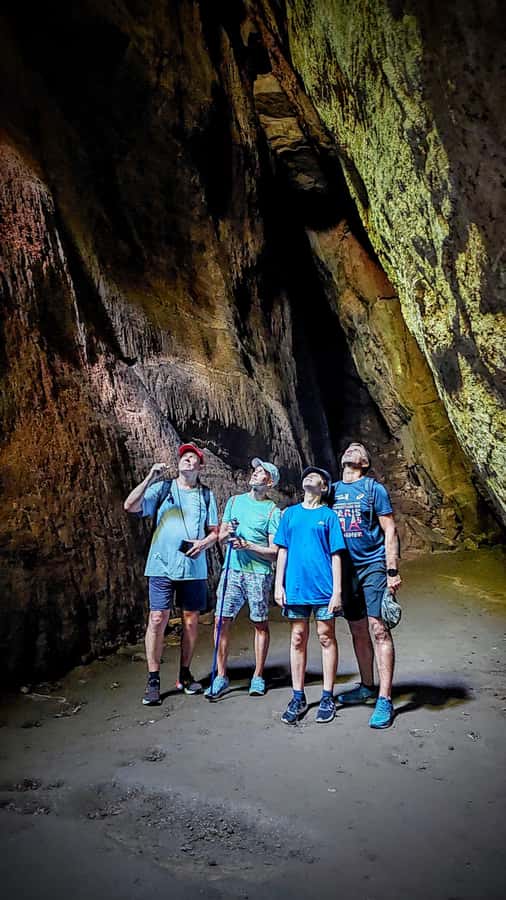
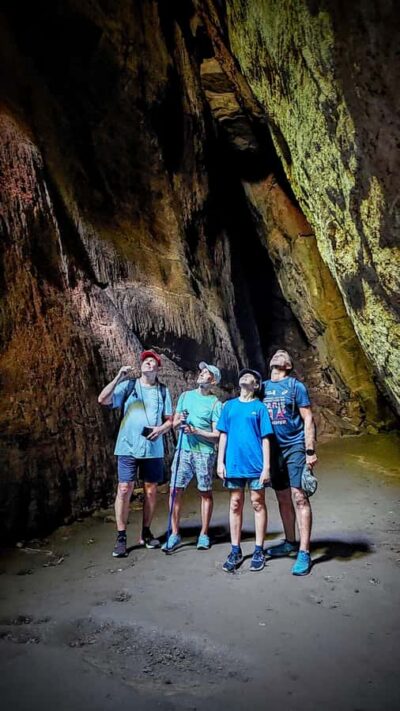
- Caves and gneiss formations, including Morcego’s Grotto (Cova da Onça area and the bat cave visit)
- 19th-century coffee plantation leftovers, like Mayrink Chapel and old ruins
- Big nature and culture stops packed into a 6-hour day without rushing you through everything
Deeper into the Tijuca, trip by trip
Tijuca Forest, the hike that turns Rio into a story
Tijuca Forest National Park is one of the easiest ways to experience the real Rio beyond the beaches. Even though you’re in the city region, the air gets cooler as you gain elevation, and the forest starts doing its quiet magic on your attention.
This tour works because it’s not just a “walk to a waterfall.” It’s a timed circuit that mixes physical effort with eye-opening context. As you move between trail segments and short scenic pauses, you’re learning why the park exists, how it was shaped by human use like coffee plantations, and how it later became one of the world’s best-known replanted urban forests.
If you want a day that feels active but still thoughtful, this is a smart match. The moderate hike is long enough to matter, but short enough to stay enjoyable.
Pickup and group size, what to expect before you even hike
The big practical win here is hotel pickup from many places in Rio’s South Zone. This includes areas like Copacabana, Ipanema, Leblon, Leme, Flamengo, Glória, Catete, and Santa Teresa, plus Praia de Botafogo. If your exact hotel is outside the pickup zone, you’ll be given a nearby meeting point.
You also benefit from a small group setup. Many recent outings have been around five people, which is a big difference from the crowded, zip-through-the-views style of some bus tours. In a small group, the guide can slow down at the right plants, make sure everyone sees the key spots, and adjust pace when the trail turns steep or slick.
Do note the vehicle fit. One traveler flagged that the van can feel cramped for taller people. The ride itself is short, but it’s worth knowing if you’re tall or need extra legroom.
The first waterfall payoff: Cascatinha Taunay and the park’s big signals
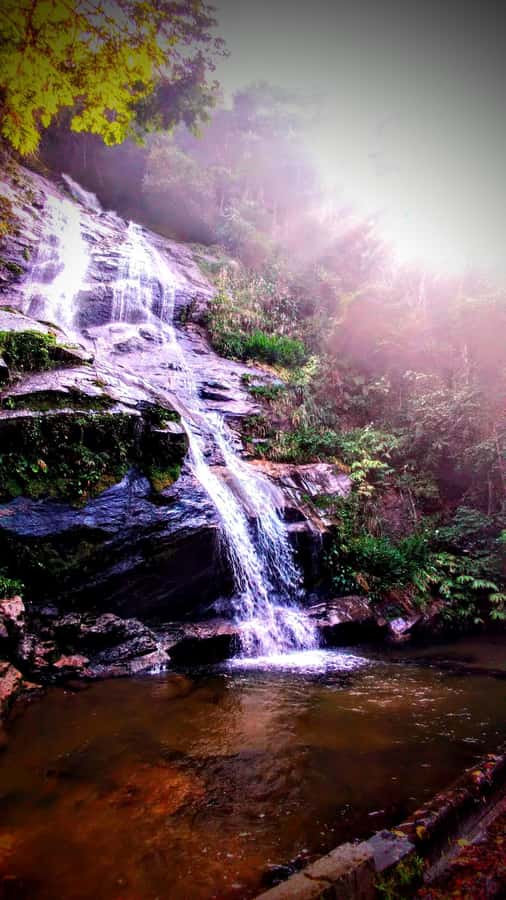
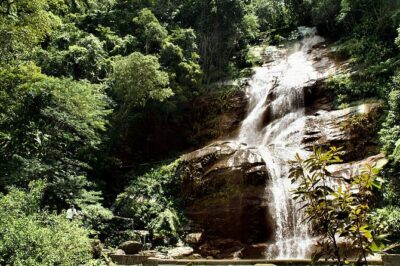
Right after you start settling into the day, you’ll get to Cascatinha Taunay, listed as the largest waterfall in Tijuca Forest National Park. This is one of those stops that immediately teaches you the scale of the rainforest. Even with no massive climbing yet, you’re already seeing how water power shapes the forest.
Then the tour keeps stacking context. You get guided time in the park, plus a photo stop at Capela Mayrink from 1850. That chapel is more than an aesthetic pause. It hints at the human era when this area was used for coffee, before the rainforest became the focus again.
What I like about starting with these kinds of stops is that you understand what you’re looking at before the hike gets more technical. You’re not guessing. You’re being led.
More falls worth the drive
- Rio: Tijuca Forest & Horto Waterfalls Circuit Tour
★ 4.7 · 99 reviews - Hiking in the Tijuca Forest : Waterfalls and Caves
★ 5.0 · 72 reviews - Garganta do Céu and Waterfall hike in Pedra da Gávea
★ 5.0 · 71 reviews - Tijuca Forest Hike – Waterfalls & Caves, Nature & Wild Life!
★ 5.0 · 51 reviews - Tijuca Forest w/ Chinese View,cascatinha Taunay,horto waterfall and parque laje
★ 4.5 · 29 reviews
Mayrink Chapel, the coffee-plantation era, and why the past matters here

The park’s story is one of the reasons this tour feels more rewarding than a simple scenic walk. Tijuca Forest wasn’t always protected the way it is now. The area was occupied by coffee plantations in the 19th century, and many of the route stops reflect that timeline.
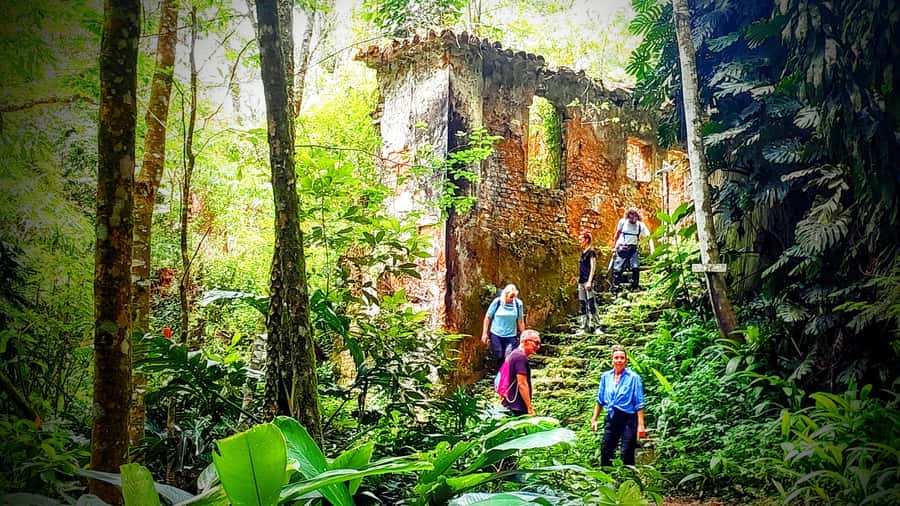
The tour passes key remnants tied to that history, including the Mayrink Chapel. It’s the kind of building that makes you picture the people who once lived and worked here. That matters because you start noticing how the forest recovered and how the park’s human history shaped where trails and viewpoints ended up.
Also, you’ll move through spots where the guide can explain the “why” behind the forest’s present-day design. You’re not only collecting photos. You’re learning how Rio rewove itself back into nature.
Hanging bridge moments: Cova da Onça and the gneiss-cave route
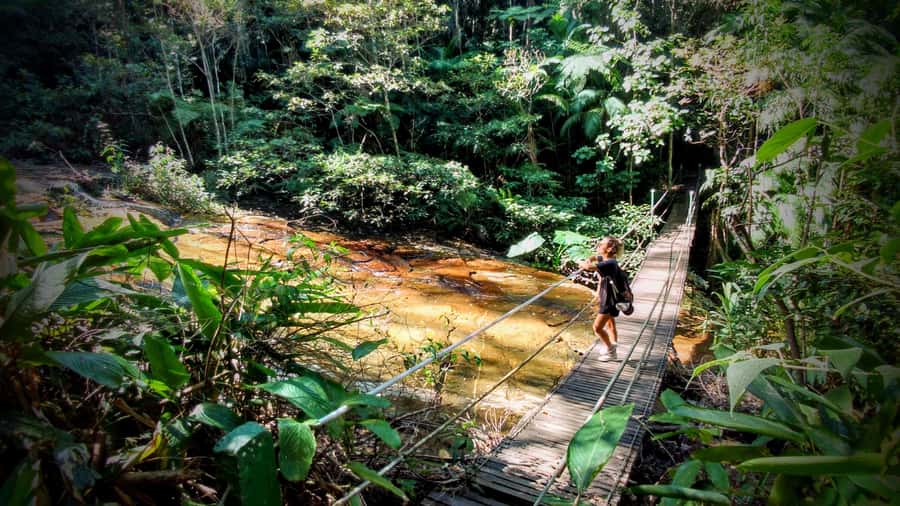
As the circuit continues, you’ll hit Cova da Onça Suspension Bridge, followed by short guided visits and trail segments. The bridge adds a little drama without being a theme-park stunt. It’s a neat change of pace from purely waterfall-and-forest visuals.
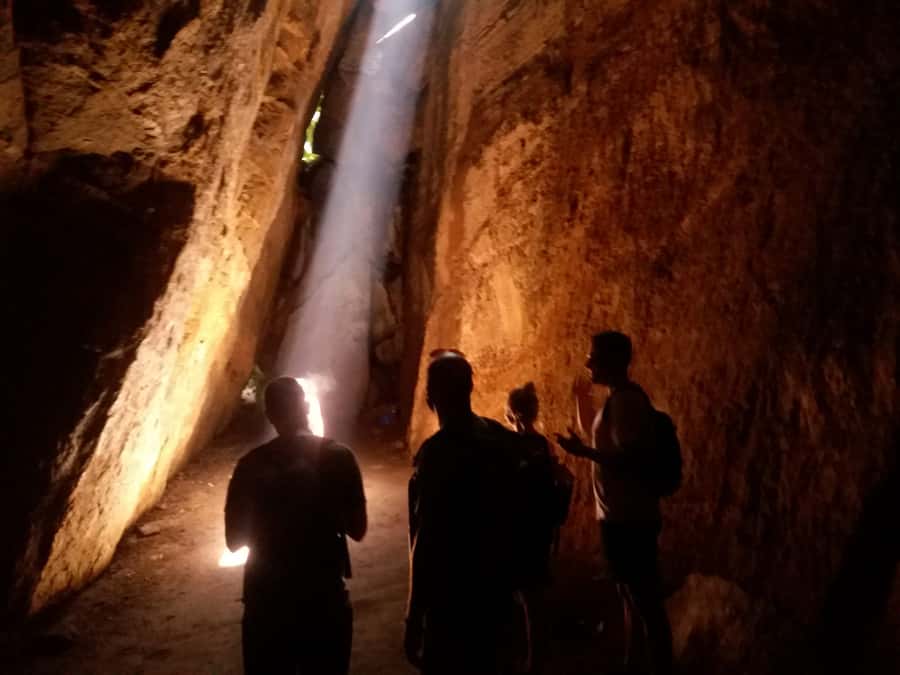
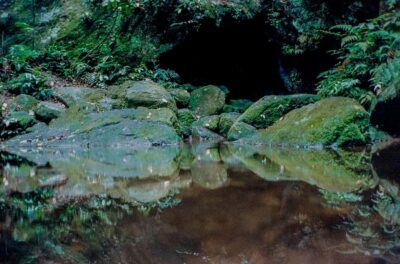
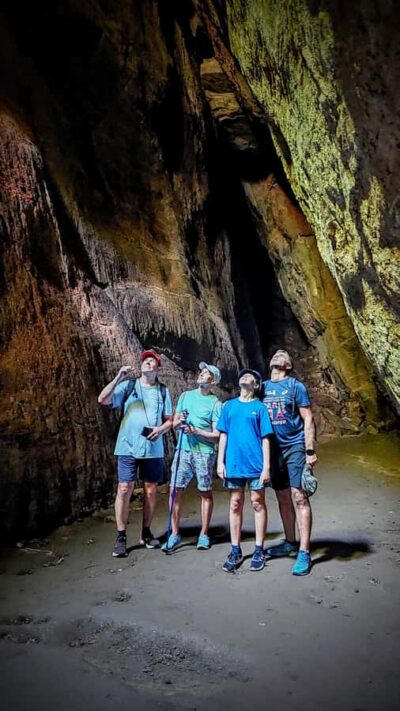
Then comes the cave-focused part of the experience, where the tour leans into geology. You’ll visit Morcego’s Grotto, described as the largest gneiss cave in Brazil. If you like the “how did this form” side of travel, this is the part that will click.
A quick reality check: you might not see bats during your bat cave visit, depending on seasonal timing and whether they’re active. One traveler noted the bats were hibernating, and the guide chose not to disturb them. That’s actually the right attitude. The cave is the point, the bats are wild life you should respect from a distance.
This section is also where the hike transitions from pretty into properly adventurous. Trails can be rough underfoot, and you’ll want sure footing.
Old slave cemetery in the Eucalyptus Forest, a serious stop in a lively day
Some tours keep history light. This one doesn’t. It includes time in the Eucalyptus Forest, where there’s mention of an old slave cemetery.
I appreciate that this stop is included in a nature hike, not saved for a separate museum day. It’s a reminder that “rainforest walking” doesn’t mean only greenery. It means layers of Brazil’s real past. A good guide helps you hold both ideas at once, nature and history, without making either feel like an afterthought.
If you’re the kind of person who likes context, this will make the walk feel heavier in a good way. If you prefer purely escapist nature time, you may still be glad it’s there. It gives the day meaning beyond scenery.
Baronesa Cascade: the waterfall shower that makes the effort worth it
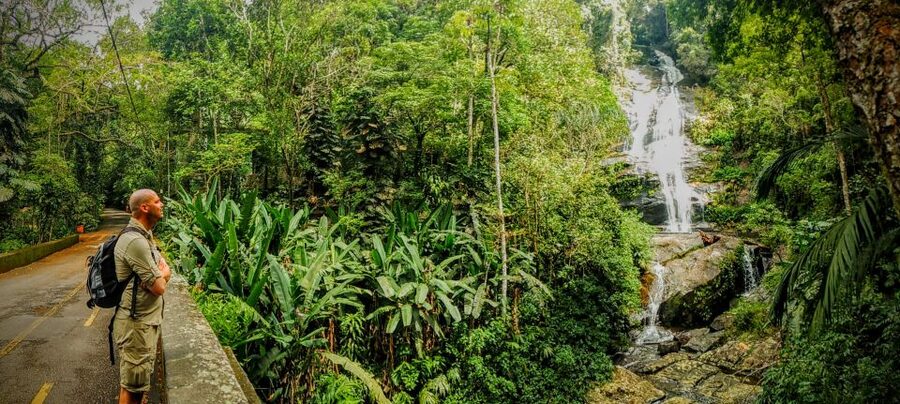
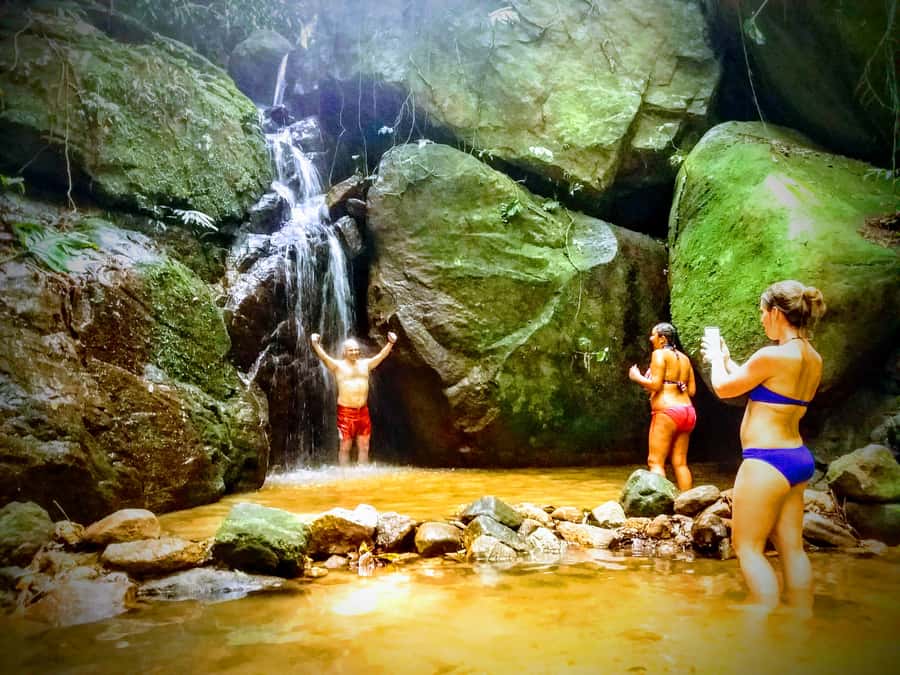
The highlight that most people talk about is the cool-down at the end: Cascata da Baronesa (Baronesa Cascade). You’ll do a guided visit and hike segment to get there, and then you get the chance for a waterfall shower.
This is a rare feature. Many hikes in Rio end with a viewpoint. Here, the water actually becomes part of the experience. On a humid day, it’s a relief, and it’s also a fun reset for your energy before the return path.
One detail worth planning around: bring clothes and shoes you’re okay getting damp. You’ll likely be wet at least in parts, especially if you want to get close enough for the full shower effect.
And yes, people say this is toward the end of the hike loop, when your body has already done its work. That timing is why it feels like a reward instead of an early gimmick.
The walk-back circuit: ruins, viewpoints, and Wallace Fountain
On your way back, the tour doesn’t just repeat the same trail. You pass additional story stops and scenic pauses that help break up fatigue.
You’ll see the former residence of Barão d’Escragnolle, a past manager of the park, now part of the area connected with The Esquilos restaurant. That helps you picture the park’s management history, not just the plantations before it.
You’ll also encounter Wallace Fountain, a gift from the English philanthropist Richard Wallace, produced in France in 1870. The sculpture symbolism is part of the stop: it represents goodness, charity, sobriety, and simplicity. It’s a moment where Rio’s global connections show up even inside a rainforest tour.
Then you’ll get additional photo stops and viewpoints along the way, including a stop at Mirante da Palmira with scenic views. You don’t need to be a hardcore hiker to appreciate these moments. They’re the visual punctuation at the end of a long paragraph.
How hard is it, really? (6.2 km, 448 m, and rainforest terrain)
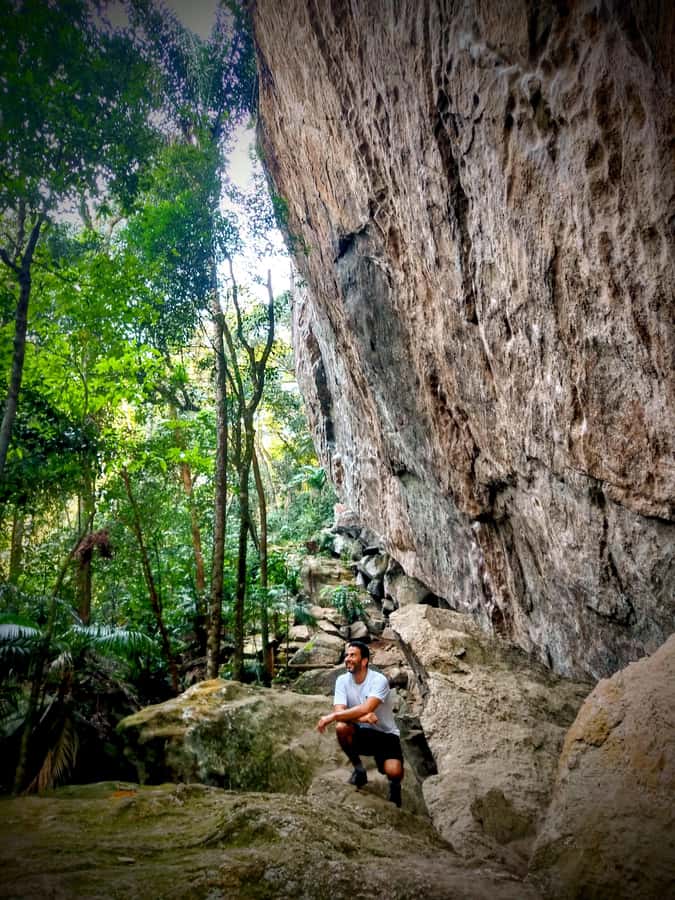
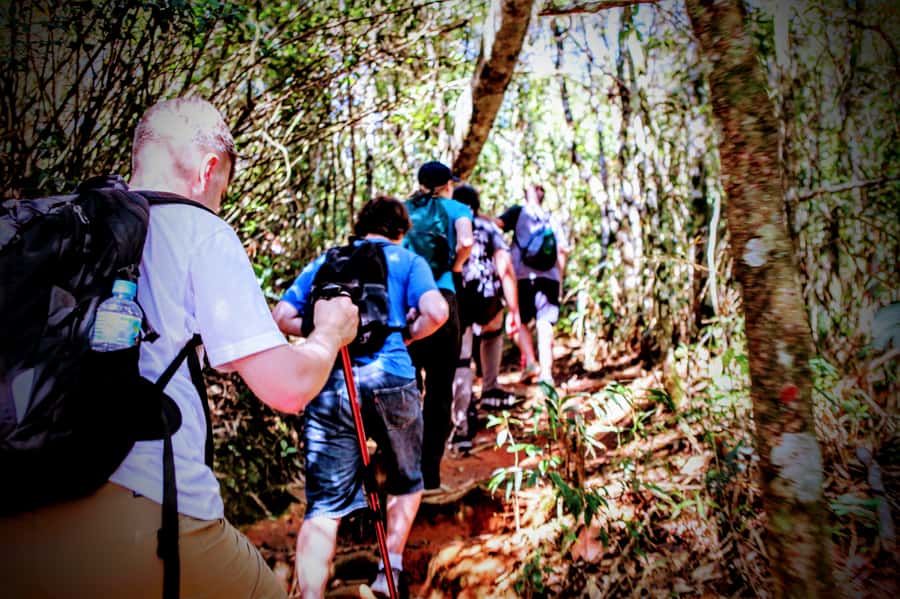
The hike is rated moderate, with 6.2 km total distance and a stated climb of 448 m. The active hiking time is about 2.5 to 3 hours, while the full day runs around 6 hours including transfers and stops.
What that means for you: you’ll be walking uphill and downhill on rainforest rough terrain. It’s not a smooth nature path the whole way. If you can handle stairs, uneven ground, and short steep sections, you’ll likely be fine.
But do not underestimate heat and humidity. One traveler mentioned the hike was harder than expected, with a steep section that pushed them. The same traveler also said it was manageable with their group and the guide keeping pace.
So I’d plan like this:
- wear sports shoes with solid grip
- pack water and snacks
- expect at least one moment where you breathe hard and then recover
Guide quality is the product here, and the guide names show it
You’re paying for more than transport and a trail. The guides are repeatedly the strongest part of the day, and it shows in the names people mention: Riccardo, Vinnie, Pietro, Tito, Renata, Luiza, and others.
What gets praised is not just facts. It’s the way guides connect details into a coherent story and keep people included. One traveler described a guide who was especially attentive to everyone’s comfort and pace. Another noted how the guide made the day feel safe, even after rain.
In practical terms, this matters because rainforest hiking is where good interpretation saves your attention. Without a guide, you can still enjoy trees and waterfalls. With a guide, you start noticing plants you would never name and geological clues you would miss completely.
Price and value: why $69 can make sense in Rio
At $69 per person for a half-day style experience, the value mainly comes from three things that are hard to replicate alone: a bilingual guide, a packed route of specific stops, and transportation from designated hotels.
Most DIY plans fall apart at the edges. You either spend time figuring out how to access trail points, or you join a generic tour that sees fewer sites in one circuit. Here, the day is structured so you can hit big moments like the largest waterfall in the park, a cave visit, and the Baronesa waterfall shower within a reasonable time window.
You also get insurance included, which isn’t glamorous but is useful when you’re hiking rough ground. The cost isn’t only paying for the walk, it’s paying for organization plus interpretation plus access.
What to bring for a comfortable, safe hike
The essentials are straightforward, and they’re the difference between enjoying it and rushing through it.
Bring:
- food and snacks
- water and drinks (not provided)
- sunscreen
- insect repellent
- sports shoes and sportswear
- a daypack
And remember the rules: no pets, no large bags or luggage, and no bare feet. Alcohol and drugs are also not allowed.
One more small note from real experience: if rain happens, ask your guide what’s available and wear gear you can tolerate getting wet. At least one guide, Tito, had ponchos when weather turned.
Who should book this hike, and who should think twice
This tour is best for you if you:
- want a rainforest hike that’s moderate but real
- like history tied directly to the natural setting, including the coffee-plantation era and chapel ruins
- want a strong guide-led experience rather than self-guided wandering
- can handle uneven ground and a few steeper sections
It might not be for you if:
- you have heart problems or want a fully gentle walk
- you need wheelchair accessibility
- you’re only interested in seeing animals, because wildlife sightings vary day to day and are never guaranteed
Should you book Rio’s Tijuca Forest Small Group Hike to Caves and Waterfalls?
I’d book it if you want one day in Rio that feels like a real escape, but with enough structure that you don’t waste time. The combination of Cascatinha Taunay, the cave circuit, and the Baronesa waterfall shower gives you both effort and payoff.
If you’re deciding between this and a pure viewpoint day, choose this when your priority is connection: plants, geology, and the human story behind the park. And if you’re worried about animals, shift your expectations to the forest itself. This tour is built around what’s always there, trees, water, rock, and a guide who helps you see it clearly.
FAQ
What is the hike distance and elevation gain?
The hike is 6.2 km (3.8 mi) with an elevation gain of 448 m (1,469 ft).
How long is the full tour, and how much time is actually hiking?
The total duration is 6 hours. The hiking portion is about 2.5 to 3 hours.
Is this walk considered moderate?
Yes. It’s described as a moderate hike and requires good fitness for rough rainforest terrain with up and down sections.
Is hotel pickup included, and from where?
Pickup is included from designated hotels in Rio’s South Zone, including neighborhoods such as Copacabana, Ipanema, Leblon, Leme, Flamengo, Santa Teresa, Glória, Catete, and Praia de Botafogo. If pickup isn’t available from your exact address, a nearby meeting point will be provided.
What language will the guide speak?
The tour includes a bilingual guide in English and Portuguese.
Is food and water included?
No. Food and water (and drinks) are not included, so you should plan to bring snacks and water.
What should I bring to hike in Tijuca Forest?
Bring food and drinks, snacks, sunscreen, water, insect repellent, sports shoes, sportswear, and a daypack.
Are there restrictions on bags, pets, or alcohol?
Yes. Pets are not allowed, luggage or large bags are not allowed, and alcohol and drugs are not allowed.
Do I need to share passport details?
Yes. Participants must provide a passport number, birth date, and full name for insurance.
Is the tour suitable for wheelchair users or people with heart problems?
No. It’s not suitable for wheelchair users and it is also listed as not suitable for people with heart problems.
Can I cancel for a refund?
Yes. The activity offers free cancellation up to 24 hours in advance for a full refund.
Waterfalls Worth the Drive
Still in the Tijuca? Keep Going
More Tour Reviews in Rio De Janeiro
Latest from our Rio De Janeiro notebook
- Unforgettable Boat Party★ 5.0 · 3 reviews
- Tijuca National Park and all its wonders!★ 5.0 · 3 reviews
- Rocinha Jeep Tour: A Journey into the Soul of the Favela!★ 3.8 · 3 reviews
- Rio: Favela Walking Tour of Rocinha with a Resident Guide★ 4.7 · 3 reviews
- Rio: Private, Custom express, Main Attractions!★ 5.0 · 3 reviews
- Rio: Museum of Tomorrow, Yup Star & Olympic Boulevard★ 3.7 · 3 reviews
Tijuca Forest Tours, compared.
 ★ 4.7Christ, Selaron Steps, and Tijuca Park TourFrom $68857 reviews
 ★ 4.3Guided Jeep Tour through Tijuca RainforestFrom $90740 reviews
 ★ 4.0Jeep Adventure: Guided Tour through Tijuca Rain ForestFrom $88554 reviews
 ★ 4.5Half-Day Jeep Tour at Floresta da TijucaFrom $60353 reviews
 ★ 4.34-Hour Botanical Garden & Tijuca Forest TourFrom $51275 reviews
 ★ 4.5Rio de Janeiro Botanical Garden & Tijuca Forest TourFrom $55168 reviews
 ★ 4.9Tijuca Forest Challenge Hike Full-Day TripFrom $86163 reviews
 ★ 4.2Jeep Tour in the Tijuca ForestFrom $82108 reviews
Browse the lists this tour appears in