
REVIEW · MUSEUMS
Official Ticket: Oceanographic Museum Univali – Piçarras – SC
Marine life comes indoors.
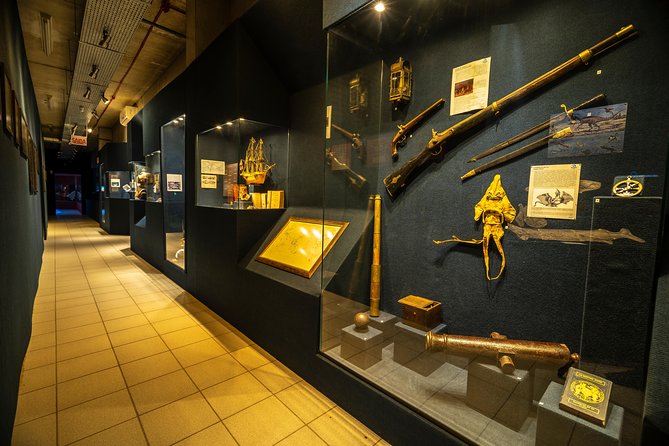
The Univali Oceanographic Museum in Piçarras turns Brazilian seas into a themed route, built around 1,400-plus exhibits plus live aquariums. I love the way the museum gives you a clear story from fossils and ocean history through to modern marine life. I also love that you do not stay stuck with diagrams, you get real animals in tanks as you move wing to wing.
My main caution is simple: some parts can feel a bit dim, and not every display is as explanatory as you might hope. If you like reading labels, go slow and give the exhibits a few minutes each.
In This Review
- Key things to notice before you go
- Planning your 1.0 to 1.5 hour museum loop in Piçarras
- Price and value: what $15.68 buys you here
- The museum’s seven wings: a practical guide to what to look for
- Blue Wing: emergence of life and oceanography
- Red Wing: marine invertebrates, from shells to giant squid
- Green Wing: cartilaginous fish, sharks and rays
- Brown Wing: bone fish and a rare deep-sea set
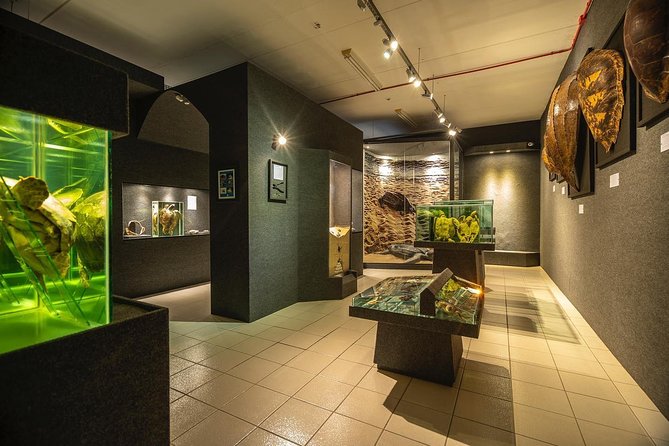
- Gray Wing: marine reptiles and sea turtle diversity
- Beige Wing: seabirds, penguins, and the wandering albatross diorama
- Black Wing: marine mammals, whaling history, dolphins, whales, and more
- Ocean Giants panel outside: scale you can actually see
- The touch experience: when hands-on time helps (and when it disappoints)
- Lighting, labels, and how to keep the visit enjoyable
- Who this museum fits best
- Should you book the Oceanographic Museum Univali in Piçarras?
- FAQ
- What is the duration of the Oceanographic Museum Univali ticket?
- When is the museum open?
- What is included with the official ticket?
- Are there live animals or only specimens?
- What themes are covered inside the museum?
- Is there anything outside the museum?
- Are service animals allowed?
- What is the cancellation policy?
Key things to notice before you go
- Seven-wing layout that groups marine life by type, from fossils to seabirds and mammals
- Live aquarium circuit that adds motion to the collection, not just specimens behind glass
- Standout animal finds like the only white shark jaw on display in Brazil
- Rare deep-sea displays including fish that live beyond 2,000 meters depth
- Outdoor Ocean Giants panel where scale is part of the lesson
- Touch lab style sensory time that can be a highlight for kids and adults, when you time it right
Not sold yet? Here is what else scored well across South Brazil.

Planning your 1.0 to 1.5 hour museum loop in Piçarras
This is an afternoon-friendly stop. The ticket is built for a visit that usually lands around 1 hour to 1 hour 30 minutes, which means you can tuck it into a day without turning the rest of Piçarras into a rush. The museum runs Tuesday to Sunday, 2:00 PM to 5:30 PM, for the current operating window listed (from 12/01/2025 through 02/28/2027).
What helps most is the museum design. You are not wandering randomly through rooms. The wings are organized by theme, so the visit feels like moving through chapters rather than hunting for meaning.
If you are traveling with kids, this pace works well. If you are traveling with someone who gets restless in museums, you can still do a full lap and keep momentum.
Price and value: what $15.68 buys you here
At about $15.68 per person, you are paying for more than entry. The ticket includes access to the exhibition, plus a sensory experience with marine animals. For a museum, that is the key value point: you get both indoor exhibits and at least one hands-on moment.
You also get a lot of structured variety for your money. The collection is presented in seven wings, and the ocean themes repeat in a useful way, fossil science, living creatures, and ecology are connected rather than separate. That helps your brain remember what you saw, which is the whole point of paying for education instead of just looking at things.
One note on value, based on real-world impressions: some visitors feel the museum is worth every minute, while a smaller group wishes for more explanation and better lighting in certain areas. So if you want maximum label depth, plan to spend extra time reading. If you want mostly eye-candy and big shapes, you will still have plenty to enjoy.
The museum’s seven wings: a practical guide to what to look for
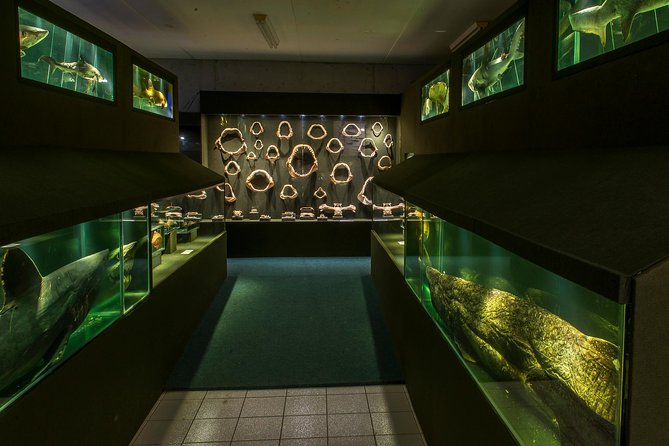
The Univali Oceanographic Museum is organized into seven wings, each focused on a major slice of the marine world. As you walk, you are basically learning how marine life is sorted: by history (fossils), by body type (invertebrates, fish groups), and by adaptation (reproduction and habitat).
A smart way to do this is to pick two or three “missions” for yourself. For example:
- Spot at least one animal you recognize, then find its bigger family story in the wing
- Focus on one wing deeply, then skim the rest so the visit stays fun
- Take photos of big skeletal displays, then read the habitat or ecology sections next
Here is how each wing works, and what is most worth your attention.
Blue Wing: emergence of life and oceanography
This wing sets the stage. You will see fossils from geological ages and learn how life in the sea is tied to deep time. There is also a historical thread, how ancient civilizations viewed the sea and how ocean discovery developed into modern oceanography.
If you like “why it matters,” this is your stop. It gives context for the rest of the museum. Even if you are not a geology fan, the fossil story helps you understand that today’s ocean biodiversity did not just appear overnight.
Red Wing: marine invertebrates, from shells to giant squid
The Red Wing is where shapes and colors really pop. You get calcareous skeletons and preserved specimens, plus tanks with live animals that match what you just saw in display form.
This wing includes mollusks (with shells and specimens such as a preserved giant squid), echinoderms (stars, sea urchins, sea cucumbers), and a set of crustaceans like shrimp and crabs.
If you want a quick win for kids, this is a great wing. It is visual, the animals are familiar in general terms, and the museum links the preserved and living versions so you are not left guessing.
Green Wing: cartilaginous fish, sharks and rays
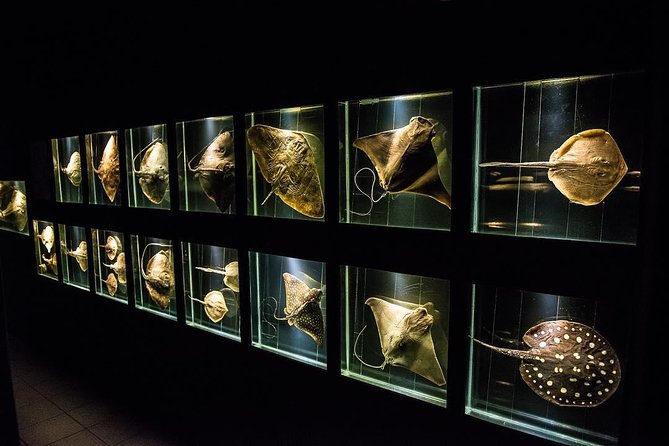
This is the shark and ray zone. You will see multiple types, including coastal, deep-sea, and endangered species. One of the big drawcards here is the jaw display, including the only white shark jaw on display in Brazil.
Also pay attention to reproduction. The wing explains how cartilaginous fish adapt to different marine habitats, not just what they look like. There are four aquariums that represent habitats in the wild, so you can connect the anatomy and the lifestyle.
If your group has mixed ages, this wing is a strong compromise. Older visitors get anatomy and science. Younger visitors tend to fixate on the silhouettes and teeth and jaws.
Brown Wing: bone fish and a rare deep-sea set
The Brown Wing covers bony fish families and shows how varied they are in shape and adaptation. You will see big fish like tarpon and swordfish, including a focus on their coastal and oceanic presence.
There is also an aquarium section with fish from the Indian Ocean and the Pacific Ocean. That matters because it expands the idea of Brazil’s seas. You start thinking of the ocean as a network, not just a local coastline.
The rare highlight is a deep-sea fish exhibit described as living in the abyssal area, over 2,000 meters deep. Even if you do not catch every scientific term, the concept is clear: this is a world with different rules, and the museum uses that fact to make you pay attention.
Gray Wing: marine reptiles and sea turtle diversity
Marine reptiles are limited to a set number of species in this section, and the museum emphasizes sea turtles. In Brazil, there are five species, and they are presented here.
You will learn about biology and ecology, with different life stages represented in the exhibition narrative. If you like animals with a long evolutionary and conservation story, this wing gives you a solid overview.
Beige Wing: seabirds, penguins, and the wandering albatross diorama
This wing zooms in on seabirds and uses ecology as its main thread. It includes all species of penguins, showing distribution across the southern hemisphere.
The standout is a diorama of an oceanic island featuring endangered wandering albatrosses. Dioramas can be a little cheesy in some museums, but here it is useful. It helps you picture how seabirds rely on particular places, not just on food availability.
Black Wing: marine mammals, whaling history, dolphins, whales, and more
This wing begins with a historical part about whaling and commercial exploitation, something that was widely practiced in Santa Catarina. That framing matters because it turns marine mammals from “cute faces” into subjects of human impact and policy.
After that, you see dolphins and whale species that occur in southern Brazil, with biology explained. The museum also includes South American wolves and sea lions, plus manatees that occur in northeastern Brazil.
This wing is where you might feel a bit heavy, in a good way. The museum does not ignore the human side of ocean history, and that makes the rest of the animal viewing feel more grounded.
Ocean Giants panel outside: scale you can actually see
Right outside the museum, there is the Ocean Giants panel. It shows the largest marine animals of each group on a full-scale display.
The headline example is a blue whale described as 33 meters long and 170 tons, the largest animal known to have lived on Earth. Even if you have seen whale photos before, full-scale presentation changes the way you understand size. You stop thinking in “picture size” and start thinking in real dimensions.
If the day is hot, this outside panel also works as a reset. You get fresh air, then you can return to the indoor wings (or end your visit with a stronger finale).
The touch experience: when hands-on time helps (and when it disappoints)
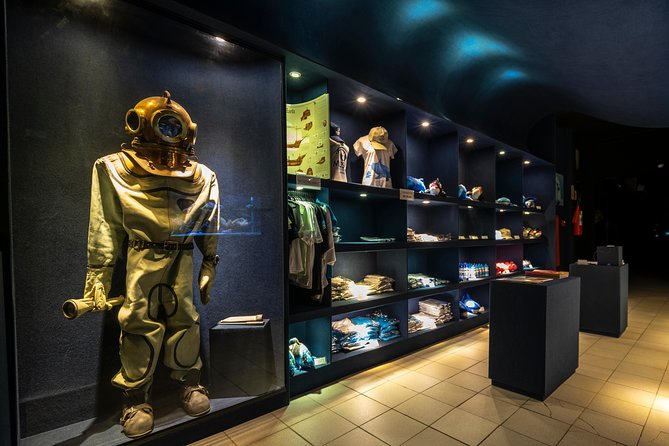
Your ticket includes a sensory experience with marine animals. In practice, that usually means a hands-on lab style moment, the kind that can make marine life feel personal.
In the better experiences, people say the touch lab is unique and memorable for both kids and adults. It is a big deal because it turns education into sensation, and that sticks.
At the same time, not everyone loves the value. A couple of impressions argue that the touch lab did not justify the cost for them, or that it felt like it was not worth the extra attention. This is where I think your best strategy is mindset. If you expect this to replace the museum, you might be disappointed. If you treat it as a short bonus to the main exhibit, it is easier to feel satisfied.
Tip: If you want the touch moment to land, plan to arrive with enough time to do the wings calmly first, then slow down at the end. Rushing reduces the payoff for the one hands-on segment you get.
Lighting, labels, and how to keep the visit enjoyable
One thing that pops up in feedback is that lighting can be a problem in parts of the museum. When exhibits are dim, it is harder to read small text and to see fine detail in shells, skeletons, and habitat scenes.
You can fix this yourself with a simple approach:
- Spend more time at the entrances of each wing, then read the biggest theme panels first
- When a label is hard to read, look for the central object first, then go back to text
- If you see a wall photo that looks under-explained, check whether the same theme continues in the next exhibit
There is also feedback that some displays could use more explanation. So if you are the type who wants deep label-level learning, give yourself the full time window and do not treat this as a rapid walk-through.
If you are going with a group, agree on a pace. One fast person can accidentally ruin the experience for everyone else, because dim labels need time to decode.
Who this museum fits best
This ticket is a strong match for:
- Families with kids who want a mix of aquariums, fossils, and hands-on moments
- People who like science with a clear structure, seven wings that make sense in order
- Travelers who enjoy animal diversity, from invertebrates to sharks and rays to sea turtles
It is also a good option if you care about ocean conservation themes. You will encounter both biology and ecology, and the whaling history in the marine mammals wing makes the story about impact rather than only beauty.
If you are a hard-core museum nerd who wants a lot of deep interpretive writing in every single display, you might still enjoy it, but you should expect that some labels and images are lighter on details. For that style of visitor, patience and selective focus work best.
Should you book the Oceanographic Museum Univali in Piçarras?
I would book it if you want a structured ocean museum with a lot of variety in a short time. The value improves fast when you count what is included: entry to a large, themed collection, live aquariums, and a sensory marine animal experience.
Choose this ticket especially if you are traveling with kids or if you enjoy learning through a mix of fossils, biology, and real animals in tanks. The Ocean Giants panel is a nice final scale check, and the seven-wing route makes it hard to feel lost.
Skip or reconsider if you know you hate dim museum spaces, or if you need very detailed explanations on every single exhibit to feel satisfied. In that case, you may want to approach the visit like a visual tour first, reading only where the text is clear.
FAQ
What is the duration of the Oceanographic Museum Univali ticket?
The experience is listed as about 1 hour to 1 hour 30 minutes.
When is the museum open?
It is open Tuesday to Sunday, 2:00 PM to 5:30 PM, for the dates listed (12/01/2025 to 02/28/2027).
What is included with the official ticket?
The ticket includes access to the exhibition and a sensory experience with marine animals.
Are there live animals or only specimens?
The museum has a live animal aquarium circuit within the exhibition.
What themes are covered inside the museum?
The museum is divided into seven wings: Blue, Red, Green, Brown, Gray, Beige, and Black, plus an Ocean Giants panel outside.
Is there anything outside the museum?
Yes. There is an Ocean Giants panel located outside the museum featuring large marine animals, including a blue whale described as 33 meters long and weighing 170 tons.
Are service animals allowed?
Yes, service animals are allowed.
What is the cancellation policy?
Free cancellation is available. You can cancel up to 24 hours in advance for a full refund. If you cancel less than 24 hours before the start time, no refund is issued.
More Tour Reviews in South Brazil
More Tour Reviews in South Brazil
Latest from our South Brazil notebook
- Official Ticket: Oceanographic Museum Univali – Piçarras – SC★ 4.5 · 45 reviews
- Guided walk on the Malacara Trail★ 5.0 · 48 reviews
Museums, compared.
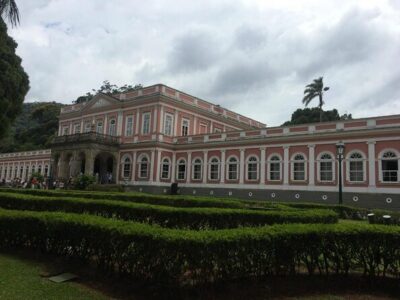 ★ 4.0Petrópolis Day Trip from Rio de Janeiro including Imperial Museum and Crystal PalaceFrom $93101 reviews
 ★ 5.07-Hour Shared Group Santos Tour : Mont Serrat, Coffee Museum and SightseeingFrom $8968 reviews
 ★ 4.5Olympic Boulevard, Museum of Tomorrow & Historical RioFrom $7266 reviews
 ★ 4.5Olympic Boulevard, AquaRio and Museum of Tomorrow TourFrom $4954 reviews
 ★ 4.1Olympic Boulevard, Museum of Tomorrow & History TourFrom $6747 reviews
 ★ 4.6Petrópolis Trip with Palace, Imperial Museum & BreweryFrom $5542 reviews
 ★ 4.5Museum of Tomorrow Guided Tour, Admission & TransferFrom $5838 reviews
 ★ 3.4MUSA and INPA Museums with Observation Tower TourFrom $5026 reviews
Browse the lists this tour appears in