
REVIEW · HISTORICAL TOURS
Rio: Olympic Boulevard, Museum of Tomorrow & History Tour
Rio’s future and past walk side by side. This half-day route pulls you through Downtown Rio’s bigger stories and lesser-seen corners, with a big standout at the Museum of Tomorrow and a serious contrast stop at the Monastery of Saint Benedict. I love how the tour stitches African influence at Valongo Wharf to Olympic-era Rio along Olympic Boulevard. I also like that the pace around the museum can work for your own rhythm, not a frantic sprint. One thing to consider: the experience depends on smooth pickup and routing, and there have been issues when a guide or driver got tangled in traffic or timing.
In the best versions, the guiding makes the difference. People have praised guides like Emma for being friendly and giving flexibility inside the Museum of Tomorrow, and Pedro for staying focused on Brazilian history. On the other hand, there are also reports of guides losing their way or rushing to make another stop, which can affect how much time you really get at each place. If you’re the type who hates schedule stress, I’d go in with comfortable shoes, a calm mindset, and a backup plan if timing slips.
In This Review
- Key things that make this tour worth your time
- Downtown Rio in 4 hours: how this route actually feels
- Hotel pickup timing and group setup (so you do not lose precious minutes)
- Valongo Wharf and the UNESCO stop that explains the African influence
- The Eduardo Kobra mural on Olympic Boulevard: color with meaning
- Museum of Tomorrow: architecture, science ideas, and flexible pacing
- Monastery of Saint Benedict, Praça XV, and how the past lands in your lap
- Rio 2016 Olympic Cauldron and Anthony Howe’s reflective sculpture
- Confeitaria Colombo: art nouveau grandeur and classic bites
- Price and logistics: is $67 a good deal for what you get?
- Who should book this tour, and who might want a different plan
- Should you book Rio’s Olympic Boulevard, Museum of Tomorrow & History Tour?
- FAQ
- How long is the Rio: Olympic Boulevard, Museum of Tomorrow & History Tour?
- Where does hotel pickup happen?
- Is the Museum of Tomorrow ticket included?
- Is food included during the tour?
- Is Confeitaria Colombo open every day?
- Is the tour private, and how big is the group?
Key things that make this tour worth your time
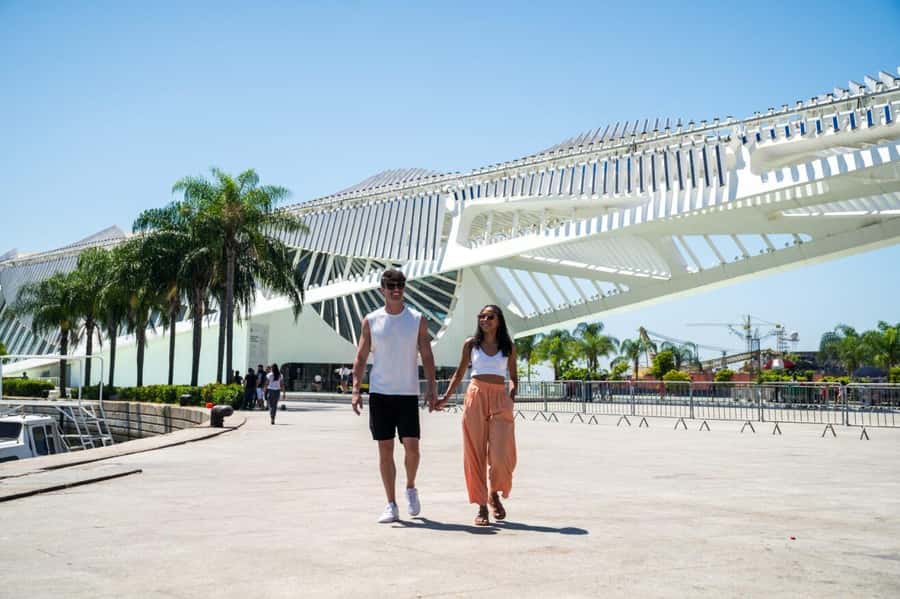
- Museum of Tomorrow blends futuristic architecture with hands-on science ideas, and you get time to move at your own pace inside.
- Valongo Wharf (UNESCO) connects Rio to African influence in Brazil through real historical context, not just photos.
- Eduardo Kobra mural gives you a dramatic street-art moment in a single stop, right as the route heads along Olympic Boulevard.
- Monastery of Saint Benedict offers a striking contrast: plain exterior, then ornate gold interior.
- Rio 2016 Olympic Cauldron is more than a selfie object, it is a modern sculptural reminder of the Games.
- Confeitaria Colombo finishes in a polished, early-1900s setting where you can grab a classic snack or dessert.
Older stories from Rio De Janeiro
Downtown Rio in 4 hours: how this route actually feels
This tour is built like a walking story from the city’s layers. You start in the Southeast Region with hotel pickup in Rio’s South Zone, then you head into Downtown where you can feel the mix of commerce, culture, and politics in the streets. The total time is about 4 hours, so you do not get every museum in Rio. Instead, you get a tight sampler that links major landmarks with the context that makes them click.
The structure is simple: a guided walk to key sights, a scheduled ticket visit to the Museum of Tomorrow, then a final stop at Confeitaria Colombo to round out the day with food and atmosphere. The whole thing runs with a small group, up to 19 people, in an air-conditioned van. That matters because Rio traffic and walking pace can vary, and having fewer people usually helps the group stay together.
The biggest value here is coherence. The route does not just list famous points. It connects themes, African heritage, art in public space, science and futurism, and the way Brazil interprets its own past. If you like history that shows up in buildings, walls, and streets, this one hits well.
Hotel pickup timing and group setup (so you do not lose precious minutes)
Pickup is available from Copacabana, Ipanema, Leblon, and Leme, typically between 8:10 AM and 8:55 AM. You are collected before the start time, then dropped back after the tour ends. If you stay in a hostel or B&B, you will get told the nearest hotel for pickup and drop-off.
Why I think that matters: a morning start means you are walking in daylight, and you are usually less stressed about crowds. But it also means you want to be ready a bit early at pickup. One set of reports mentions timing problems when the group got off track and the bus left without them, so treat pickup like an airport gate. Be on time, stay near your meeting point, and keep your eyes open when the group boards.
Communication helps. The tour guide provides live commentary in English, Spanish, and Portuguese, so you can follow the story even if your Portuguese is shaky.
Valongo Wharf and the UNESCO stop that explains the African influence
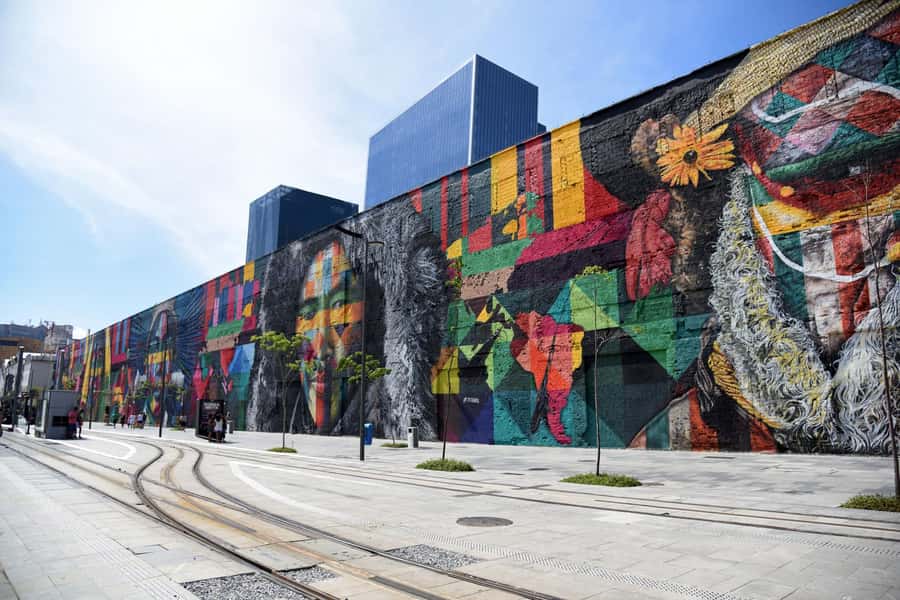
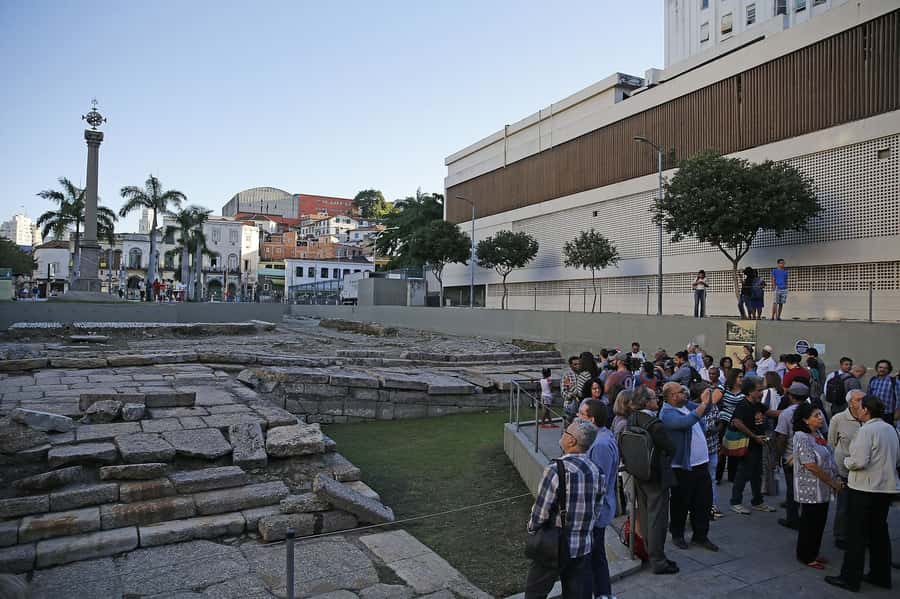
You begin at Valongo Wharf, Rio’s newest UNESCO World Heritage site. This is where the tour’s historical backbone starts. The guide frames what you are seeing in terms of African influence in Brazil, so the stop reads like a real connection to people and movement, not a random pier photo.
What I like about starting here: it gives you a lens for the rest of the morning. When you later see murals, religious sites, and national monuments, you understand that Rio’s identity did not form in a vacuum. It’s layered. The wharf stop helps you read the city like a record of trade, forced migration, culture, and survival.
Practical tip: this section is part of a walking tour, so wear shoes you can keep on. The ground can be uneven in places, and you do not want sore feet when the big architecture stops come next.
Indoor days when the rain lands
- Petrópolis Day Trip from Rio de Janeiro including Imperial Museum and Crystal Palace
★ 4.0 · 101 reviews - Olympic Boulevard, Museum of Tomorrow & Historical Rio
★ 4.5 · 66 reviews - Rio: Olympic Boulevard, AquaRio and Museum of Tomorrow Tour
★ 4.5 · 54 reviews - Museum of Tomorrow Guided Tour, Admission & Transfer
★ 4.5 · 38 reviews - Rio de Janeiro: Flamengo Museum Ticket Entrance
★ 4.7 · 22 reviews
The Eduardo Kobra mural on Olympic Boulevard: color with meaning
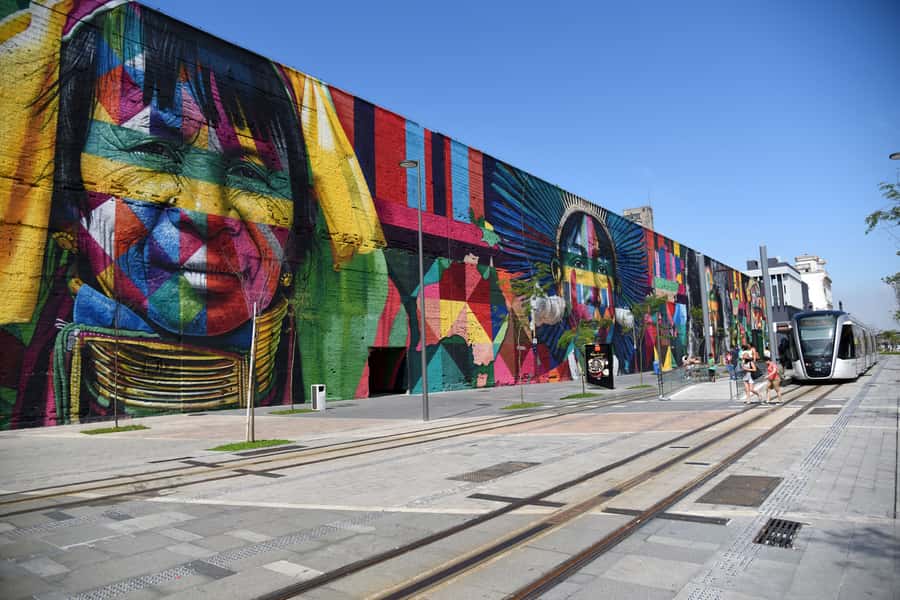
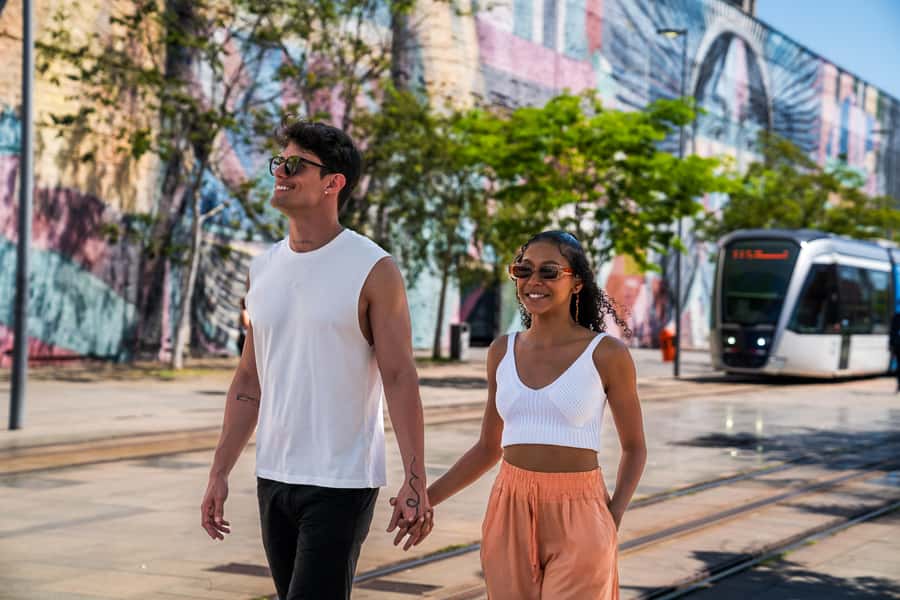
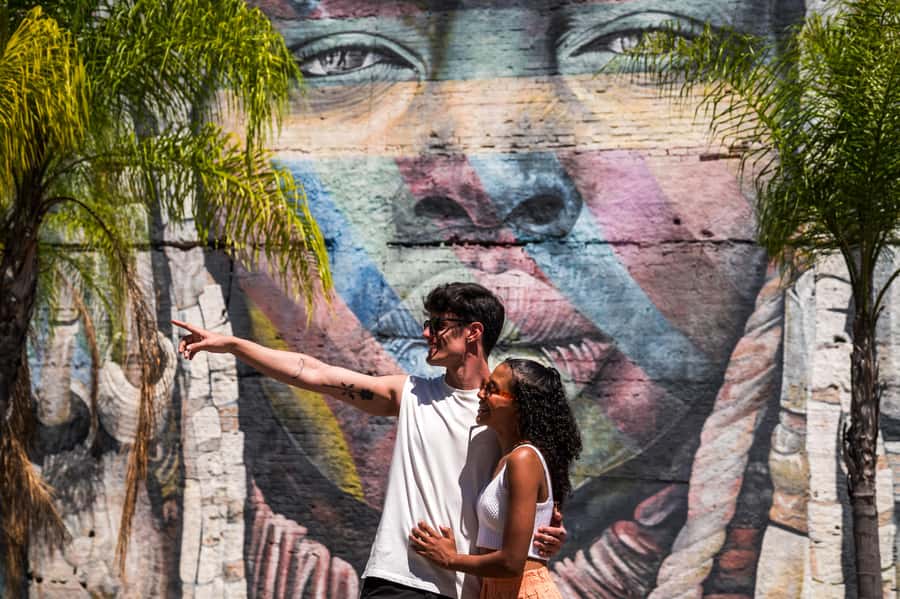
After Valongo Wharf, you head to one of the most famous street-art murals in the city: the Eduardo Kobra mural. It is designed with five ethnic groups in a bold geometric style, which turns this into more than a wall that happens to be big. It is a visual statement about identity.
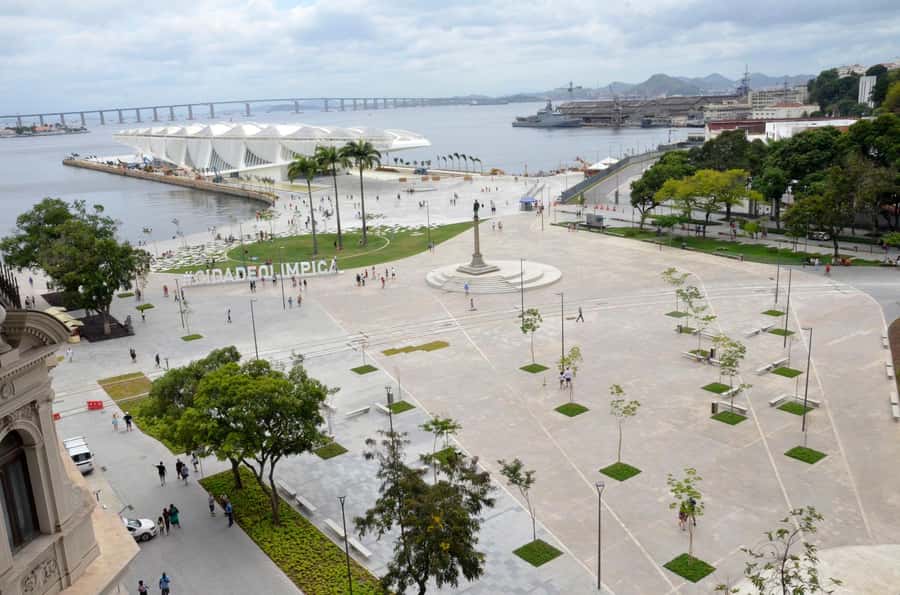
Then the walk continues along Olympic Boulevard. That matters, because the boulevard functions like a corridor between eras. It ties the art moment to the Olympic-era elements you see later, so the morning feels linked rather than chopped into unrelated stops.
If you enjoy photography, this is one of your best moments. The mural is meant to be seen up close, and it gives you instant contrast against Rio’s regular street textures. Just do not spend so long taking pictures that you miss the flow toward the museum, because the museum is where the tour tempo becomes more flexible.
Museum of Tomorrow: architecture, science ideas, and flexible pacing
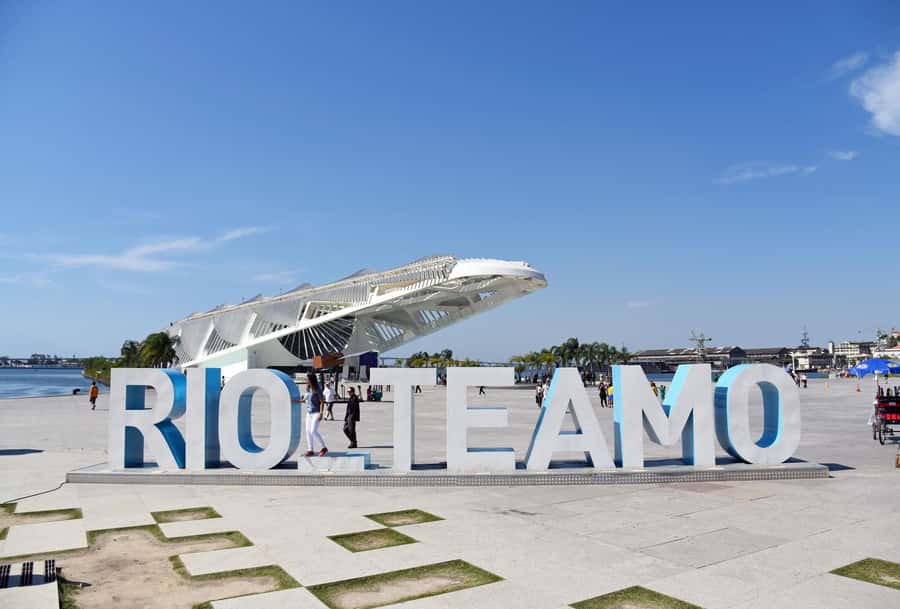
The Museum of Tomorrow is the headline stop for a reason. It is dedicated to science and technology themes, built around exploring and questioning how the future might take shape for planet and humanity. And yes, the building itself looks like futurism made into concrete and glass.
What I would plan for: give your eyes time before you rush into exhibits. The architecture sets the mood, and the displays tend to reward visitors who slow down enough to read. One guide example named Emma stood out for being friendly and allowing flexibility for exploring the museum at your own pace. That is a big deal. In many tours, you feel chained to a timetable. Here, you can usually shape your time once inside.
What to expect inside, based on the tour concept: you are not just touring rooms, you are encountering prompts about future scenarios, tech, and environmental questions. Think of it as a place that makes you ask, what comes next, and what choices get us there?
The ticket is included, and the visit is scheduled, so you avoid the hassle of figuring out admission mid-day. This stop alone can justify the tour for anyone who wants a more modern side of Rio.
Monastery of Saint Benedict, Praça XV, and how the past lands in your lap
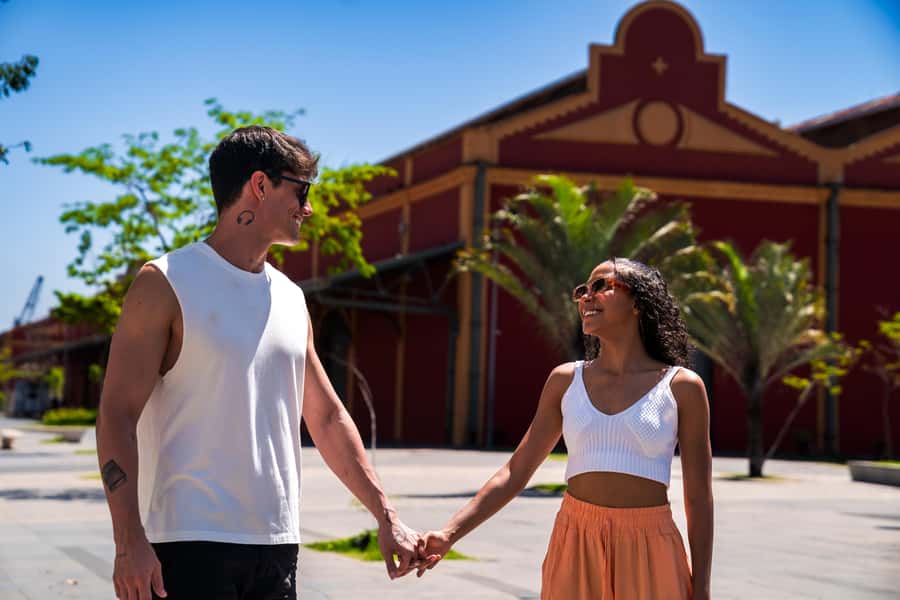
After the museum, the tour shifts gears. You head toward the Monastery of Saint Benedict, where the contrast is the point. The exterior can feel simple and quiet, but inside the space is covered in golden ornaments, a Baroque heritage that hits you visually as soon as you enter.
I love stops like this because they remind you that Baroque art was not only about wealth. It was about emotional impact. When you see that shift from plain outside to ornate inside, Rio’s history stops being abstract.
From there, the route continues to Praça XV, where you see one of the former headquarters of the Brazilian empire. This stop helps you understand that Downtown Rio is not just street noise. It is also a stage where power, governance, and national identity played out.
If you want to get the most out of these history stops, pay attention to the guide’s framing. A quick lesson can help you connect the monastery’s style to the broader cultural currents around it. Then Praça XV gives you a way to picture what the area looked like when the empire was shaping policy.
Rio 2016 Olympic Cauldron and Anthony Howe’s reflective sculpture
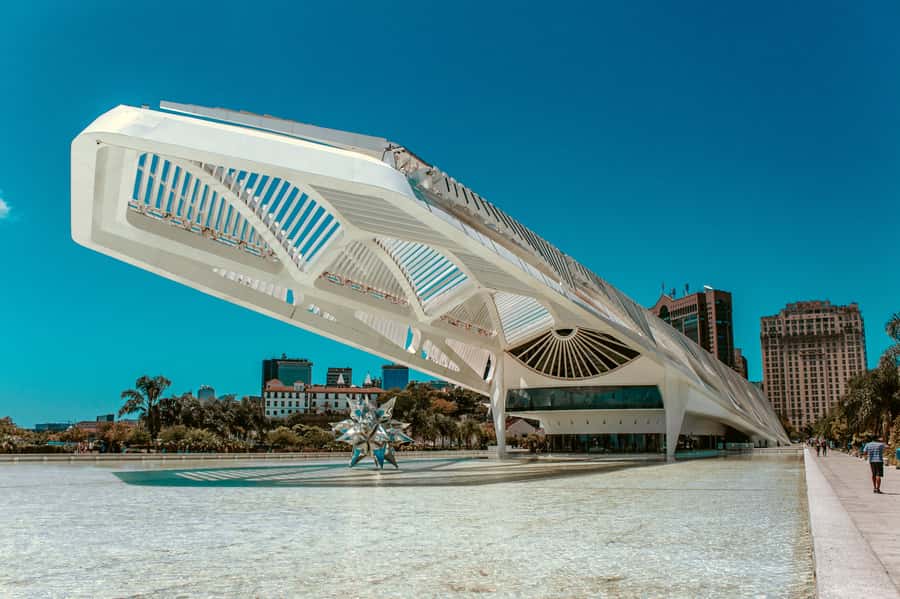
Next comes an Olympic-era landmark with an art-meets-technology feel: the Rio 2016 Olympic Cauldron, created by Anthony Howe. The tour highlights the structure’s reflective kinetic sphere look, and it is presented as a reminder of the Games.
This is a stop that works well even if you are not an Olympics superfan. Why? Because it is about design, how light changes on reflective surfaces, and how Rio chooses to represent a global event in physical form. If you’re a fan of public art, you’ll probably spend a few extra minutes here just watching how reflections shift as people pass.
It is also a good breather before the final indoor-ish stop at Confeitaria Colombo. Short walk, short photo time, then you transition into a space where you can sit, eat, and reset.
Confeitaria Colombo: art nouveau grandeur and classic bites
The tour finishes at Confeitaria Colombo, a must-see café known for its opulent art nouveau design. You get a close look at large stained glass, tiles, and mirrors, with details like imported materials mentioned from places such as France, Portugal, and Belgium.
This is also where you decide how hungry you are. Food and drinks are not included, so plan to budget for a snack or dessert. You can taste classic Brazilian options like coxinha de frango (little chicken thigh) or brigadeiro (brigadier).
Two practical notes. First, Confeitaria Colombo is closed on Sundays, so if your dates are Sunday, you should confirm availability with the operator. Second, since the tour is rain or shine, it is nice to end here because the café gives you a warm, sheltered payoff.
If you care about atmosphere, this is one of those places where you should look up. The decorative details are part of the experience, not background.
Price and logistics: is $67 a good deal for what you get?
At $67 per person for a 4-hour guided experience, the value depends on what you want most. You get hotel pickup and drop-off in the South Zone, a small-group van ride, a professional guide with live commentary in three languages, and the Museum of Tomorrow ticket.
That package can make sense if you do not want to plan museum tickets plus a guided Downtown walk on your own. The cost also reflects that you are seeing several different kinds of places, museum, UNESCO site, major mural, a monastery interior, and a landmark café.
Where it might feel expensive is if you mainly care about just one or two stops. In that case, you may prefer to DIY the Museum of Tomorrow and handle the rest with public transit. But if you like having context and not worrying about routes, the guided structure saves time and mental effort.
Logistics do matter. Reports include issues when a guide got lost or when transportation timing created stress. This is not a reason to avoid Rio tours. It is a reason to be alert and flexible.
Who should book this tour, and who might want a different plan
This is a great match for:
- First-time visitors who want Downtown Rio stories without building an itinerary brick by brick
- People who enjoy mixing architecture, art, and history in the same morning
- Anyone who likes modern science ideas, not only classic museums
- Food-and-photo lovers who appreciate finishing with a stop like Confeitaria Colombo
It might be a less ideal fit if:
- You hate any chance of schedule slippage and need everything to run perfectly on time
- You prefer fully seated, slow experiences, because there is moderate walking throughout
- You are traveling with unaccompanied minors, since unaccompanied minors are not allowed on this tour
Because the tour runs in rain or shine, pack accordingly. Comfortable shoes are a must.
Should you book Rio’s Olympic Boulevard, Museum of Tomorrow & History Tour?
If you want a guided, story-driven Downtown Rio morning that covers future science at the Museum of Tomorrow and then lands in the city’s layered past at places like the monastery and Praça XV, I’d book it. The included museum ticket and the hotel pickup in the South Zone make it easier for time-pressed days.
Just do one smart thing before you go: confirm your pickup details with the provider and be ready early. If you get a calmer guide like the examples named Emma or Pedro, this tour can feel smooth and satisfying. If you end up with a guide who rushes or has trouble finding the route, you may feel shortchanged on pace. The route is great, so protect your experience by staying present at pickup and keeping a steady rhythm.
If you want, tell me your travel dates and where you’re staying in Rio, and I’ll suggest whether this schedule fits well with your other must-dos.
FAQ
How long is the Rio: Olympic Boulevard, Museum of Tomorrow & History Tour?
It lasts about 4 hours.
Where does hotel pickup happen?
Pickup and drop-off are available for hotels in Rio’s South Zone, including Copacabana, Ipanema, Leblon, and Leme.
Is the Museum of Tomorrow ticket included?
Yes. Tickets to the Museum of Tomorrow are included.
Is food included during the tour?
No. Food and drinks are not included, though you can buy them at Confeitaria Colombo.
Is Confeitaria Colombo open every day?
No. Confeitaria Colombo is closed on Sundays.
Is the tour private, and how big is the group?
It is not a private tour. The group is limited to a maximum of 19 passengers, using an air-conditioned van.
Everything Else We Rated in Rio De Janeiro
More Tour Reviews in Rio De Janeiro
More Tour Reviews in Rio De Janeiro
Latest from our Rio De Janeiro notebook
- Unforgettable Boat Party★ 5.0 · 3 reviews
- Tijuca National Park and all its wonders!★ 5.0 · 3 reviews
- Rocinha Jeep Tour: A Journey into the Soul of the Favela!★ 3.8 · 3 reviews
- Rio: Favela Walking Tour of Rocinha with a Resident Guide★ 4.7 · 3 reviews
- Rio: Private, Custom express, Main Attractions!★ 5.0 · 3 reviews
- Rio: Museum of Tomorrow, Yup Star & Olympic Boulevard★ 3.7 · 3 reviews
Historical Tours, compared.
 ★ 4.4Historic Rio and Santa Teresa Half-Day TourFrom $47228 reviews
 ★ 4.9Downtown Historical Bike TourFrom $85191 reviews
 ★ 4.0Scenic Train ride to historical cities of Morretes and AntoninaFrom $128188 reviews
 ★ 4.9Little Africa Heritage Walking TourFrom $40177 reviews
 ★ 4.4From Foz do Iguazu: Triple Frontier Landmark TicketFrom $24136 reviews
 ★ 5.0Explore Little Africa : Unveiling Afro Heritage in Rio de JaneiroFrom $8297 reviews
 ★ 4.8Historic Centre Walking Tour & Cachaça TastingFrom $1996 reviews
 ★ 5.0Downtown-Center History Walking Tour – in EnglishFrom $3191 reviews
Browse the lists this tour appears in