
REVIEW · HISTORICAL TOURS
Explore Little Africa : Unveiling Afro Heritage in Rio de Janeiro
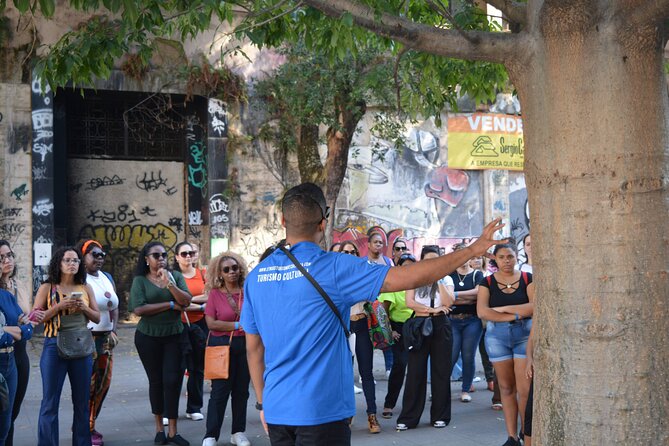
Rio’s real roots run through Little Africa. This 3.5-hour walk in Rio pairs major memory sites with museum time, and it starts with a decolonial tone that helps you connect the dots between slavery, religion, and community life. I love the way the route anchors you at Cais do Valongo, then keeps going so the story does not end with the past. I also like that guides such as Carolina bring the subject down to earth with clear, human explanations.
One important consideration: this is an active tour. You will do a fair amount of walking, and it is not recommended for people with disabilities, so plan your stamina before you book.
In This Review
- Key highlights you will actually feel
- Why Little Africa changes how you see Rio
- Price, time, and group size: what $82.53 buys you
- Your walking plan, VLT ride, and packing basics
- Stop 1: Matriz da Paroquia de Santa Rita as a decolonial opener
- Stop 2: Instituto de Pesquisa e Memoria Pretos Novos, and the power of included entry
- Stop 3: MUHCAB in Gamboa, Afro-Brazilian history beyond the street
- Stop 4: Cais do Valongo, the port district that forces attention
- Stop 5: Pedra do Sal near Largo da Prainha
- Stop 6: Largo São Francisco da Prainha, zungus, and a cooler today
- Guides make or break a tour like this
- Who should book this tour
- Should you book the Little Africa Tour?
- FAQ
- How long is the Little Africa tour in Rio?
- What is the price per person?
- What is included in the price?
- Is lunch included?
- Are the museums always open?
- How big is the group?
- Is the tour suitable for people with disabilities?
Key highlights you will actually feel
- Cais do Valongo and port memory: you spend real time at the places tied to the forced arrival system, with context that makes them understandable.
- Included entry at the Pretos Novos institute: you get access time at Instituto de Pesquisa e Memoria Pretos Novos, not just street-level viewpoints.
- Afro-Brazilian culture in Gamboa at MUHCAB: a focused museum stop that adds community and identity, not only tragedy.
- Pedra do Sal and Largo São Francisco da Prainha: historical religious landmarks and a square linked to Little Africa and the zungus.
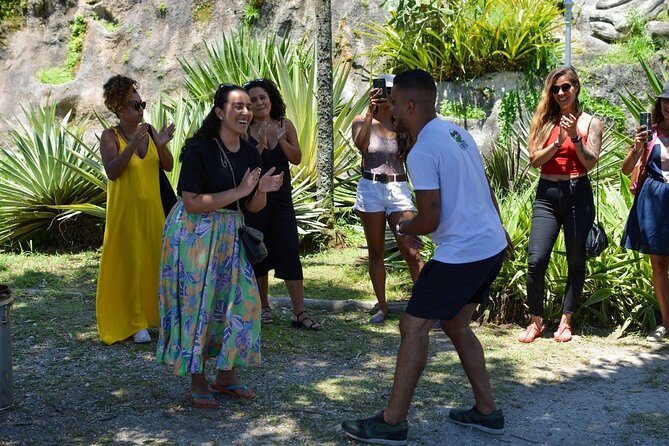
- Small group size: capped at 20 travelers, which helps the guide keep pace and answer questions.
Older stories from Rio de Janeiro
Why Little Africa changes how you see Rio
If you have only seen Rio from the usual postcard angles, this tour recalibrates your compass. Rio is famous for beaches and big viewpoints, sure. But Little Africa is the part that explains how Afro-Brazilian life took shape here, long after ships stopped arriving.
You start with heritage context, then move through a sequence of sites tied to port history, memory work, and religious community spaces. The best part is the flow. You are not just collecting facts. You are learning a map of meaning: where people arrived, where they were remembered, and where culture survived through community, faith, and resistance.
The tour also keeps the tone direct. One stop frames the story through a decolonial narrative, which matters because it pushes back against the idea that slavery is only a distant, tidy chapter in a textbook. Instead, it links that history to how inequalities and identities echo into modern life.
Price, time, and group size: what $82.53 buys you
At $82.53 per person for about 3 hours 30 minutes, you should think of this as a half-day education with a real itinerary, not a casual neighborhood stroll. You are paying for guide interpretation and multiple paid moments.
Here is where the value comes from:
- You get entry covered at the institute tied to the Pretos Novos memory work.
- All fees and taxes are included.
- Several other stops are free to enter, so your money goes toward time and context rather than ticket logistics.
- The tour includes a short ride on the VLT public transport, which helps the route feel efficient without turning it into a car tour.
The group size cap of 20 travelers is a quiet win. With smaller groups, the guide can slow down when people ask questions, and the pace feels more controlled. Reviews praise guides such as Rafael and Malu for how they explain things with warmth and clarity, and that is exactly what you want on a tour like this where the subject can feel heavy.
The only real trade-off is that there is no lunch included. If you are the type who gets distracted when your stomach starts grumbling, plan a snack before you start, or eat after you finish at Largo da Prainha.
Your walking plan, VLT ride, and packing basics
This is not a sit-down museum-only afternoon. Expect a mix of street walking and short, practical transport. Comfortable shoes matter. One traveler also suggested doing the tour earlier if you want your best photo lighting toward the end, because the sun can change the vibe after hours when you are outside.
Also, check your calendar like an adult. This experience requires good weather. If weather is poor, you will be offered a different date or a full refund.
And for practical respect: this is a route where dignity matters. You will often be standing near sites that carry painful memory. Go slow, keep your voice low in sensitive areas, and give the guide room to set the tone.
Finally, know the basic boundaries of the day. The tour starts at Santuário de Santa Rita in Centro and ends at R. São Francisco da Prainha, right by Largo da Prainha in Saúde. You will want to plan your next step from that ending point, especially for dining.
- Rio de Janeiro: 6-Stop Highlights of Rio with Lunch
★ 4.4 · 5,157 reviews - Christ the Redeemer Entry Ticket by Corcovado Train
★ 4.4 · 4,476 reviews - Rio de Janeiro: Rocinha Favela Walking Tour with Local Guide
★ 4.8 · 3,052 reviews - Rio: Christ the Redeemer, Sugarloaf, Selaron & BBQ Lunch
★ 4.5 · 2,428 reviews - Rio De Janeiro: Half-Day Rocinha Favela Walking Tour
★ 4.7 · 2,272 reviews
Stop 1: Matriz da Paroquia de Santa Rita as a decolonial opener
Your start at Matriz da Paroquia de Santa Rita sets the tone. This is an external visit with cultural and heritage-based content, and you will hear a story framed through a decolonial lens.
What I like about starting here is that it does not jump straight into slavery statistics. It begins with heritage and religious-cultural meaning, then uses the opening to help you understand why later sites hit so hard. You are primed to listen for how faith, community space, and memory work connect.
You will also hear context connected to a historical Menu publisher. The detail sounds odd in translation, but the takeaway is what matters: the guide uses local historical threads to help you see how information, power, and narrative shaped what people learned and what they were allowed to remember.
From a visitor standpoint, this first stop is the moment to get your questions ready. If you are new to the topic, you can ask your “What am I looking at, exactly?” questions early, before the route becomes more emotionally intense.
Stop 2: Instituto de Pesquisa e Memoria Pretos Novos, and the power of included entry
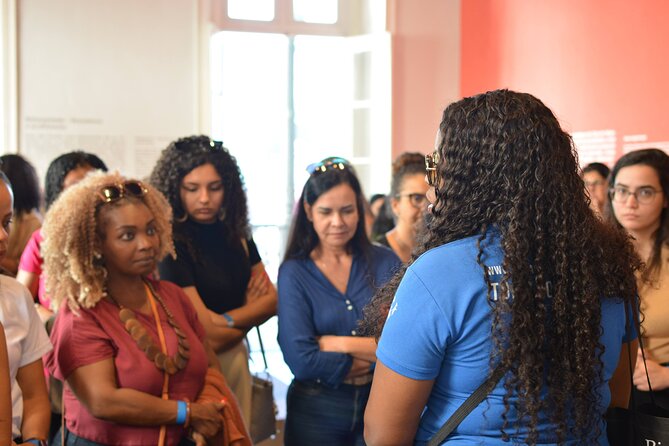
Stop two takes you to Instituto de Pesquisa e Memoria Pretos Novos (IPN). This is a key part of the day because the ticket is included, so you are not waiting on separate entrance fees or guessing whether you will get enough time inside.
The institute is focused on research and memory, and it relates directly to the Pretos Novos story in Rio. The stop is listed as an external visit, but because admission is included and the time block is substantial, you should expect the guide to give you a structured interpretation tied to archaeological memory work.
Why this stop matters: it shifts the experience from monuments to evidence. It is not only about what people say about the past, it is about how the past is studied and how memory becomes public knowledge. That makes the next port-history stop hit with more weight.
If you want to understand why people sometimes describe this kind of tour as “life-changing,” this is where it starts to feel real. You are learning how communities keep memory alive, and how that memory becomes part of Brazilian identity instead of being buried.
Stop 3: MUHCAB in Gamboa, Afro-Brazilian history beyond the street
Next up is MUHCAB (Museu da História e da Cultura Afro-Brasileira) in the Gamboa region. You get a full 40 minutes here, and the museum admission is listed as free.
This stop is important because the theme expands. After memory and port context, MUHCAB gives you a place to connect Afro-Brazilian history and culture as lived experience, not only as a timeline of suffering.
A museum like this works best when you do not try to read everything like a student. Instead, listen to what the guide highlights, then notice what you are drawn to. Look for themes that repeat across exhibits, like identity, community structures, and cultural continuity.
I also like how the museum stop breaks up the day. You get a chance to reset your attention, use the bathroom if needed, and then step back outside ready for the strongest location of the route.
Stop 4: Cais do Valongo, the port district that forces attention
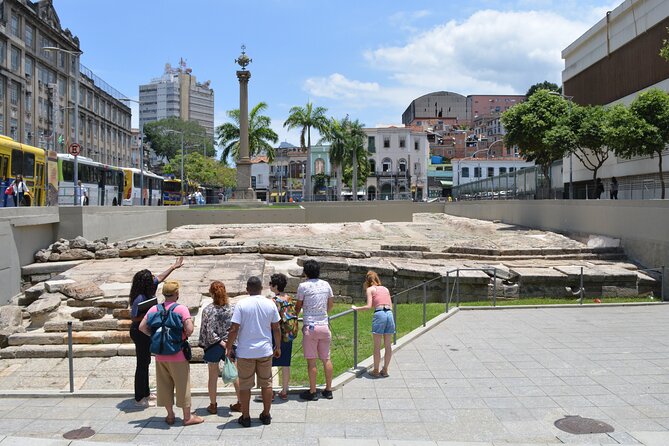
Then you reach Cais do Valongo, a former wharf in Rio’s port district. You spend about 30 minutes here, and admission is free.
This is the emotional center of the tour for many people, and that makes it the stop where your behavior matters most. Keep your phone use minimal. Listen to what the guide says and let the place do its work.
The Valongo Wharf connects directly to the port system that brought enslaved Africans to Brazil. You are not just looking at a historic structure. You are standing in a location tied to forced movement and human loss. Good guides make that understandable without turning it into spectacle.
What you take away from this stop should be more than “slavery happened.” You should leave with a clearer picture of how the port district shaped lives, how memory is preserved, and why the area around Little Africa carries lasting cultural weight.
Stop 5: Pedra do Sal near Largo da Prainha
After Valongo, the route shifts to a historical and religious landmark: Pedra do Sal in the Saúde neighborhood, near Largo da Prainha.
This stop is an external visit, timed at about 25 minutes, and it has no admission cost. It is a helpful pivot point. It helps you move from the port system into the religious and community spaces where people expressed identity and made culture survive.
The best way to experience Pedra do Sal is to treat it like a “listen with your eyes” stop. Let your brain stop chasing dates for a moment. Instead, focus on the atmosphere and the meaning the guide connects to it.
Also, if you want photos, do them quickly and respectfully. This is not a place to stage long photo sessions while others are learning. Capture what you need, then return attention to the story.
Stop 6: Largo São Francisco da Prainha, zungus, and a cooler today
The tour ends at Largo São Francisco da Prainha, a square that is described as a symbolic territory of Little Africa marked by Black presence and the zungus. You also finish near the end address at R. São Francisco da Prainha, 7.
It lasts about 20 minutes, and it is free to visit. One detail I appreciate: the square is also considered one of the coolest places by Time Out. That does not mean the tour sugarcoats the past. It means the area is alive now, and you can see how historical significance coexists with modern street energy.
For many visitors, this last stop is emotional relief in a smart way. After heavy memory stops, you end where community identity is visible in everyday space.
If you like to keep your day practical, plan a meal after the tour in this neighborhood. You are done at the right spot to transition from learning to eating.
Guides make or break a tour like this
The guides are a big reason this experience earns such strong scores. People specifically mention guides like Carolina, Rafael, Malu, and Raphael for combining deep subject detail with real friendliness.
Two patterns show up in the feedback:
- The guide makes the story clear even when English is not the primary language. In other words, you are not left behind.
- The guide adjusts pacing when someone needs it, so the experience feels inclusive without watering down the message.
That matters to you because a history tour can fail in two ways. It can be too abstract, or too rushed. Here, you are likely to feel like the guide is controlling the pace, controlling the emotional weight, and inviting questions.
Who should book this tour
This tour is a strong match if you want more than sightseeing. Book it if you care about Afro-Brazilian culture, the African diaspora, and how Rio’s neighborhoods connect to port history and religious community spaces.
It is also a good choice if you like guided interpretation that stays grounded in places. Instead of only reading and memorizing, you will move through the city and feel where each chapter belongs.
You might want to choose a different option if you cannot manage walking. This tour is not recommended for people with disabilities, and the day includes street movement plus a short VLT hop.
Should you book the Little Africa Tour?
Yes, I would book it if your trip to Rio includes at least one serious history experience. The route makes sense, the time with the institute is included, and the ending at Largo São Francisco da Prainha helps you finish with context instead of just sadness.
One last decision checklist for you:
- Pick dates when key stops are open. The New Black Institute is closed on Sundays, and museums close from 16th December to 5th January and during Carnival season.
- Wear comfortable shoes and bring patience for an active half day.
- If you want your best outdoor photos, consider an earlier start so you are not relying on fading light at the end.
If you do that, you will walk away with a Rio map that actually explains the city, not just photographs it.
FAQ
How long is the Little Africa tour in Rio?
It lasts about 3 hours 30 minutes.
What is the price per person?
The tour costs $82.53 per person.
What is included in the price?
All fees and taxes are included, plus the ticket for The New Black Institute. The tour also includes a short ride on the VLT public transport.
Is lunch included?
No, lunch is not included.
Are the museums always open?
No. Museums will be closed from 16th December to 5th January and during Carnival season. Also, the New Black Institute is closed on Sundays.
How big is the group?
The tour has a maximum of 20 travelers.
Is the tour suitable for people with disabilities?
It is not recommended for disable people.
The Older Story of Rio de Janeiro
More Tour Reviews in Rio de Janeiro
More Tour Reviews in Rio de Janeiro
Latest from our Rio de Janeiro notebook
- Unforgettable Boat Party★ 5.0 · 3 reviews
- Tijuca National Park and all its wonders!★ 5.0 · 3 reviews
- Rocinha Jeep Tour: A Journey into the Soul of the Favela!★ 3.8 · 3 reviews
- Rio: Favela Walking Tour of Rocinha with a Resident Guide★ 4.7 · 3 reviews
- Rio: Private, Custom express, Main Attractions!★ 5.0 · 3 reviews
- Rio: Museum of Tomorrow, Yup Star & Olympic Boulevard★ 3.7 · 3 reviews
Historical Tours, compared.
 ★ 4.4Historic Rio and Santa Teresa Half-Day TourFrom $47228 reviews
 ★ 4.9Downtown Historical Bike TourFrom $85191 reviews
 ★ 4.0Scenic Train ride to historical cities of Morretes and AntoninaFrom $128188 reviews
 ★ 4.9Little Africa Heritage Walking TourFrom $40177 reviews
 ★ 4.4From Foz do Iguazu: Triple Frontier Landmark TicketFrom $24136 reviews
 ★ 4.8Historic Centre Walking Tour & Cachaça TastingFrom $1996 reviews
 ★ 5.0Downtown-Center History Walking Tour – in EnglishFrom $3191 reviews
 ★ 5.0Learn the History of Rio with an Unforgettable City Center Walking TourFrom $4982 reviews
Browse the lists this tour appears in