

REVIEW · HISTORICAL TOURS
Learn the History of Rio with an Unforgettable City Center Walking Tour
Rio history hits hardest in the Centro. This private city-center walking tour strings together famous Rio landmarks and explains how the city developed through time. You also get flexibility to steer the route toward what you care about most.
Two big wins for me. First, it is truly private, meaning it is just your party and you are not stuck with a one-size-fits-all script. Second, you get real street-level context as you move from theaters and movie-era squares to iconic tiled steps and historic coffee.
One thing to watch: pace and time. One past participant felt the walk wrapped up early, after about 1.5 hours instead of the full time. If you want all stops without rushing, set expectations with your guide early on.
In This Review
- Key points you will actually care about
- Why Rio Centro Works Best on Foot
- Start at the Theatro Municipal, Rio’s grand calling card
- Cinelândia Square: where film culture and grand buildings share space
- Selarón Steps: street art that makes the city feel personal
- Arcos da Lapa: the aqueduct that turned into a bohemian symbol
- The Metropolitan Cathedral: big architecture, big meaning
- Largo da Carioca and Paço Imperial: old streets and old squares
- Confeitaria Colombo: your traditional break, built into the route
- Price and value: what $49.05 is really paying for
- Private and flexible, but you still set the pace
- Practical tips so your walk stays fun in Rio heat
- Who should book this Rio Centro history walk
- Should you book this Rio city center history walking tour?
Key points you will actually care about

- Private for your party, so you can ask questions and shape the timing around your interests
- Eight major Centro stops that make Rio’s story visible, not abstract
- Free entry at each listed stop, so your money goes toward the guide, not ticket lines
- Guide-led history and architecture focus, including praise for guides such as Rafael and Danielle
- Ends at Paço Imperial, which makes an easy bookend if you are continuing exploring nearby
- Hot-weather advice is part of the plan, including bringing bottled water
Kept it on foot? So did these



Why Rio Centro Works Best on Foot
Rio can feel huge at first. Centro, though, is where the city’s layers stack up close together. Walking this part of town helps you see how Rio’s power, entertainment, religion, and daily life connected, without you needing to jump between distant neighborhoods.
The tour is built around a tight cluster of sites, with a route that keeps moving through squares, landmarks, and streets. You get a practical orientation too. After the walk, you will know what areas to aim for and what landmarks act like anchors, including where to circle back if you want more time.
This is also the kind of tour that rewards your curiosity. If you care about architecture, you will get plenty to chew on. If you care about history, you get the human story behind buildings, not just dates. And because it is private, you can ask for more detail at one stop and less at another.
Start at the Theatro Municipal, Rio’s grand calling card
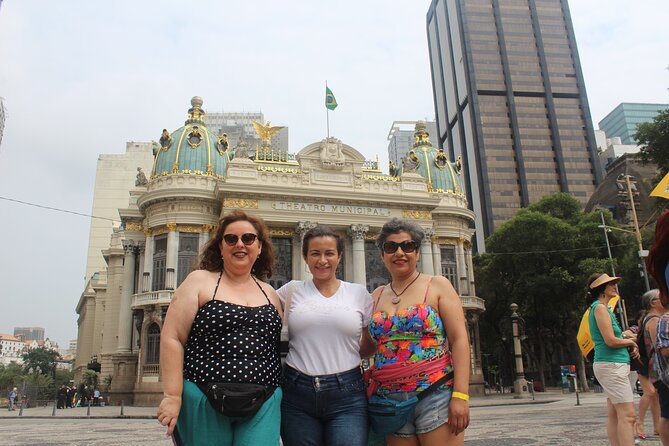
Your walk begins at the Municipal Theater of Rio de Janeiro, the obvious place to start if you want to understand Rio’s ambition. Even if you are not a theater person, the building signals a lot. This is Rio saying it wants culture at a high level, and it wants it in a public way.
What I like about starting here is rhythm. You begin at a landmark that sets tone and scale, then you gradually move into smaller street moments and neighborhoods. In other words, you do not just do a checklist of famous spots. You learn how the city presents itself, and how taste, politics, and public life show up in architecture.
Admission is listed as free for this meeting stop, and the location is in the Centro area near public transit, so you are not stuck figuring out remote logistics before you even start.
Cinelândia Square: where film culture and grand buildings share space
Next up is Cinelândia, a square known for early movie theaters and for important historical buildings. That combination matters. It is not just that there were theaters. It is that Rio used big public spaces to bring entertainment into the mainstream, and the architecture around the square reflects that.
Walking through Cinelândia with a guide means you can connect the visual dots. You start to see how the square functions like a stage: a place where crowds gather, culture gets broadcast, and the city’s identity gets performed.
Drawback to keep in mind: squares can be crowded and loud, especially depending on the time of day. If you want more context, arrive ready to listen closely when the street noise kicks up. A private guide helps here, since you can ask for the specifics that matter to you.
City loops we timed around Rio de Janeiro
- Rio: Carnival Backstage Tour at Samba City with Cocktail
★ 4.6 · 520 reviews - Rio de Janeiro: Private Guided City Tour
★ 4.6 · 207 reviews - Rio de Janeiro: Half-Day Christ the Redeemer and City Tour
★ 4.4 · 101 reviews - Rio Samba Bus: hop-on hop-off city tour in Rio de Janeiro
★ 3.8 · 94 reviews - Learn the History of Rio with an Unforgettable City Center Walking Tour
★ 5.0 · 82 reviews
Selarón Steps: street art that makes the city feel personal
Then you hit the Escadaria Selarón, the stairway covered in colorful tiles from around the world. This is one of those places where your camera will work overtime, but the story is the point. The steps turn a common street element into a public canvas, and that is a big theme in how Rio expresses itself.
Why this stop is so valuable on a guided walk: you get help seeing beyond the surface. It is easy to think of Selarón as just pretty tiles. With a guide, it becomes a sign of how everyday people and visitors can shape a landmark, and how art can take over a public space.
Timing note: this is usually a linger stop. Even if you only pause for photos, plan a little extra time because the stairs are visually dense. Also, keep an eye on footing. Tiles can be slick when it is wet.
Arcos da Lapa: the aqueduct that turned into a bohemian symbol
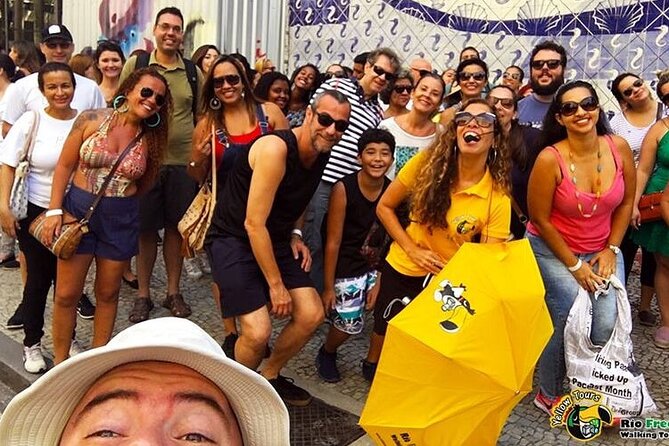
From there you move toward Lapa and the Arcos da Lapa, famous arches that were once part of a former aqueduct. That detail is key. You are not just looking at old stone. You are seeing how infrastructure can outlive its original purpose and become a cultural icon.
Lapa is known for a bohemian energy, and the arches physically anchor that vibe. On a walking tour, you get a double benefit: you learn the structural history, then you feel the neighborhood’s personality through the street scene around you.
Potential drawback: this is a short stop. The listed time is brief, so if you want more time in Lapa to explore side streets, say so. Because the tour is flexible, you can often ask to spend a little extra time here, then tighten up elsewhere.
The Metropolitan Cathedral: big architecture, big meaning
Next comes the Metropolitan Cathedral of Saint Sebastian, known for unique design. This is one of those buildings that can feel like it came from a different planet, especially if you are already moving through older Centro architecture.
A guided explanation helps you read it. Instead of just admiring the shape, you understand why the city built something so distinctive and how public religious architecture can communicate identity.
The practical angle: cathedrals and major buildings often have rules about where you can stand and how you can move. The good news is that the tour lists this stop as free to enter, so you are not losing budget on admissions. The better news is that you will have a guide to manage the flow so you spend time looking, not searching.
Largo da Carioca and Paço Imperial: old streets and old squares
After the cathedral, you head to Largo da Carioca, a square associated with the oldest buildings in the city. This is a chance to step from landmark scale into the kind of street history that shaped daily life.
Squares are where cities compress time. At Largo da Carioca, the value is in learning how the city’s early structure influenced everything around it. When you later reach the last stop, Paço Imperial, that continuity helps it all click.
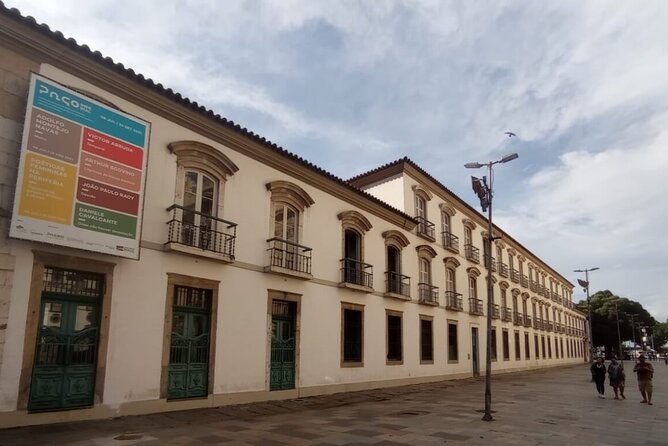
Paço Imperial is one of Brazil’s most important historic squares, and the tour ends there. If you want a smooth transition, this is a smart bookend. You can keep exploring nearby without needing a long relocation, and you can use the tour’s final landmark as your reference point.
One practical note based on the site hours provided: Paço Imperial is listed as open Monday through Saturday from 9:30 AM to 2:00 PM for the given period. If you are planning an afternoon start, factor that in so you do not arrive near closing.
Confeitaria Colombo: your traditional break, built into the route
You also stop at Confeitaria Colombo, described as the most traditional coffee shop and bakery in the city. This is not just a sweet detour. It is a cultural one, because coffee shops like this are part of how people socialize, celebrate, and slow down.
Since food and drinks are not included, you control the spend. If you want a quick break, grab something small and keep rolling. If you want to reset after walking, use the stop as your breather.
Why it fits the tour’s style: it grounds the history in everyday routines. Rio is not only theaters and stairways. It is also the moments people gather over coffee and pastry. This stop helps you leave the tour with a fuller picture of what the city feels like.
Price and value: what $49.05 is really paying for
At $49.05 per person for about three hours, this is not a “cheap and fast” deal, but it also does not feel inflated for what you get. The biggest value driver here is that it is private for your party and led by a guide, with the route centered on free-entry stops.
That matters because many city walking tours charge similar money while stacking paid attractions on top. Here, you are mostly paying for direction, storytelling, and pacing. You also get the flexibility to customize the itinerary to your interests, which is where private tours can justify the cost if you actually use that flexibility.
The strongest praise in the feedback centers on guides who are friendly and informative, with real appreciation for the architecture and history angle. People also loved how the tour helps you get oriented quickly in Rio’s Centro.
One fair caution from a lower-score comment: if your guide’s pace runs short, you can end up feeling shorted on time. Your best move is simple. At the start, ask how they plan to cover the full route in the allotted time, then check in briefly before you hit the later stops. That way, you steer the experience instead of hoping it works out.
Private and flexible, but you still set the pace
The private setup is more than a branding line. It changes how the walk feels. You can slow down at Escadaria Selarón because you want more photos, or you can press for more explanation at the cathedral because the design interests you. You do not have to match someone else’s schedule.
It also helps with questions. You can ask what to look for at the next building, or why a particular landmark became important. That is where the history becomes memorable, because you are not just hearing facts. You are learning how to see.
Here is how I suggest you use the flexibility. Pick your two priorities before you meet the guide, like architecture and historic squares, or movie culture and bohemian Lapa. Then be ready to trade time if something grabs you more than expected. It is a small planning step that pays off.
Practical tips so your walk stays fun in Rio heat
Rio’s Centro can be hot, especially in the warmer months. The tour strongly suggests you bring bottled water, and I agree. Do not treat water as optional. It is what keeps you exploring while the day is still enjoyable.
Wear comfortable shoes. You are walking between landmarks and lingering at multiple stops. Even if the route is not described as exhausting, you will feel it in your legs if you wear the wrong footwear.
A few more practical notes from the tour details:
- The attractions are listed as free to enter at the stops on this route.
- Service animals are allowed.
- The meeting and end points are in the Centro area, and the start area is near public transportation.
- You will receive confirmation at booking time.
- As per city law, showing a COVID-19 vaccination document is mandatory to visit the tourist attractions in the city, so have it ready before you head out.
Also, plan your expectations around the end time. Since Paço Imperial has listed opening hours, going too late in the day can squeeze your options.
Who should book this Rio Centro history walk
This tour is a great fit if you want an organized way to understand Rio’s development without spending all day in museums. It works especially well for you if:
- you are a first-time visitor who wants the big Centro highlights in a few hours
- you like architecture and want help reading it
- you enjoy history told through real places, not just names on a plaque
- you want a private format so you can move and ask questions at your pace
It may be less ideal if you are trying to see everything while sprinting. The best experience comes when you allow time to look and listen. Also, if you are extremely time constrained, build in a buffer. One low-score experience pointed to an early finish, and that is exactly what you want to prevent for a tour you paid for.
Should you book this Rio city center history walking tour?
Yes, you should consider booking if you want a guided, private orientation to Rio’s Centro that mixes major landmarks with neighborhood character. I like the structure because it keeps you moving through the city’s major “story zones,” and I especially like that the route focuses on free-entry stops, so you are not stacking extra costs on top of the ticket price.
Just do two smart things before you go: confirm your guide’s plan to cover the full time window, and bring water and comfortable shoes for Rio’s heat. If you show up ready to ask questions and slow down when something grabs you, you will come away understanding Rio in a way you cannot get from a photo walk alone.
Everything Else We Rated in Rio de Janeiro
More Tour Reviews in Rio de Janeiro
More Tour Reviews in Rio de Janeiro
Latest from our Rio de Janeiro notebook
- Unforgettable Boat Party★ 5.0 · 3 reviews
- Tijuca National Park and all its wonders!★ 5.0 · 3 reviews
- Rocinha Jeep Tour: A Journey into the Soul of the Favela!★ 3.8 · 3 reviews
- Rio: Favela Walking Tour of Rocinha with a Resident Guide★ 4.7 · 3 reviews
- Rio: Private, Custom express, Main Attractions!★ 5.0 · 3 reviews
- Rio: Museum of Tomorrow, Yup Star & Olympic Boulevard★ 3.7 · 3 reviews
Historical Tours, compared.
 ★ 4.4Historic Rio and Santa Teresa Half-Day TourFrom $47228 reviews
 ★ 4.9Downtown Historical Bike TourFrom $85191 reviews
 ★ 4.0Scenic Train ride to historical cities of Morretes and AntoninaFrom $128188 reviews
 ★ 4.9Little Africa Heritage Walking TourFrom $40177 reviews
 ★ 4.4From Foz do Iguazu: Triple Frontier Landmark TicketFrom $24136 reviews
 ★ 5.0Explore Little Africa : Unveiling Afro Heritage in Rio de JaneiroFrom $8297 reviews
 ★ 4.8Historic Centre Walking Tour & Cachaça TastingFrom $1996 reviews
 ★ 5.0Downtown-Center History Walking Tour – in EnglishFrom $3191 reviews
Browse the lists this tour appears in