
REVIEW · SALVADOR & BAHIA TOURS
From Salvador: Quilombo Heritage Daytrip with Lunch
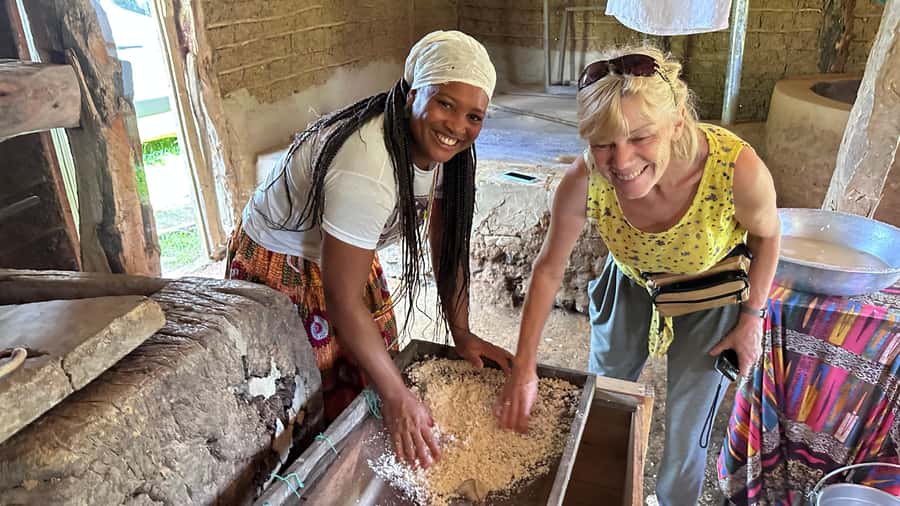
A flour workshop in a quilombo setting sounds simple. This daytrip turns it into a real, lived-in experience, with manioc flour made by hand and a chance to talk with the community’s griô before you get to work. I love the hands-on side of the visit, and I love the time set aside for conversation, not just passing through. One thing to consider: for the price, the quilombo portion can feel like basic demonstrations unless you go in expecting a short, guided taste rather than a long workshop.
I also like how the tour stitches together everyday Bahia life with a couple of big historical waypoints, from a local fair area in Santo Amaro to the colonial city of Cachoeira-Ba. You’ll spend about 8 hours with an accredited guide, and the group stays intimate, which helps you ask questions and stay relaxed. Lunch is included, but drinks are not, so plan to budget for water or anything you want beyond the meal.
In This Review
- Key things to know before you go
- A small-group Quilombo day from Salvador: what your $170 buys
- Santo Amaro morning: Praça da Purificação and a real local fair
- The Recôncavo farming drive: sugarcane, manioc, tobacco
- Quilombo Kaonge: daily life you can talk about, not just watch
- Hands-on manioc flour and palm oil: what you will actually do
- Lunch break in a quilombola setting: included, and adjustable
- Cachoeira-Ba afternoon: a colonial city plus the Paraguaçu River crossing
- Guide quality and group size: why it can feel personal
- Price and value: is $170 fair for what you get?
- Practical tips so the day feels smooth
- Who should book this Quilombo daytrip, and who should skip it
- Should you book this Quilombo Heritage Daytrip with Lunch?
- FAQ
- How long is the Quilombo Heritage daytrip?
- What is the price per person?
- How small is the group?
- What is included in the price?
- Are drinks included?
- Is a vegetarian lunch available?
- What languages does the tour guide speak?
- Where is the pick-up location?
- Is the tour wheelchair accessible?
- Can I cancel and get a full refund?
- What should I wear?
Key things to know before you go
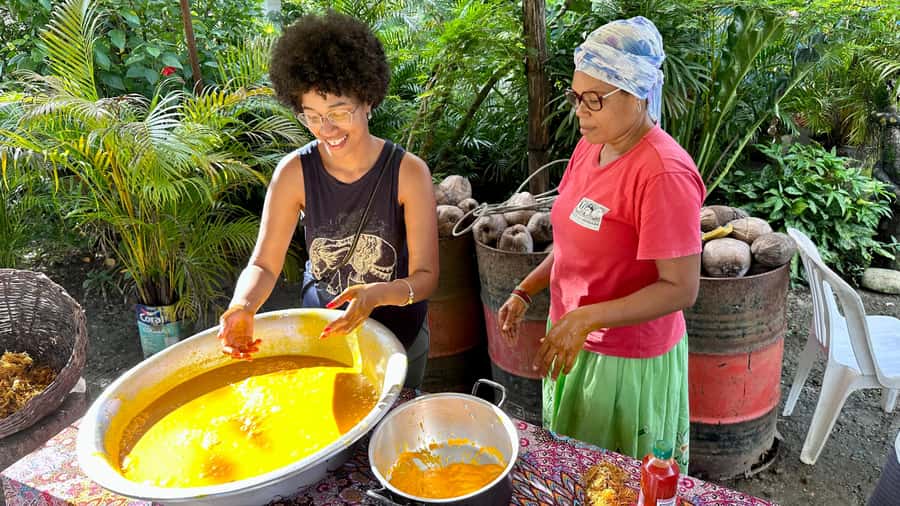
- Hands-on manioc flour and palm oil learning: you practice the process, not just watch.
- Time with a griô: you can ask questions and learn how the community thinks about daily life.
- Very small group: advertised up to 6, with the operator listing a limit of 4, so you will not get lost in a crowd.
- Recôncavo day structure: Santo Amaro fair area in the morning, quilombo visit midday, Cachoeira-Ba in the afternoon.
- Paraguaçu River crossing on an 1830 English bridge: a specific historical stop, not a generic photo spot.
- Lunch included with a vegetarian option: tell the operator in advance if you need it.
Bahia beyond the Pelourinho
A small-group Quilombo day from Salvador: what your $170 buys
This is a full-day tour, roughly 8 hours, built around one main theme: understanding quilombola daily life and food traditions in the Recôncavo region. At $170 per person, you’re paying for three things that matter: transport out of Salvador, a guided route that links multiple stops, and a lunch included day plan.
The best value is the structure. You are not just getting dropped at one place and left to wander. You start in Salvador’s regional orbit, then you move into the sugarcane, manioc, and tobacco farming belt, then into the Quilombo Kaonge experience, and finally into Cachoeira-Ba. That chain of stops is what makes the day feel coherent.
One caution. The quilombo part is described as hands-on learning, but not as a long, build-your-own meal, multi-course workshop day. Based on past feedback, some people feel the demonstrations are a bit basic for the price, even though the overall tour is still good value compared to other quilombo tours. If you want a deep, hours-long workshop style experience, be aware this trip is likely more of a curated taste of the process.
Santo Amaro morning: Praça da Purificação and a real local fair
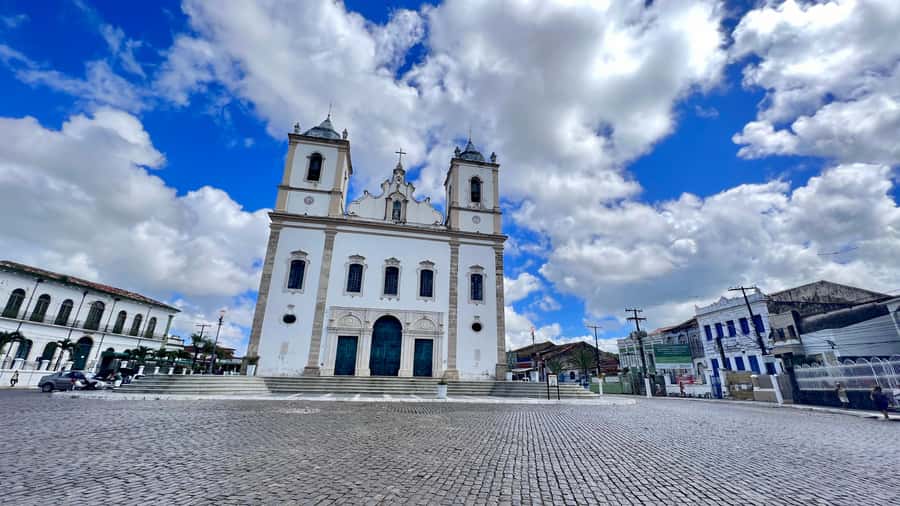
Your day starts with pickup in Salvador, typically from your hotel lobby, then a morning visit in Santo Amaro around Praça da Purificação. Expect a guided stop that mixes photo time with a walk-and-look approach. The tour includes guided sightseeing for about 30 minutes here.
Then you shift into the vibe of the town, including time in the middle of a public fair area, plus a look at secular houses. This is one of those moments that makes the rest of the itinerary feel grounded. You get a sense of how daily community life works before you move outward to farms and quilombola traditions.
What I like about starting here is that it sets context without bogging you down in lectures. You’re meeting the region as people actually experience it, market energy and street life, before the day turns more educational and traditional.
Practical tip: wear comfortable walking shoes. You may be on your feet for the fair stroll and sightseeing segments, and you’ll want your feet fresh before the country drive.
The Recôncavo farming drive: sugarcane, manioc, tobacco
Between Santo Amaro and the quilombo, the route goes through farm country, specifically with sugar cane, manioc, and tobacco farms on the way. It’s not just scenic driving. It’s a living map of what food and labor traditions have fed this region for generations.
This matters because the tour’s central food lesson, manioc flour, does not happen in a vacuum. By seeing the agricultural landscape that supports the ingredients, you’ll understand why manioc is so central. You also get a better sense of how regional crops tie into work rhythms, ingredients, and local economies.
You should think of this drive as the bridge between two worlds: town life in the morning, then quilombola life and food making later. If you’re the type who likes learning through movement, you’ll appreciate it.
Older stories from Salvador Brazil
- Historic City Tour in Salvador
★ 3.6 · 17 reviews
Quilombo Kaonge: daily life you can talk about, not just watch
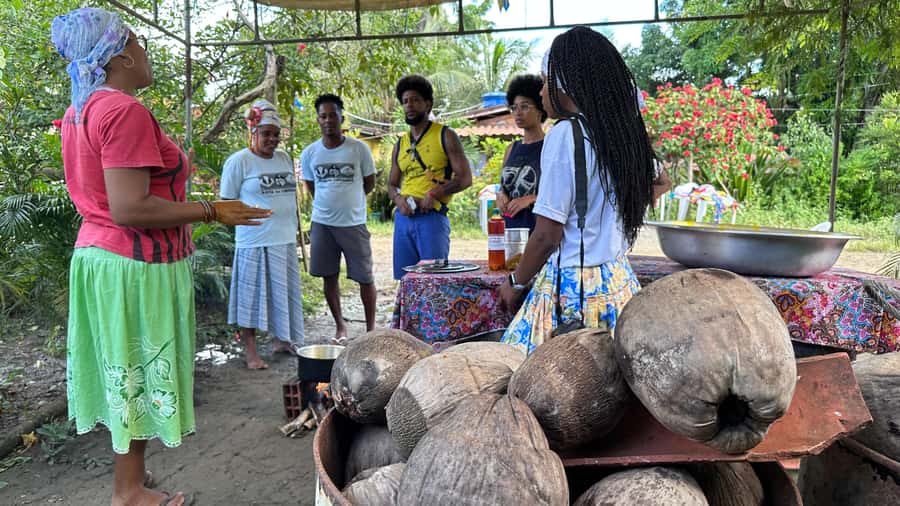
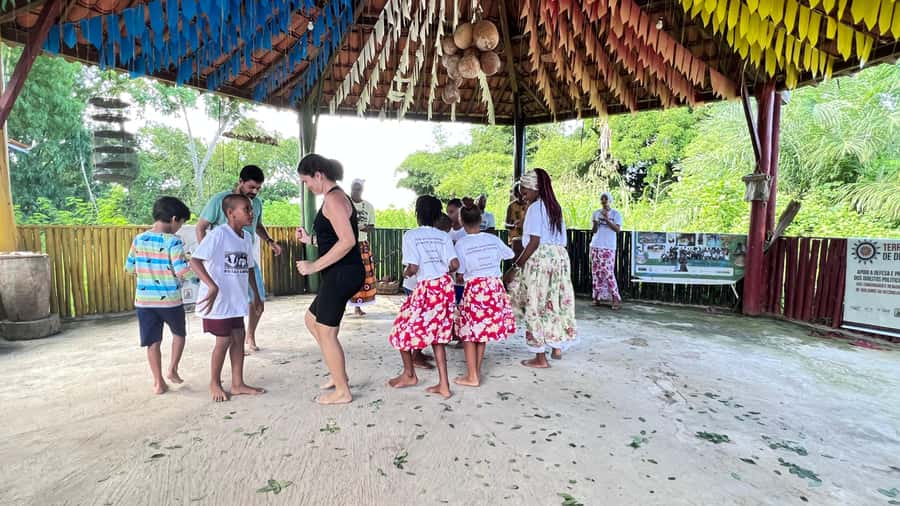
The main destination is Quilombo Kaonge, where you can experience daily life and share wisdom and tastes. A key part of the visit is time to talk with one of the elders, known on the tour as the griô.
That conversation piece is the difference between a quick cultural stop and a meaningful one. The itinerary builds in time for questions and dialogue before any hands-on work starts. In other words, you’re not learning only through procedures and tools, you’re also learning through perspective.
Expect to spend time observing life in the community setting. You’ll likely notice how daily routines connect with food, time, and shared knowledge. If you go in with curiosity and respect, this becomes the emotional core of the day.
One consideration: because the day is time-limited and shared with a small group, you may not get a long, one-on-one experience with the elder. Still, the fact that the tour includes a conversation slot at all is a strong plus.
Hands-on manioc flour and palm oil: what you will actually do
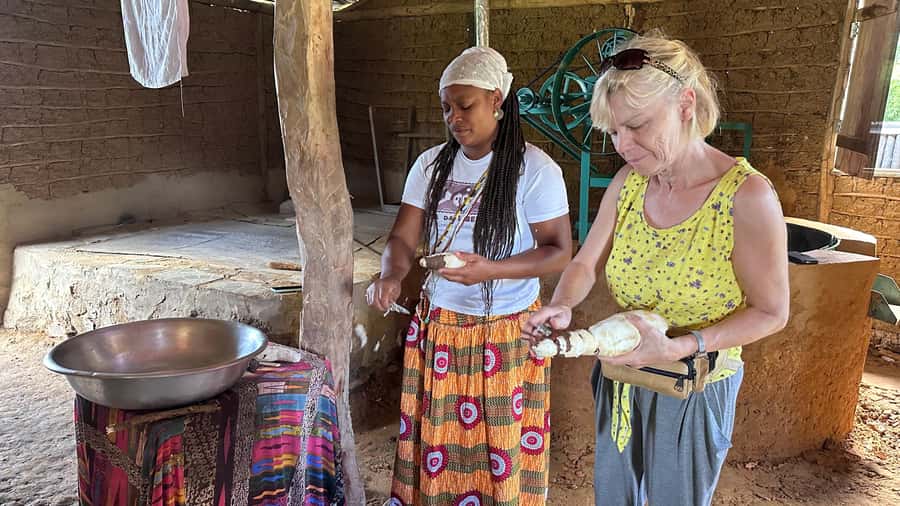
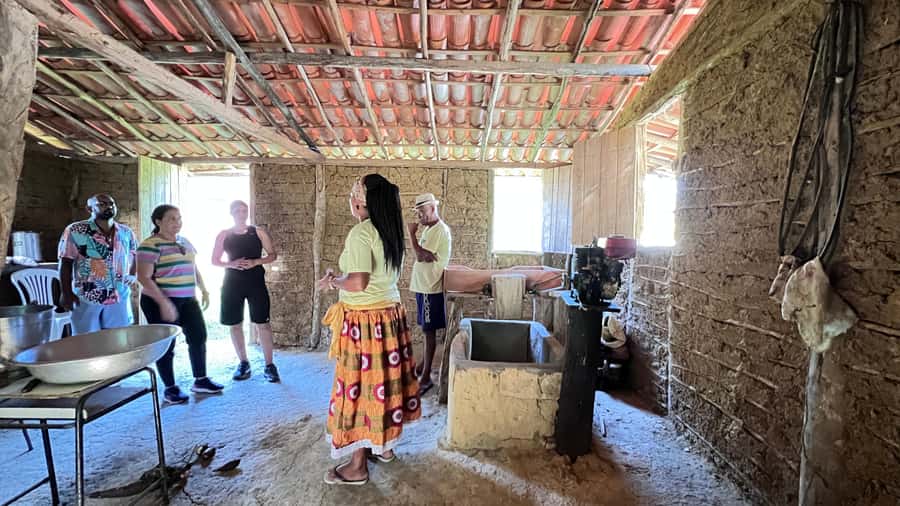
After lunch, the tour shifts into the practical part: putting your hands to work and learning the process of making flour and oil palm oil. This is the section where the tour can feel more or less satisfying depending on what you want.
If you want a guided introduction to the steps, then practicing with the tools is a real win. You’ll get a feel for the labor behind everyday staples. You’ll also understand why traditional food processing is often passed down through shared methods rather than quick, store-bought replacements.
If you want an extended, in-depth workshop where you do everything start to finish at a slow pace, you might find the time short. That lines up with some prior disappointment, where the activities were described as basic demonstrations. So I suggest you frame this as a guided hands-on lesson, not a full artisan apprenticeship.
In either case, ask questions during the process. The best learning usually comes from using your hands while the guide explains what’s happening, then asking why certain steps are done a certain way.
Lunch break in a quilombola setting: included, and adjustable
Lunch is included, and the tour also gives a longer meal window in the middle of the day, with regional food. There’s also an important note for food planning: a vegetarian option is available if you request it when booking.
This matters because many cultural food experiences become frustrating for picky eaters or vegetarians when the menu is fixed. Here, you at least have a path to adjust your meal choice.
What I like about including lunch is that it prevents the day from feeling like a nonstop rush. You get time to regroup, talk more casually with your guide, and reset before the afternoon visits.
Tip: since drinks are not included, decide ahead of time what you want to buy. Bring cash or confirm what is easiest to purchase with the group, if anything is available at lunch.
Cachoeira-Ba afternoon: a colonial city plus the Paraguaçu River crossing
After the quilombo visit, your route goes to Cachoeira-Ba, described as the most important city in the Recôncavo region. Expect a colonial city atmosphere. This is your shift from community food traditions back into broader regional history.
A standout moment here is the crossing of the Paraguaçu River on a bridge built by the English in 1830. That’s a specific detail, and it helps the stop feel anchored in real history rather than generic sightseeing.
Shortly after the river crossing, the tour includes a visit to the Danneman cigar factory. It’s another kind of cultural lens, showing how the region’s industries have taken shape over time.
I like this afternoon combo because it balances the day. Morning and midday focus on food and everyday traditions. The afternoon expands the frame, showing how the same region ties into colonial-era city life and industrial production.
Guide quality and group size: why it can feel personal
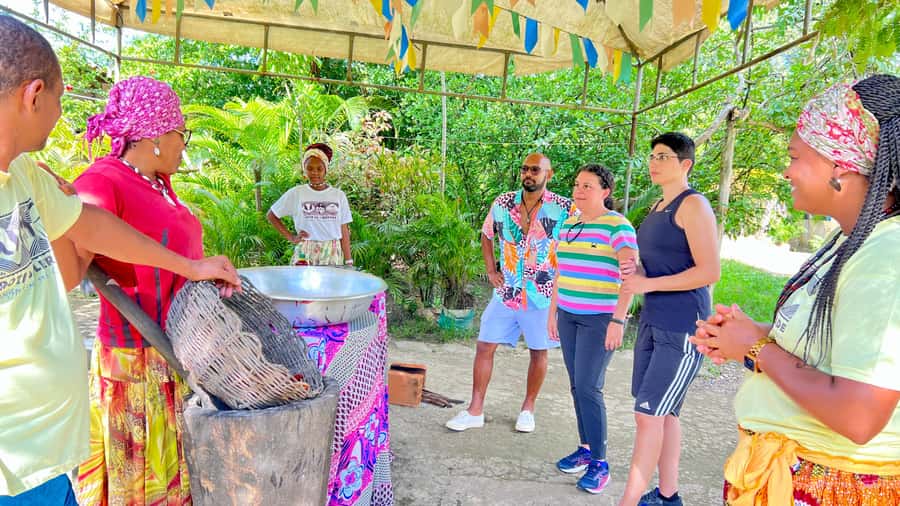
Small groups are a big deal on tours like this. When you are limited to a maximum group size, you get two advantages: it’s easier to hear the guide, and it’s easier to ask questions without feeling like you’re cutting into the flow.
This tour is built for that. The highlights mention a maximum of 6 people, while the operator lists a limit of 4 participants. Either way, you’re not dealing with a busload.
Language options are also helpful. The guide is listed as Spanish, English, and Portuguese, so you can usually find a comfortable way to understand what’s being explained and what you’re seeing.
As for guide style, one past participant specifically called out Wilson as fun and full of interesting information. If you end up with someone in that same energetic teaching style, you’ll likely get more out of both the conversation with the griô and the hands-on steps.
Price and value: is $170 fair for what you get?
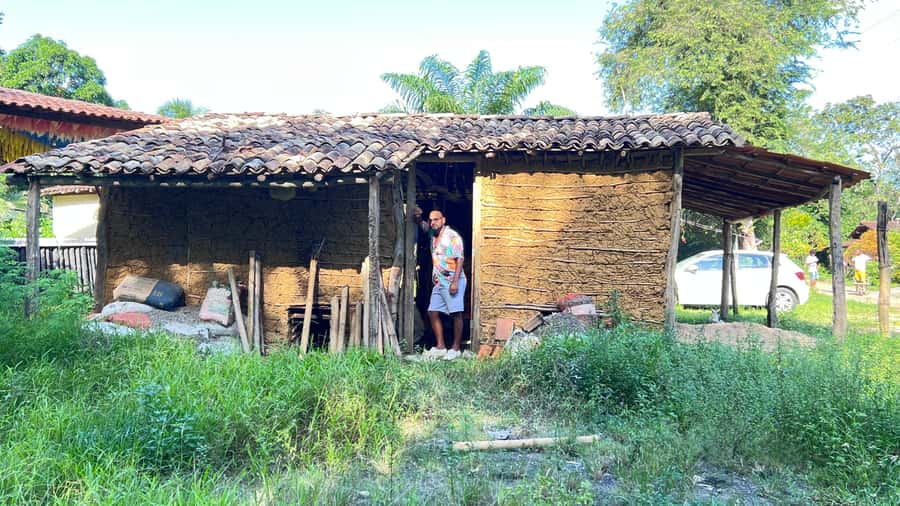
Let’s be honest. $170 is not a budget daytrip. You should decide what you value most before booking.
Here’s where the price makes sense:
- Transport and hotel pickup and drop-off are included.
- A small-group setup keeps the experience from feeling rushed.
- Lunch is included.
- You get more than one stop, including Santo Amaro, Quilombo Kaonge, Cachoeira-Ba, and a specific historical river crossing.
Here’s where some people have felt it misses:
- The quilombo activities can feel like basic demonstrations, depending on your expectations.
- The day is only 8 hours, so the hands-on practice may be shorter than you imagine if you expected a full workshop.
My practical advice: treat this as a respectful, guided introduction to quilombola food processing and conversation, wrapped in a day of regional sightseeing. If that fits your travel style, $170 may feel justified. If what you want most is long-form practical work, this might feel too brief.
Practical tips so the day feels smooth
Dress for smart casual. You will be walking some parts of the day, and you’ll also be in rural or semi-rural settings. Wear comfortable shoes and light layers, since Bahia weather can shift.
Bring a reusable water bottle, because drinks are not included. That simple step keeps you from paying repeatedly for small purchases.
When you reach the griô conversation time, come with one or two questions. Even basic curiosity helps, like how manioc fits into daily meals or why certain steps matter. The tour is structured to allow talk, so use it.
For the hands-on flour and palm oil segment, keep your sleeves or gloves situation in mind. You are practicing a process, so you’ll want to avoid clothing that makes you worry about getting messy.
Finally, if you are vegetarian, note it at booking. The option exists, but you’ll want it arranged in advance.
Who should book this Quilombo daytrip, and who should skip it
Book this if:
- You want a small-group day focused on manioc flour and traditional food processing.
- You value conversation with community elders and want time allocated for it.
- You’d like a day that combines cultural learning with regional sightseeing.
Consider skipping if:
- You are expecting an all-day, detailed, start-to-finish workshop where you do everything and spend hours at the tools.
- You get disappointed when a cultural experience is more guided and shorter than you hoped.
Should you book this Quilombo Heritage Daytrip with Lunch?
I’d book it if your goal is respectful, practical learning in a small group, plus a strong sense of place in the Recôncavo region. The mix of Santo Amaro, Quilombo Kaonge, Cachoeira-Ba, and the Paraguaçu River bridge built in 1830 makes the day feel more than a single activity.
If you do book, set expectations like this: think guided taste and guided hands-on practice, not a long artisan boot camp. And if you want maximum payoff, be ready to ask questions during the griô conversation time and to participate during the flour and palm oil steps.
FAQ
How long is the Quilombo Heritage daytrip?
The tour duration is listed as 8 hours.
What is the price per person?
The price is $170 per person.
How small is the group?
The experience highlights mention up to 6 people, and the activity details list a limit of 4 participants.
What is included in the price?
Transportation, hotel pick-up and drop-off, a small-group tour, an accredited guide, and lunch are included.
Are drinks included?
No. Drinks are not included.
Is a vegetarian lunch available?
Yes. A vegetarian option is available if you advise the operator at the time of booking.
What languages does the tour guide speak?
The guide is listed as speaking Spanish, English, and Portuguese.
Where is the pick-up location?
Pick-up is included from your hotel lobby in Salvador.
Is the tour wheelchair accessible?
Yes, the tour is listed as wheelchair accessible.
Can I cancel and get a full refund?
Yes. Free cancellation is offered up to 24 hours in advance for a full refund.
What should I wear?
The dress code is smart casual.
More Tour Reviews in Salvador Brazil
Bahia, Past the Old Town
More Tour Reviews in Salvador Brazil
Latest from our Salvador Brazil notebook
- From Salvador: Quilombo Heritage Daytrip with Lunch★ 3.4 · 3 reviews
- From Salvador: Schooner Tour to Frades Island★ 3.9 · 3 reviews
- Salvador: Caipirinha Masterclass with Unlimited Drinks★ 4.2 · 4 reviews
- Salvador: Schooner Cruise with Pickup and Itaparica Stop★ 3.8 · 5 reviews
- BOXE CLASS – EX BAHIAN CHAMPION (SALVADOR-BA)★ 5.0 · 7 reviews
- Salvador by Night: Pelourinho & Old Town Tour★ 4.3 · 8 reviews
Salvador & Bahia Tours, compared.
 ★ 3.9Schooner Tour to Frades Islands and ItaparicaFrom $3998 reviews
 ★ 4.7Afro-Brazilian Roots Private City Tour in SalvadorFrom $15088 reviews
 ★ 5.0Trekking the valley of the pat 3 days/ GUIDE TUTY CHAPADA DIAMANTINAFrom $42178 reviews
 ★ 5.04 FASCINATING DAYS! Reservations from 2 people -Chapada Diamantina by ZenturFrom $32371 reviews
 ★ 5.0Private City Tour in Porto SeguroFrom $11870 reviews
 ★ 5.02 AMAZING DAYS! Booking from 2 people – Chapada Diamantina by ZenturFrom $13363 reviews
 ★ 4.8Salvador Historic Walking Tour – Pelourinho62 reviews
 ★ 4.5Salvador de Bahia African Culture Tour60 reviews
Browse the lists this tour appears in