
REVIEW · RIO FAVELA TOURS
Rocinha Walking Tour: Get a Feel for the Brazil’s Largest Favela (Shared Group)
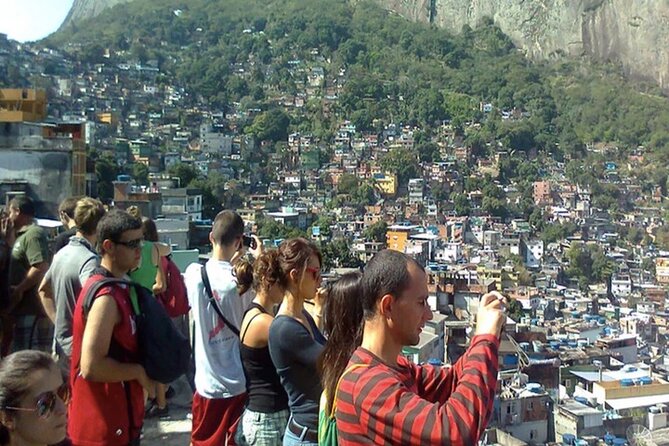
Rocinha changes how you see Rio. This small-group tour led by a Rocinha resident shows the day-to-day side of Brazil’s largest favela, and I like how the route includes spectacular viewpoints over Rio’s beaches and forest slopes. One catch: you should expect moderate walking on uneven alleys and a hill climb, so wear solid shoes and don’t schedule this as your only easy day.
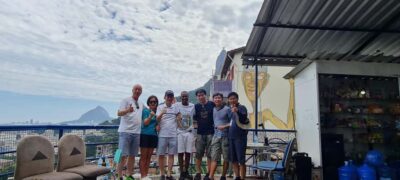
What makes this one feel different is the size. You’re capped at 10 people, which means your guide can actually pause, answer questions, and keep the pace human instead of herding you through tight spaces. It also helps that the tour is socially conscious, not a quick photo stop.
In the most glowing feedback, the guide Carlos is singled out for very good English and a personal approach that feels more like being introduced to a neighborhood than being escorted through a checklist. If you prefer a purely sightseeing day with zero personal conversations, this might feel more meaningful than you expected.
In This Review
- Key things I’d focus on before you go
- The big picture: why Rocinha on foot is worth your time
- Meeting up in Copacabana, then heading into Rocinha
- Stop 1: Salocin Tour through Rocinha alleys and real daily rhythm
- Stop 2: Moto-taxi up the hill for adrenaline and perspective
- Stop 3: Community centers, crafts production, and the fair atmosphere
- Stop 4: Morro do Laboriaux viewpoint over beaches and Tijuca slopes
- Stop 5: Wark graffiti studio, the Wark Institute, and art that has real roots
- Stop 6: Mrs. Maria’s home and the São Conrado view
- How much you pay, and what you get for that $100
- Pace, comfort, and who this fits best
- Safety and comfort: what to do on a neighborhood day
- Should you book the Rocinha Walking Tour?
- FAQ
- How long is the Rocinha Walking Tour?
- How many people are on the tour?
- What is included in the $100 price?
- Is food or drinks included?
- Is the tour guided, and is language support included?
- What should I bring or plan for physically?
- Where does the tour start and end?
Key things I’d focus on before you go

- Small group size (max 10) keeps it personal and makes questions easier to handle
- Led by a Rocinha resident for context that goes beyond what you’ll read on a sign
- Moto-taxi ride included, adding speed and adrenaline while getting you to viewpoints
- Crafts and shopping stop that supports local production and small business
- Graffiti history with Wark, plus a connection to art education through the Wark Institute
- Multiple high points, including the Laboriaux viewpoint with broad views across Rio
Favela walks we have run the numbers on
The big picture: why Rocinha on foot is worth your time
Most first-time Rio plans skim the “postcard” parts, then move on. This tour does the opposite, and that’s the value. Rocinha is large and spread out, so seeing it from one distant overlook will never give you the same sense of scale and community.
You get a guided walk through daily life, then add viewpoint time so it’s not all narrow lanes and street corners. That mix matters. It helps you understand how people live inside the urban geography of Rio, with houses climbing the hill and routes linking neighborhoods, commerce, and art.
Also, the tour is built around access that normal visitors usually cannot get. You’ll spend time at community-focused stops, including craft production and a visit connected to a long-time resident. That’s where it stops being entertainment and starts being education you can feel in your own conversation.
Meeting up in Copacabana, then heading into Rocinha
The tour meets at Cardeal Arcoverde / Copacabana, at Praça Cardeal Arcoverde on R. Barata Ribeiro. The best practical tip here is simple: arrive early enough to feel settled. You’ll start with a shared group format, and the day runs on a tight schedule to fit everything into about 3 hours.
From the information provided, metro tickets are included. That helps cut friction, especially if you’re new to Rio transit. It also means you can spend your energy on the tour, not on figuring out how to get there.
You should also mentally prepare for a walking experience in alleyways. The tour description calls for moderate physical fitness, which is a polite way of saying that some parts are not stroller-flat. Think uneven surfaces, short uphill sections, and time spent moving.
Stop 1: Salocin Tour through Rocinha alleys and real daily rhythm
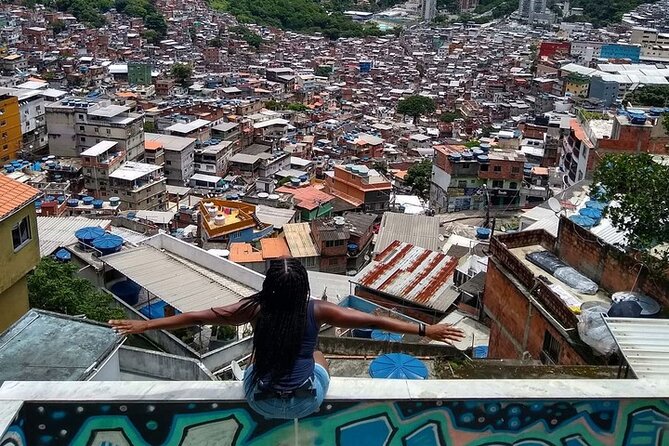
Your first segment is a Salocin Tour that focuses on getting to know the reality of Rocinha up close. You walk down alleys and learn about day-to-day life, with your guide explaining how people live, work, and move through the neighborhood.
Why this opening works: it gives you bearings fast. Before you jump to art or viewpoints, you learn what the space feels like from the inside. That makes later stops click. When you then see a community center, a craft area, or a graffiti studio, you’ll understand the context of why those places matter.
The downside is that the first hour can feel intense if you came expecting a gentle, casual stroll. If you’re the type who needs lots of time to process, pace yourself. The guide can likely slow down, but you’ll still be in a real neighborhood, not a theme park.
Tip: keep your phone accessible, but don’t lead with the camera. Ask questions first. It helps conversations feel respectful, and it makes the tour more rewarding.
Kept it on foot? So did these
- Rio de Janeiro: Rocinha Favela Walking Tour with Local Guide
★ 4.8 · 3,052 reviews - Rio De Janeiro: Half-Day Rocinha Favela Walking Tour
★ 4.7 · 2,272 reviews - Sunrise and Sunrise Walk Two Brothers with Local Guide
★ 5.0 · 193 reviews - Rio de Janeiro: Little Africa Heritage Walking Tour
★ 4.9 · 177 reviews - Learn the History of Rio with an Unforgettable City Center Walking Tour
★ 5.0 · 82 reviews
Stop 2: Moto-taxi up the hill for adrenaline and perspective
Next comes a 20-minute moto-taxi ride uphill to reach an overview of Rocinha. This is one of the most “you can only do this on a guided tour” moments because it covers elevation quickly and gets you to a viewpoint that you likely would not reach as efficiently on foot.
This part is included, which is a value win in plain terms. You’re not paying extra just to get the view. It also changes the energy of the day. After walking through alleys, the ride gives you a different perspective fast.
Safety-wise, the feedback I’m working from describes people feeling unconcerned for their safety when traveling with the guide. That matters, but you still should treat it like an actual moto-taxi ride. Hold on, keep your balance, and follow your guide’s cues.
If you have mobility issues, this is not the stop to “test your limits.” But if you’re generally comfortable moving around and you can handle short uphill sections, it’s a fun and practical way to see scale.
Stop 3: Community centers, crafts production, and the fair atmosphere
After the viewpoint momentum, the tour shifts to hands-on community culture. You visit community centers for the production of handicrafts, then walk toward the shopping area and reach a craft fair where residents sell jewelry, decorative objects, and souvenirs.
This is where the tour earns its socially conscious label. Seeing objects is one thing, but watching people make them and learning what the work means turns shopping into a conversation. You’re not just buying. You’re participating in local commerce in a way that supports creators.
Time here is about 40 minutes, so it’s enough to browse without turning into a long “buy things” session. Still, you should go in with a fair mindset. Prices and quality vary at any market.
A practical consideration: have some cash or be ready to pay in the way the sellers expect. The tour includes transit and guide services, but food and drinks are not included, and neither is any purchase obligation at the fair.
Also, don’t rush the craft production stop. The craft-making angle often becomes the most memorable part because it’s slow, personal, and specific to the community.
Stop 4: Morro do Laboriaux viewpoint over beaches and Tijuca slopes
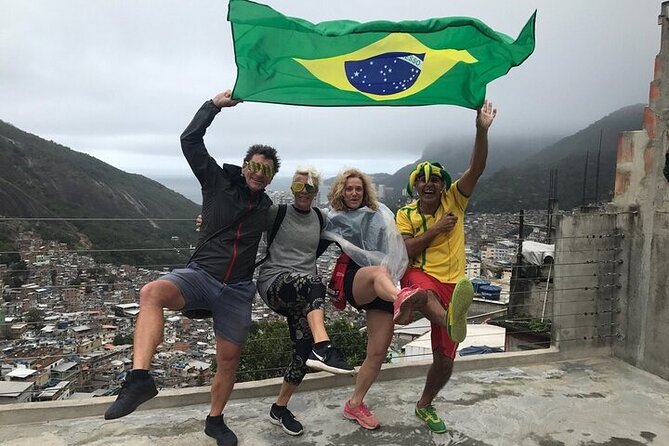
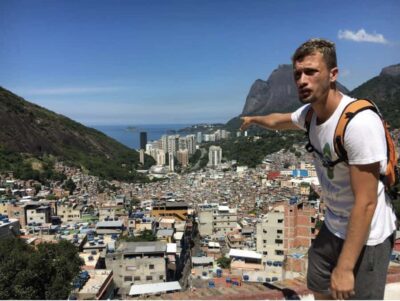
The route then takes you to the Laboriaux viewpoint at the highest point in the favela. From there, you get a privileged view of Rio, including beaches and the slopes of the Tijuca Forest.
This is the “now it makes sense” moment. After walking through alleys and seeing how the neighborhood is connected, the wide view helps your brain map what you’ve been shown. You’re seeing the topography that shapes life below.
Time is about 30 minutes, which is a good sweet spot. It gives you time to look, take photos, and ask follow-up questions without rushing you out immediately. If visibility is good, you’ll likely get a strong sense of how Rocinha sits within Rio’s broader geography.
Practical tip: dress for sun and shade swings. Hill neighborhoods can have sharp light and quick cooling with wind. Bring something to cover up if you get chilly.
One more thought: viewpoints are where people often ask the hardest questions. If you feel awkward, that’s normal. You don’t have to be intense. Just ask basic questions like what area you’re seeing or how the daily commute works.
Stop 5: Wark graffiti studio, the Wark Institute, and art that has real roots
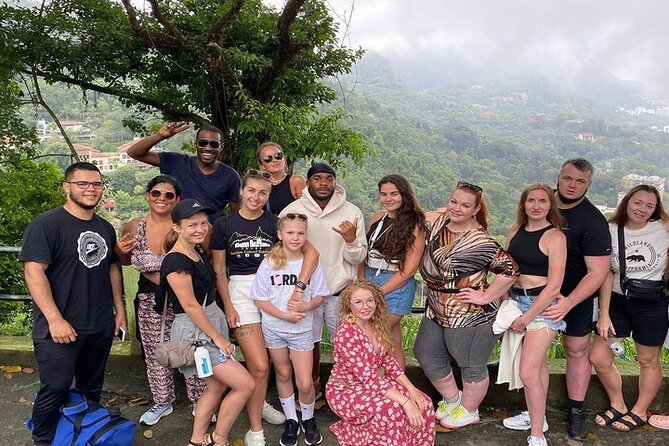
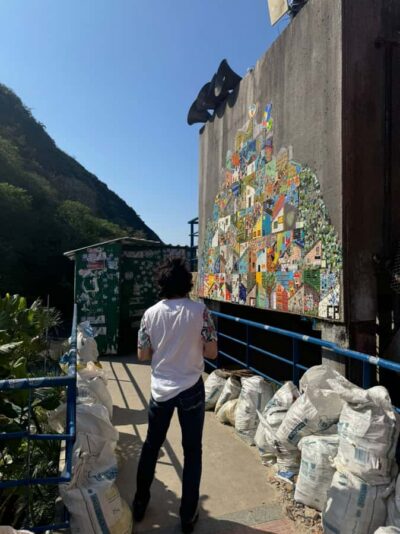
Next you visit the studio of one of Rio’s best-known graffiti artists from Rocinha, Wark. He’s described as a pioneer in the graffiti movement in the largest favela in Brazil. The tour also connects his art to wider recognition, including attention from prominent Brazilian leaders, named here as Lula da Silva.
The most meaningful part is the education angle. Wark also founded the Wark Institute, described as a school for young people in Rocinha to learn and practice art. That’s how graffiti becomes more than street decoration. It becomes a path for creative training and community pride.
This stop is about 20 minutes. It’s not meant to be an art lecture. You’ll likely get the core story quickly and then have room to ask questions.
A balanced consideration: if you’re expecting a museum-style presentation with lots of deep art history, you might want a different tour. This is more about connection and context inside the neighborhood.
If you’re an art fan, though, this is one of the best value moments. You get an authentic link between street art, a person, and an institution doing ongoing work.
Stop 6: Mrs. Maria’s home and the São Conrado view
The final stop is a visit tied to the home of Mrs. Maria, who has lived in the favela for 32 years. You spend about 10 minutes at this point, with the description emphasizing the view from her house slab: São Conrado beach and the favela itself.
Why this last stop hits: it humanizes everything you saw before. You’re no longer studying a place. You’re meeting a life that has persisted through changes over decades.
The short time also means you should keep your questions focused. Ask one or two thoughtful questions and then let the moment breathe. The value is in respectful attention, not in trying to extract a full biography in 10 minutes.
Practical tip: keep your expectations realistic. You might not have long conversations here depending on pacing and the flow of the group. The payoff is often the visual and the tone of being welcomed into a real home.
How much you pay, and what you get for that $100
The price is $100 per person for about 3 hours in a shared group, booked on average 15 days in advance. That means you should plan ahead, especially if you’re traveling in busy seasons.
Here’s the value math based on what’s included:
- Licensed bilingual private tour guide
- Metro or subway tickets
- Moto-taxi ride up to the top of Rocinha hill
- VAT and taxes
What’s not included is food and drinks, and tips are optional.
So yes, it’s not a bargain-basement experience. But the price covers the things that usually add up: professional guiding, safe and efficient transportation into the hill, and time in places that require local access. If you were to hire a similar guide privately and pay for local transport separately, the total would likely be higher.
In other words: you’re paying for access and context. The small group cap matters here. More people would mean less time per question, and it would change the feel of home visits and crafts stops.
Pace, comfort, and who this fits best
This tour is listed for moderate physical fitness. That’s not a dealbreaker for most visitors, but it is a real factor.
You’ll be walking through alleys and moving between stops that sit at different elevations. Even with some rides, the day expects you to stay steady on uneven ground and stay comfortable for a few hours.
I think this tour fits best if you:
- Want to see more than Rio’s skyline and beaches
- Like guided context, especially cultural and social explanations
- Prefer a small group, max 10, with a local guide
- Enjoy art and community-focused stops, including graffiti and crafts
You might skip it if you:
- Want a purely scenic, minimal-walking sightseeing day
- Get stressed by narrow spaces and crowds close together
- Are sensitive to personal conversations and prefer only facts on signage
Safety and comfort: what to do on a neighborhood day
Nothing about this experience is “behind glass.” You’ll be in daily life spaces, with narrow alleys and real residents around you. That can feel intimidating if you expect everything to feel controlled.
The best practical advice is to treat the day like a respectful visit. Follow your guide closely. Listen more than you speak when you first arrive. Ask questions, then keep them polite.
In the feedback I’m using, people highlight Carlos for English and for making guests feel like family, including introductions to his sister and friends as the walk goes on. That kind of relationship is exactly what reduces anxiety. You’re not walking in blind.
Also, take care with your phone camera. Photos are great, but a quick pause to ask permission or follow the guide’s lead is always the right move.
Should you book the Rocinha Walking Tour?
I’d book this if your Rio trip includes a day you want to understand the city beyond the obvious. The combination of alley walking, a moto-taxi ride for scale, craft and fair time, a high viewpoint, and a stop connected to Wark and the Wark Institute makes the day feel like more than a checklist. It’s also hard to beat the access factor, including a home visit connected to Mrs. Maria.
Skip it only if you need a low-effort day or if you’re uncomfortable with neighborhood-style walking and close conversation. This is not a drive-by photo tour.
One last practical call: reserve it early. With bookings averaging 15 days ahead, you don’t want to leave it as a last-minute “maybe.” If you care about doing something real and locally guided in Rio, this is one of the most direct ways to do it in about 3 hours.
FAQ
How long is the Rocinha Walking Tour?
It lasts about 3 hours (approx.), with different stops adding up across the day.
How many people are on the tour?
The group is capped at a maximum of 10 travelers.
What is included in the $100 price?
It includes subway or metro tickets, a licensed bilingual private tour guide, VAT and all taxes, and a moto-taxi ride up to the top of Rocinha hill.
Is food or drinks included?
No. Food and drinks are not included.
Is the tour guided, and is language support included?
Yes. The tour includes a licensed bilingual private tour guide.
What should I bring or plan for physically?
You should have a moderate physical fitness level. Comfortable shoes are a good idea because you’ll be walking in alleys and moving between stops.
Where does the tour start and end?
It starts at Cardeal Arcoverde / Copacabana, at Praça Cardeal Arcoverde on R. Barata Ribeiro. It ends back at the meeting point.
More Tour Reviews in Rio de Janeiro
Favela Tours We Rated Higher
More Tour Reviews in Rio de Janeiro
Latest from our Rio de Janeiro notebook
- Unforgettable Boat Party★ 5.0 · 3 reviews
- Tijuca National Park and all its wonders!★ 5.0 · 3 reviews
- Rocinha Jeep Tour: A Journey into the Soul of the Favela!★ 3.8 · 3 reviews
- Rio: Favela Walking Tour of Rocinha with a Resident Guide★ 4.7 · 3 reviews
- Rio: Private, Custom express, Main Attractions!★ 5.0 · 3 reviews
- Rio: Museum of Tomorrow, Yup Star & Olympic Boulevard★ 3.7 · 3 reviews
Rio Favela Tours, compared.
 ★ 4.8Rocinha Favela Walking Tour with Local GuideFrom $363,052 reviews
 ★ 4.7Half-Day Rocinha Favela Walking TourFrom $352,272 reviews
 ★ 4.9Favela Santa Marta Top Tour with Local GuideFrom $28488 reviews
 ★ 4.6Favela Santa Marta Tour with Resident GuideFrom $27220 reviews
 ★ 4.7Favela Rocinha Tour with Local Guide & Secret SpotsFrom $43218 reviews
 ★ 4.5Vidigal Favela Tour and Two Brothers HikeFrom $88121 reviews
 ★ 4.5Favela Tour The Original, Rocinha & Vila Canoas since 1992From $33113 reviews
 ★ 5.02h30 circuit in the Vidigal FavelaFrom $5088 reviews
Browse the lists this tour appears in