
REVIEW · SAMBA & CARNIVAL NIGHTS
Rio de Janeiro: Bossa Nova Walking Tour with Guide
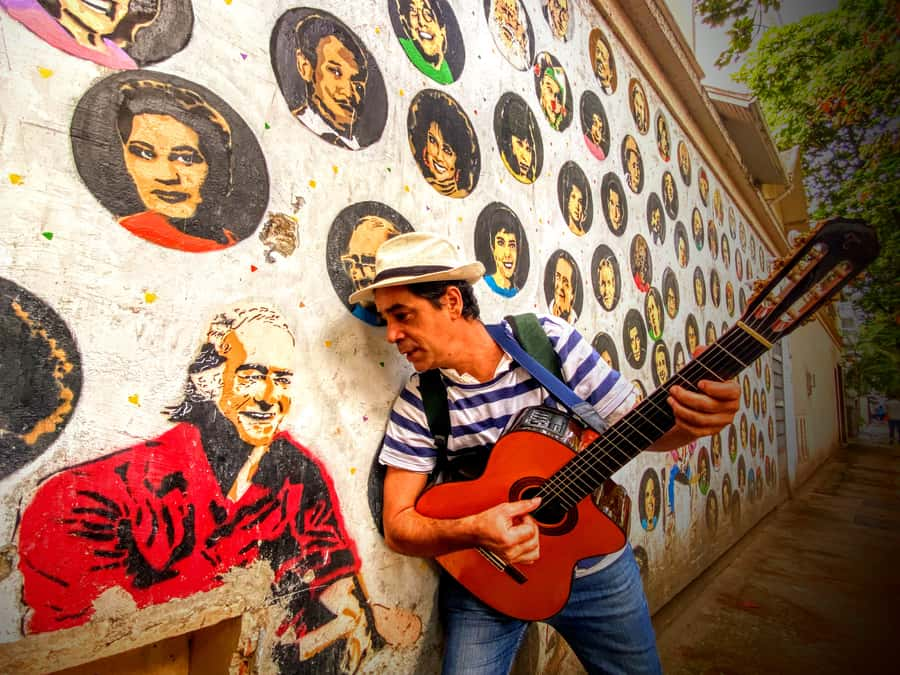
Bossa Nova sounds better when you walk it. This 3-hour Rio de Janeiro stroll threads through Ipanema and Copacabana with a guide who also plays music, so the stories come with sound, not just facts. I love the way you get a guided circuit of real street corners tied to Bossa Nova’s golden years in the 1950s and 1960s, and I also love the live music moments that pop up along the route. One thing to consider: if you’re hoping for nonstop concert-level playing the whole time, the tour is part walking, part storytelling, with music at key stops.
The best clue is the guide himself. People rave about Guilherme, the guide-musician who keeps the tone friendly and musical, and another guide nickname, Gui, shows up in notes as well. You should come prepared for a walking experience, since transport and food are not included and the pace is active.
In This Review
- Key points to know before you go
- Entering Bossa Nova mode on Ipanema’s Praça Nossa Senhora da Paz
- The real magic: Guilherme’s guide-plus-guitar format
- Stop-by-stop on the Ipanema and Copacabana Bossa Nova circuit
- 1) Praça Nossa Senhora da Paz, the theme-setter
- 2) Quiet corners and early photo pauses
- 3) Rua Nascimento Silva and the rhythm of neighborhood streets
- 4) Cantagalo, a viewpoint-style pause
- 5) Praça General Osório, where the story gets bigger
- 6) Av. Atlântica, 3968, and the long view
- 7) Estátua de Dorival Caymmi, listening to names on stone
- 8) Garota de Ipanema, walking the cultural myth on real streets
- 9) Arpoador, the sea-side pause
- 10) Estátua de Tom Jobim, the anchor point for many listeners
- 11) Casa de Cultura Laura Alvim, a brief culture break
- 12) A local bar, the final music moment and the wrap-up
- Live music timing: what you should expect
- Language, group vibe, and what makes the guide matter
- Price and value: is $49 fair for a 3-hour Bossa Nova walk?
- Practical tips so the walk feels easy, not exhausting
- Should you book this Bossa Nova walking tour?
- FAQ
- How long is the Bossa Nova walking tour?
- Where is the meeting point in Rio?
- What time will I get details about the meeting location?
- What languages does the guide speak?
- What is included in the ticket price?
- Are food or drinks included?
- Is transport included?
- What should I bring?
- Is the tour suitable for young children?
- What are the accessibility limits?
- What is the cancellation policy?
Key points to know before you go
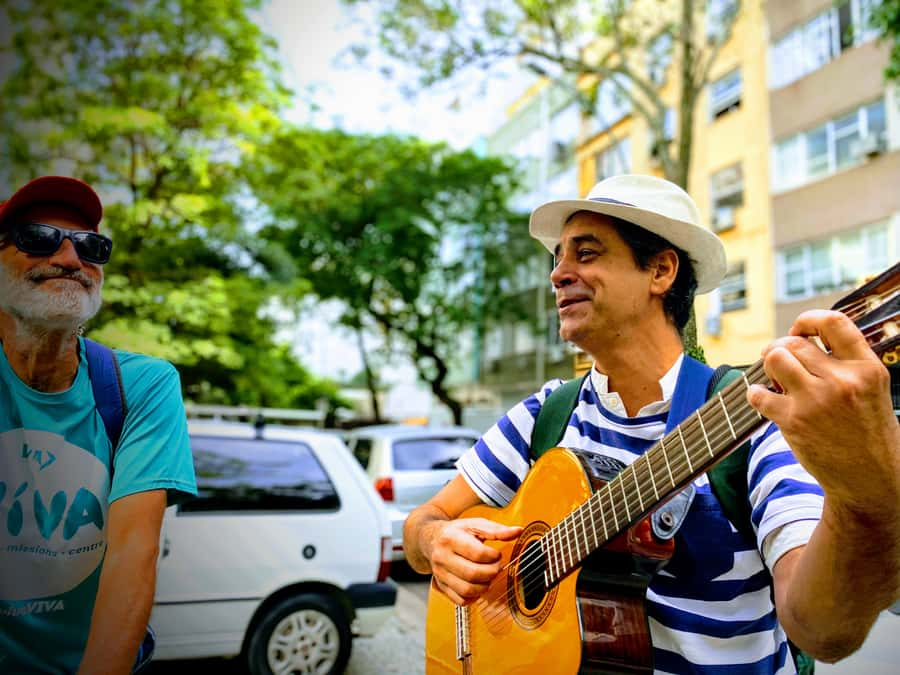
- Musician guide, not just a talker: Guilherme (also known as Gui) blends stories with live playing during pauses.
- Ipanema and Copacabana street circuit: you move through scenic spots tied to Bossa Nova’s Rio identity.
- Live Bossa Nova performance included: music happens during the tour, not only at the start or finish.
- Picture-perfect statue stops: you’ll see monuments connected to major names like Dorival Caymmi and Tom Jobim.
- Short, frequent photo breaks: lots of quick stops keep the rhythm moving through neighborhoods.
- English, Spanish, Portuguese: the guide can explain in multiple languages, depending on the departure.
Nights that run long in Rio De Janeiro
Entering Bossa Nova mode on Ipanema’s Praça Nossa Senhora da Paz
You start in Ipanema at Praça Nossa Senhora da Paz, and it’s an easy place to get oriented. The meeting point is by metro, near exit A, which matters because Rio can feel huge the first day. The tour also tells you the night before, by email at 20:00, exactly where to meet in the square and how to spot the guide.
The first part of the experience is a short “class” session right at the meeting point. This is where the guide sets the theme, so later when you’re walking past bars, beaches, and street corners, the details actually stick. It’s also a good time to ask questions like how Bossa Nova formed, who drove it, and why Rio ties so closely to this sound.
The real magic: Guilherme’s guide-plus-guitar format
This tour is built around one strong idea: your guide is also a working musician. The experience includes a live performance, and the guide plays guitar and other instruments along the way at several stops. That format changes the tone. Instead of listening to history as a lecture, you hear it as a soundtrack.
The reviews point to this as the standout. Agnes specifically highlighted learning more about Bossa Nova history from Guilherme, and she called him personable. Another booking praised Gui for being full of knowledge. Both of these fit the same pattern: you’re getting context, plus music, plus a guide who can keep the conversation lively.
One fair caution from the feedback: one rating noted they would have liked more music. Translation for you: expect music as part of the flow, with performances during pauses, not a full, uninterrupted set.
Stop-by-stop on the Ipanema and Copacabana Bossa Nova circuit
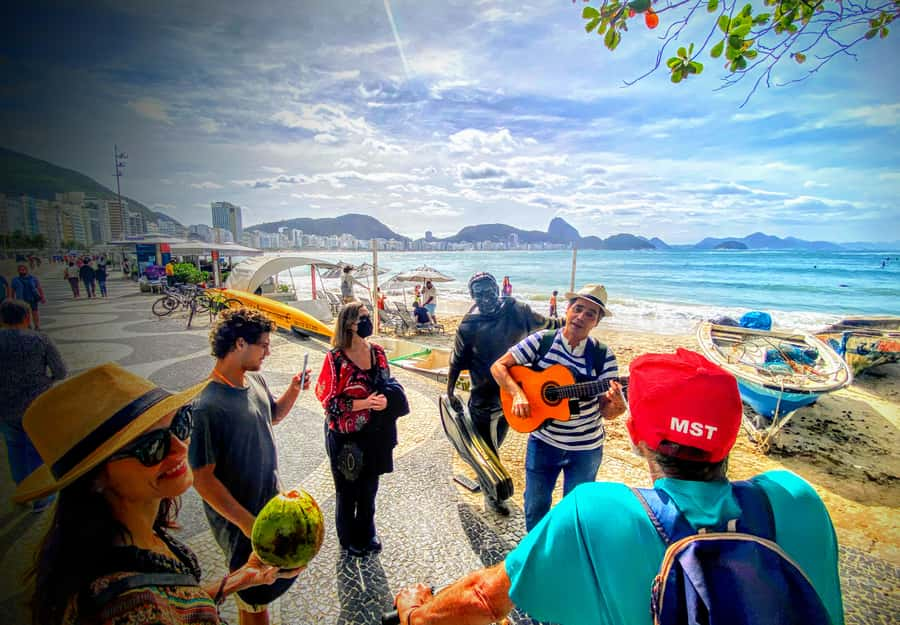
You’ll be on foot for about 3 hours, moving through a route that mixes beaches, neighborhood streets, and a handful of culture landmarks. Exact pacing can vary by group and photo timing, but the structure is consistent: you’ll stop, hear the story, take photos, and then keep walking.
Kept it on foot? So did these
- Sunrise and Sunrise Walk Two Brothers with Local Guide
★ 5.0 · 193 reviews - Rio de Janeiro: Little Africa Heritage Walking Tour
★ 4.9 · 177 reviews - Learn the History of Rio with an Unforgettable City Center Walking Tour
★ 5.0 · 82 reviews - Rio’s city walking tour: a glimpse of history and olympic legacy
★ 4.5 · 78 reviews - Walking tour of the bohemian neighborhoods of Santa Teresa and Lapa
★ 5.0 · 59 reviews
1) Praça Nossa Senhora da Paz, the theme-setter
You begin at the square and settle in for around 20 minutes. This is when you’ll get the basics of how Bossa Nova started, who the key composers and performers were, and why the style became a Rio trademark during its golden years in the 1950s and 1960s. If you’re new to the music, this early grounding helps you connect the later street stops to actual songs and names.
2) Quiet corners and early photo pauses
After the opening, you move to a sequence of small scenic and photo stops. There’s time built in for sightseeing and a short concert moment at one of the early stops. The value here is that your guide doesn’t just say, Bossa Nova happened here. He points to street-level details and gives you the curiosity and context behind the sound.
3) Rua Nascimento Silva and the rhythm of neighborhood streets
Rua Nascimento Silva is one of the early named streets on the walk. Expect another photo stop plus guided explanation. This kind of stop matters because Bossa Nova is tied to place. You’re learning not only who made the music, but also what the streets around them looked like during the era the tour focuses on.
4) Cantagalo, a viewpoint-style pause
Cantagalo is next, with another photo stop and time for sightseeing. Stops like this are useful because they break the walk with a change in scenery. They also give the guide breathing room to connect what you’re seeing with the history he’s explaining.
5) Praça General Osório, where the story gets bigger
At Praça General Osório, you get yet another photo stop and guided tour time. This is where the tour tends to feel like a proper “Rio walk,” not just a museum-style explanation. You’re seeing the city’s layout and atmosphere while the guide talks about the main players in Bossa Nova, including names like Tom Jobim and Vinícius de Moraes, plus performers such as João Gilberto.
6) Av. Atlântica, 3968, and the long view
You then reach Av. Atlântica, 3968. This stop includes a longer scenic viewing time. It’s one of the moments when the tour shifts from “learn the story” to “feel the setting.” If you like photographing the coastline and want the city’s beach energy in your photos, this is a good time to slow down and look around.
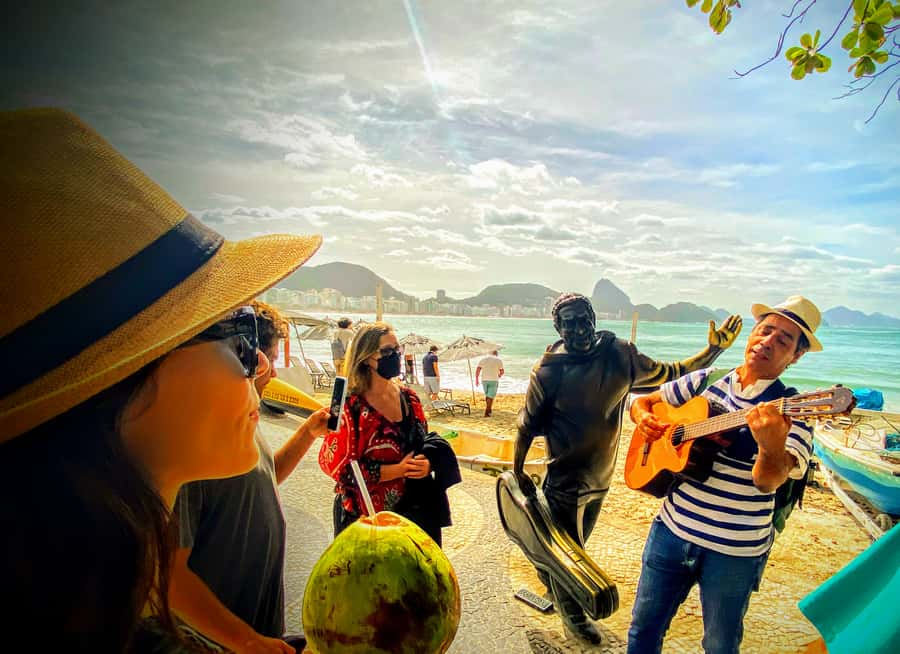
7) Estátua de Dorival Caymmi, listening to names on stone
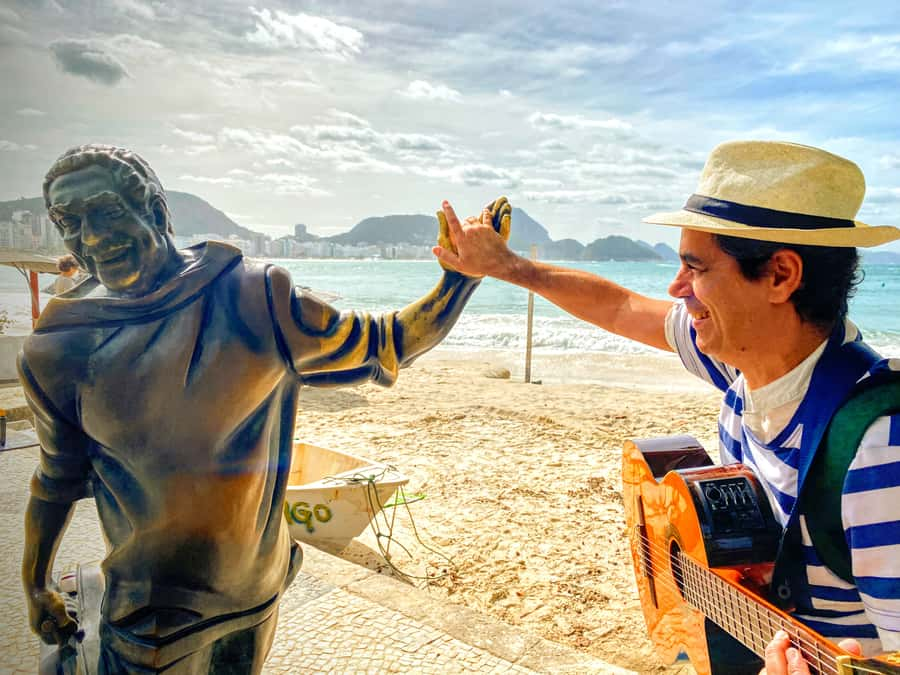
At the Estátua de Dorival Caymmi, you pause for photo-taking and guided explanation. Even if you’re not deeply familiar with Caymmi right now, the statue makes him a physical reference point. The guide ties names to the music and helps you understand why certain figures keep showing up in Bossa Nova conversations.
8) Garota de Ipanema, walking the cultural myth on real streets
Then comes Garota de Ipanema, one of the most recognizable stops on the route. You spend a short time here for photo plus guided context. The tour also promises that you’ll walk by the same streets connected with Garota de Ipanema, helping you connect the song’s story with the actual neighborhood feel.
If you like pop-culture geography, this is a highlight. It turns a famous title into something you can point to on a map and remember later.
9) Arpoador, the sea-side pause
At Arpoador, there’s another short stop for photos and guided explanation, plus scenic viewing time. This is where you get a fresh look toward the water, which is important because Bossa Nova lives in mood as much as in notes. A quick pause here lets the music feel more connected to Rio’s outdoor life.
10) Estátua de Tom Jobim, the anchor point for many listeners
You’ll stop at the Estátua de Tom Jobim. Since Tom Jobim is one of the main names the tour highlights, seeing him memorialized gives the guide an easy anchor for the story. You’ll get guided tour time and scenic context while you connect the statue with what you’re hearing about the composers and performers who shaped the style.
11) Casa de Cultura Laura Alvim, a brief culture break
Casa de Cultura Laura Alvim is a shorter stop. You’ll do a quick photo stop and walk-through. Even though this part is brief, it fits the tour’s pattern, which is mixing sound and culture with actual neighborhood landmarks.
12) A local bar, the final music moment and the wrap-up
The last part includes a local bar stop with photo time and another concert moment. This is also where you’re likely to feel the tour’s pacing slow slightly, because you’re near the finish. The tour ends at Restaurante e Bar Garota de Ipanema. Food and drinks are not included, but being there gives you a natural place to sit, cool down, and process what you just learned.
Live music timing: what you should expect
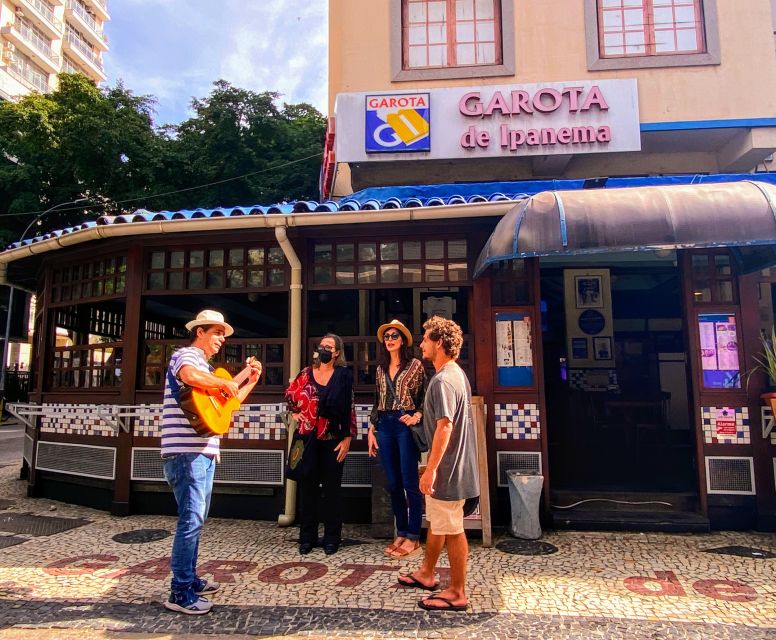
This tour includes a live performance by the musician guide. Music comes during specific stops, not as a continuous concert. That approach keeps the tour moving through multiple neighborhoods and gives you chances to take photos and ask questions.
If your priority is learning the background and getting the guided story tied to street places, the structure makes sense. You’re not trying to do a long sit-down show while walking is happening around you. Instead, you get several music moments spaced out through the walk, so the sound punctuates the history.
Based on the feedback, this approach works for most people. The one criticism was that some wanted more music, so if you fall into the category of wanting nonstop performances, consider that you might want extra listening on your own after.
Language, group vibe, and what makes the guide matter
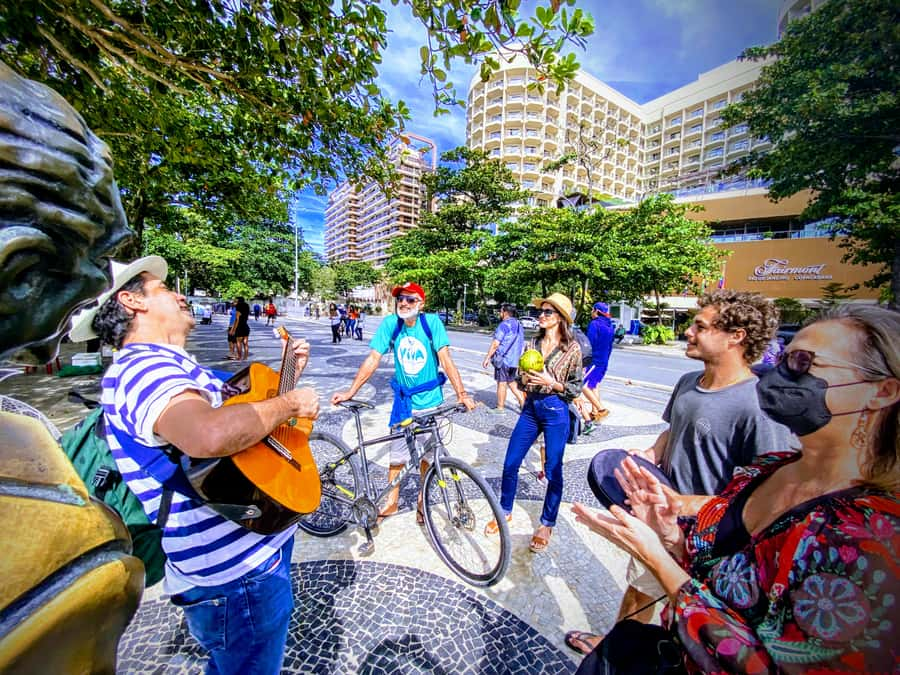
The tour runs in Portuguese, Spanish, and English, depending on the departure and your group. A multilingual option matters in Rio because it helps you avoid losing parts of the story. Here, you’re learning names, origins, and curiosities about Bossa Nova, so you want a guide who can clearly explain as you walk.
Group size is described as private or small groups available. In practice, small groups help with questions and photo timing. You also get a better chance to hear the musician guide at the stops, since the audio is part of the experience and not just background music.
Most importantly, the guide is part of why the tour scores so high. People mentioned Guilherme and Gui for being personable and knowledgeable. That’s the right combo for this specific kind of tour, because you’re balancing walking, explanation, and music.
Price and value: is $49 fair for a 3-hour Bossa Nova walk?
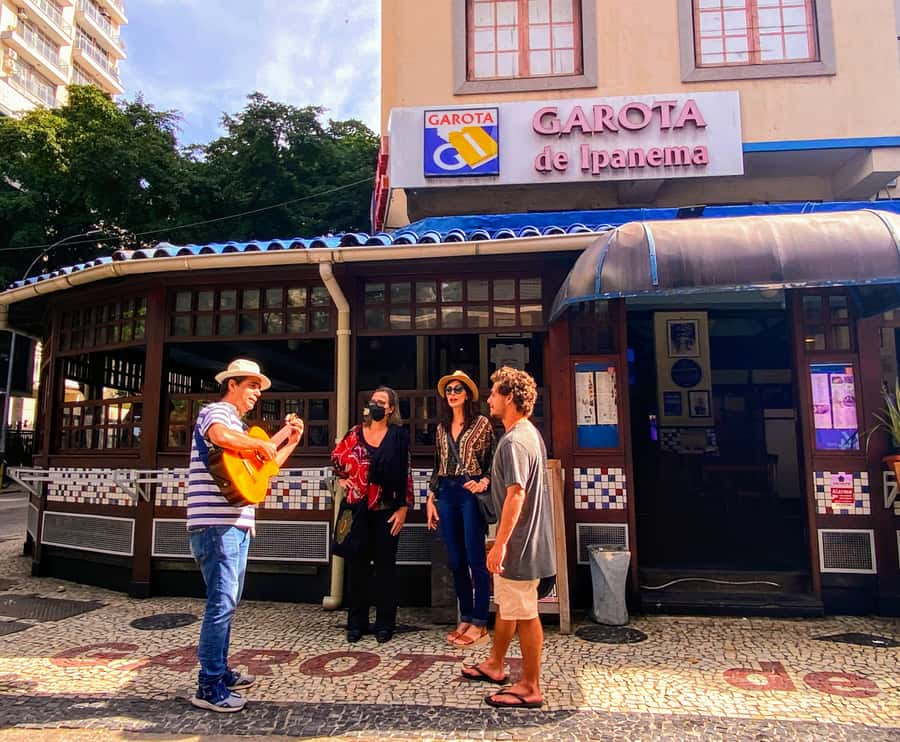
At $49 per person for about 3 hours, the value comes from two things you don’t usually get together: guided street storytelling and live performance. Since transport and food are not included, you’re paying mainly for the guide, the route, and the music moments.
If you compare that to paying for music separately and then doing your own self-guided wandering later, this format is efficient. The guide also handles the “how do I connect places to songs” problem. Without that, you could still visit statues and beaches. You might not get the same clarity on how the main composers and performers connect to the neighborhood circuit.
What I like is that you’re not only seeing scenery. You’re getting curated context from someone who can play and sing as he explains. That matters because Bossa Nova is a style that feels better when you can hear it in context.
Practical tips so the walk feels easy, not exhausting
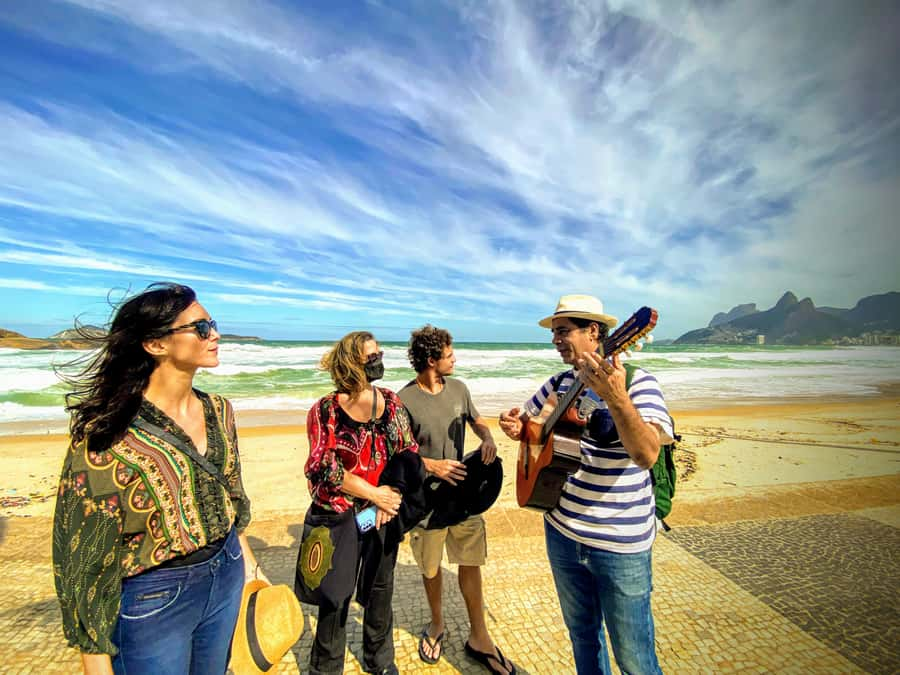
This is a walking tour, so comfort is not optional. Wear comfortable shoes and comfortable clothes. The route goes through coastal and neighborhood areas in Ipanema and Copacabana, and you’ll do multiple short stops on foot.
Bring a phone for photos, and bring an open mind for stories that link music history to real street locations. Also, plan to handle your own water and snacks since food and drinks are not included.
Lastly, note the limitations. The tour is not suitable for children under 8, and it’s not suitable for people with mobility impairments or wheelchair users. If you’re in a stroller situation or managing accessibility needs, you’ll want to think twice and consider an alternate plan.
Should you book this Bossa Nova walking tour?
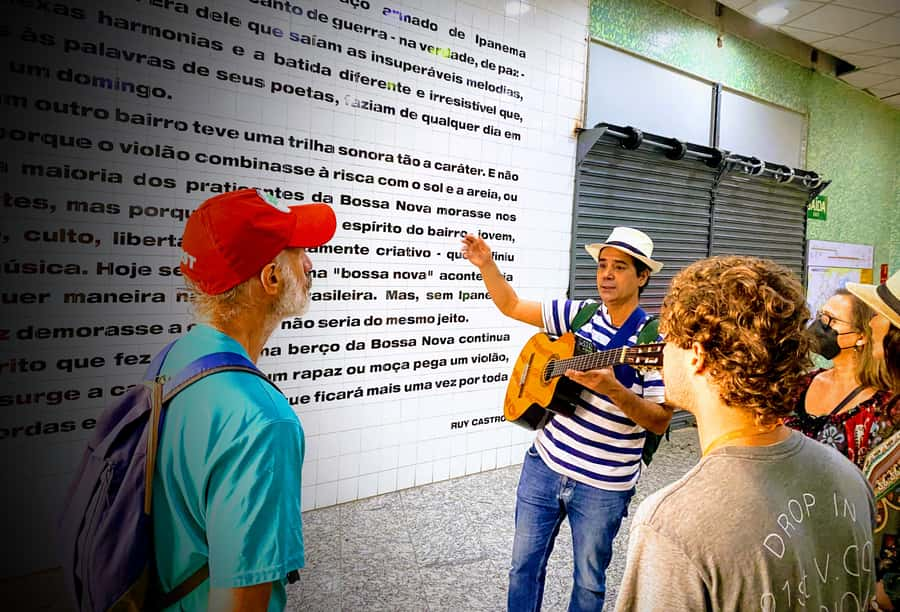
If you want Rio in a way that feels cultural and musical, this is a strong choice. I’d book it if you like walking tours that actually teach you something, and I’d especially book it if you enjoy live music mixed into the route. The guide-musician combo is the key, and the guide names that come up most, Guilherme and Gui, point to consistent quality.
Skip it if your main goal is a long, seated music performance with minimal walking. Also skip if mobility needs make a walking circuit unrealistic for you, since the tour isn’t designed for wheelchair users or people with mobility impairments.
FAQ
How long is the Bossa Nova walking tour?
The tour lasts 3 hours.
Where is the meeting point in Rio?
You meet at Praça Nossa Senhora da Paz in Ipanema, near exit A of the nearby metro station.
What time will I get details about the meeting location?
The night before, at 20:00, you’ll receive an email with the exact meeting point location in the square and directions on how to find the guide.
What languages does the guide speak?
The tour is available in Portuguese, Spanish, and English.
What is included in the ticket price?
The experience includes a guided walking tour and a live performance of the musician.
Are food or drinks included?
No, food and drinks are not included.
Is transport included?
No, transport is not included.
What should I bring?
Bring comfortable shoes and comfortable clothes.
Is the tour suitable for young children?
No, it’s not suitable for children under 8 years old.
What are the accessibility limits?
It is not suitable for people with mobility impairments or wheelchair users.
What is the cancellation policy?
You can cancel up to 24 hours in advance for a full refund.
More Tour Reviews in Rio De Janeiro
The Long Nights of Rio De Janeiro
More Tour Reviews in Rio De Janeiro
Latest from our Rio De Janeiro notebook
- Unforgettable Boat Party★ 5.0 · 3 reviews
- Tijuca National Park and all its wonders!★ 5.0 · 3 reviews
- Rocinha Jeep Tour: A Journey into the Soul of the Favela!★ 3.8 · 3 reviews
- Rio: Favela Walking Tour of Rocinha with a Resident Guide★ 4.7 · 3 reviews
- Rio: Private, Custom express, Main Attractions!★ 5.0 · 3 reviews
- Rio: Museum of Tomorrow, Yup Star & Olympic Boulevard★ 3.7 · 3 reviews
Samba & Carnival Nights, compared.
 ★ 4.9Beginner Samba Lesson in IpanemaFrom $251,071 reviews
 ★ 4.7Pub Crawl in Lapa with Cachaça Tasting and Live SambaFrom $33881 reviews
 ★ 4.6Carnival Backstage Tour at Samba City with CocktailFrom $27520 reviews
 ★ 3.5Hop-ON Hop-OFF Sightseeing Bus in Rio de Janeiro – Rio Samba BusFrom $30457 reviews
 ★ 4.6Samba Class in CopacabanaFrom $25262 reviews
 ★ 4.7Ginga Tropical Samba and Folklore Show TicketFrom $61231 reviews
 ★ 4.5Ginga Tropical – Brazilian Samba and Folklore ShowFrom $65216 reviews
 ★ 4.4Pedra do Sal: Live Samba Night with Local Guide & DrinkFrom $41183 reviews
Browse the lists this tour appears in