
REVIEW · HISTORICAL TOURS
Rio: Historical Walking Tour
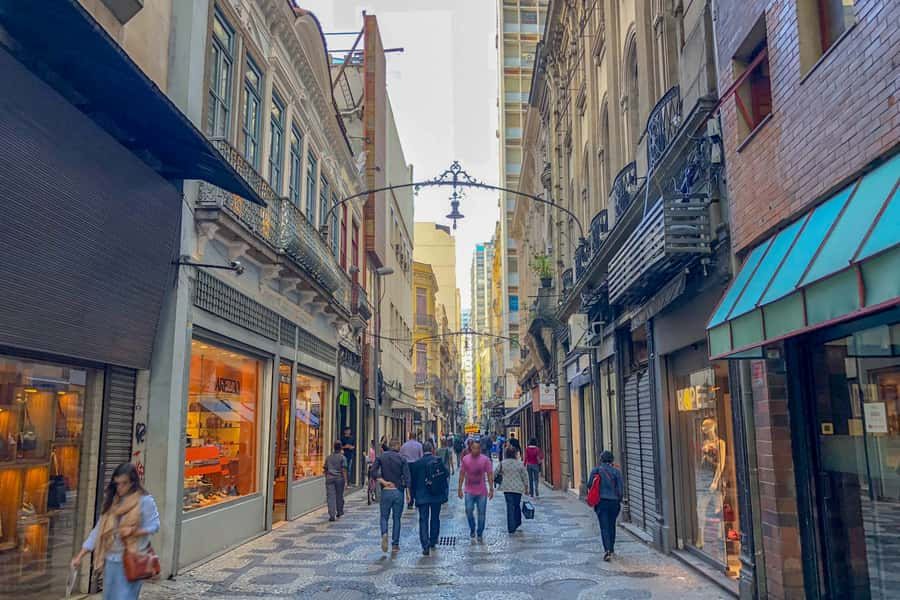
Downtown Rio turns into a story on foot. You take the subway to Cinelândia, then walk through the city center where French-influenced architecture and major landmarks do the talking. The best part is how the route is paced for seeing details, not just crossing streets.
I particularly like the focused mix of grand civic buildings and quieter religious stops, because it shows how downtown Rio grew. The tour also has a strong guide component, and guides like Lucien and Monique are praised for clear, detailed explanations. The main drawback is physical, it is not recommended for people with walking difficulties, and it is not suitable for wheelchair users.
In This Review
- Key highlights you will feel right away
- Why the subway-and-walk format works in downtown Rio
- From Cinelândia Station into French-influenced Rio
- Praça XV and the civic core, where the city shows off
- Confeitaria Colombo, a stop that turns into a mood
- Travessa do Comércio and Carmen Miranda’s former residence
- Largo da Candelária and cultural centers when open
- Candelária Church, the big visual finish before you head back
- How the guide turns landmarks into a story you can use
- Price and value: what $79 buys you in 4 hours
- Who should book this tour, and who should skip it
- Should you book the Rio Historical Walking Tour?
- FAQ
- FAQ
- How long is the Rio Historical Walking Tour?
- What is included in the price of $79 per person?
- Does the tour include meals or drinks?
- Where does the tour start and end?
- What subway route does the tour use?
- Which languages are available for the live guide?
- Is the tour suitable for wheelchair users or mobility impairments?
- Is there free cancellation?
Key highlights you will feel right away
- Subway-first start from Copacabana area, with the center reached quickly and efficiently
- Cinelândia to Praça XV section designed for classic downtown views and architectural variety
- Confeitaria Colombo (built in 1894) stop, perfect for a coffee-house style pause
- Travessa do Comércio cobbles for that old-street texture in the middle of modern traffic
- Cultural centers near Largo da Candelária like the Post Office Cultural Center and Bank of Brasil Cultural Center (when open)
- Candelária Church as a major visual anchor before you head back by subway
Kept it on foot? So did these



Why the subway-and-walk format works in downtown Rio
Downtown Rio can be a lot, loud, and a bit chaotic. This tour solves part of that problem by using the subway to get you straight into the action. Then you get a guided walk where someone else handles the order and pacing.
At 4 hours, you get enough time to see multiple areas without turning the day into a full commitment. You also avoid the stress of navigating between scattered landmarks on your own, which is where first-time Rio days can get messy.
You’ll likely start from the Copacabana side, with one listed option at Av. Atlântica 1702, Copacabana Palace, A Belmond Hotel, and the tour ends there too. The back-and-forth by subway matters because it keeps you from spending extra time in traffic when you just want to keep sightseeing.
From Cinelândia Station into French-influenced Rio
The tour kicks off with subway travel to Cinelândia Station, a starting point tied to the area’s French architectural influence. That matters because downtown Rio looks different when you know what to look for. You start noticing the design cues that shape the streetscape instead of just taking photos and moving on.
From Cinelândia, the walk heads toward Carioca Square, and that’s where several signature stops fall into place. You pass by and learn about places like the Naval Club, the Monastery Church of Santo Antônio, and the Ordem Terceira de São Francisco da Penitência.
The practical value here is orientation. If you’ve never walked downtown Rio before, this route helps you understand what’s close to what. The guided pace also means you’re not constantly checking maps while trying to appreciate churches, façades, and street geometry.
One small note for your comfort: the tour includes lots of landmarks, so your feet will do real work. Plan to wear shoes you trust, especially when the route later includes cobblestones.
Praça XV and the civic core, where the city shows off

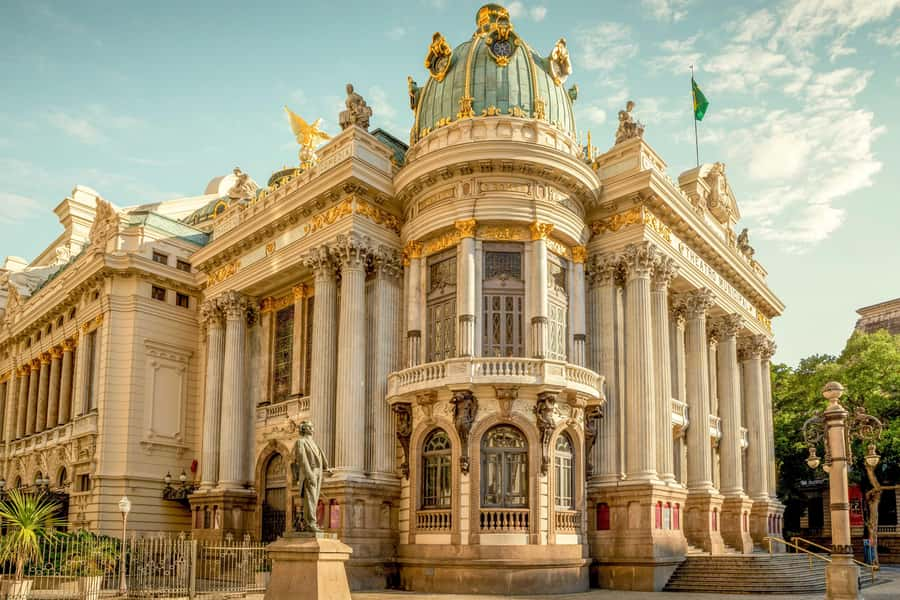
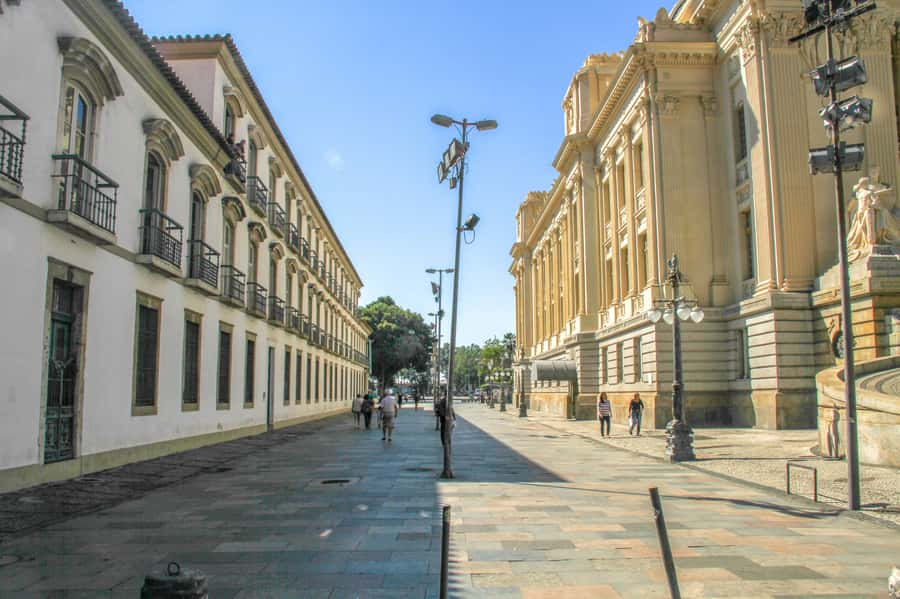
After the early downtown stretch, you get a deeper look at the civic heart around Tiradentes Palace and Praça XV. This is where you’ll see the Imperial Palace, plus a line-up of famous sculptural and architectural moments.
You’ll also pass the statue of General Osório, visit Mestre Valentim’s Fountain, and see the Teles Arch. Even if you don’t know the details ahead of time, this part works because it’s visually varied. One stop is monumental. Next is a more specific point of interest. Then it turns into a street-level scene again.
Why this matters for your trip: when you’re in Rio, it’s easy to focus only on beaches and views. This tour forces you to see downtown as a designed space, with symbols and buildings that reflect political and cultural life. It’s a nice balance, especially if your other days are more about coastlines.
If you like your travel to have context, this is also where guides tend to connect the dots between buildings and how the city functioned as a former capital. You’re not stuck with one kind of landmark. The mix keeps the story from going flat.
Older stories from Rio De Janeiro
- Rio de Janeiro: Little Africa Heritage Walking Tour
★ 4.9 · 177 reviews - Explore Little Africa : Unveiling Afro Heritage in Rio de Janeiro
★ 5.0 · 97 reviews - Learn the History of Rio with an Unforgettable City Center Walking Tour
★ 5.0 · 82 reviews - Rio’s city walking tour: a glimpse of history and olympic legacy
★ 4.5 · 78 reviews - Olympic Boulevard, Museum of Tomorrow & Historical Rio
★ 4.5 · 66 reviews
Confeitaria Colombo, a stop that turns into a mood
One of the best known breaks on this route is Confeitaria Colombo, built in 1894. Even without getting overly technical, it’s the kind of place that gives you a sense of how long downtown Rio has been part of daily public life.
This is also a strong moment to reset. After a stretch of churches and civic buildings, a classic Rio café stop can feel like breathing room. And because entrance fees are included, the tour handles the access piece, so you spend less time asking questions and more time enjoying the setting.
Just don’t expect drinks and meals to be included. If you want coffee, water, or anything else, plan on buying it yourself. The good news is you get a natural chance to do it right when you need it, not later when everyone is tired.
Travessa do Comércio and Carmen Miranda’s former residence

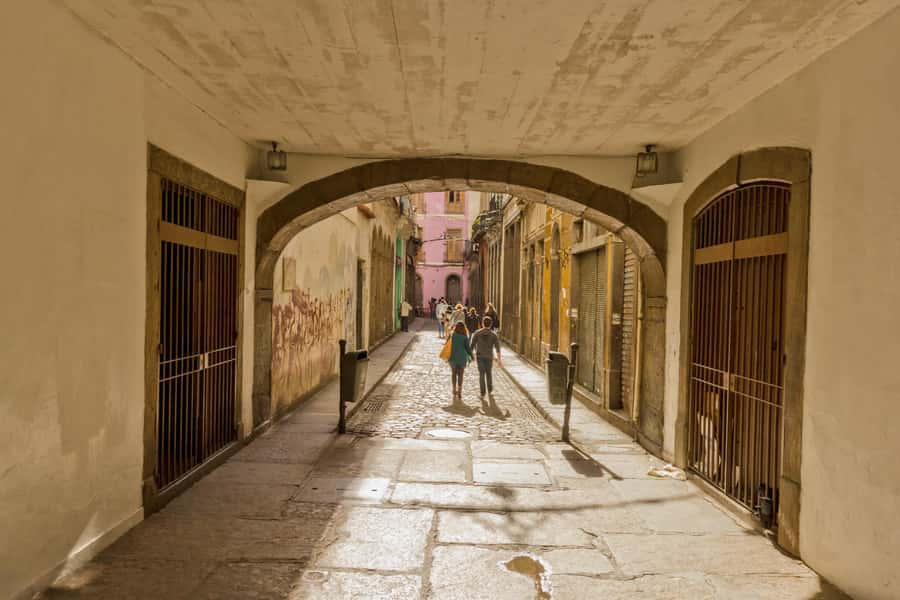
The tour shifts from major monuments to street texture, which is a smart move. You’ll reach the Travessa do Comércio, a cobble-stoned lane that changes the way you experience the city. Walking there feels slower, more tactile, and more old-Rio than modern.
Here you also see the former residence of Carmen Miranda. This kind of stop is valuable even if you’re not a superfan of pop culture history, because it anchors the neighborhood in something personal and recognizable. You see a place tied to an icon, not just a building tied to paperwork and power.
This segment is where your camera habits will change. On wide plazas you shoot wide. On cobblestones you shoot details, doorways, and the way people move through narrow space. If you like travel photos that look like you were really there, this part delivers.
Largo da Candelária and cultural centers when open
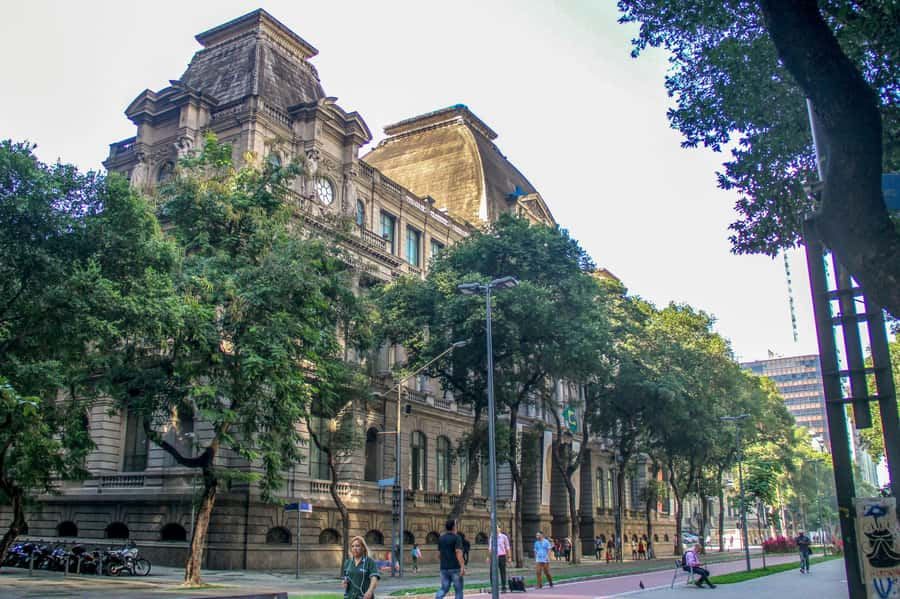
The walk continues through the area around Largo da Candelária, where you’ll see several cultural stops grouped close together. One of the religious highlights is the Church of Our Lady of the Merchants, which sits nicely in this “center city” zone.
You’ll also pass or visit places including the Post Office Cultural Center, plus France-Brazil House when it is open. Another similar stop is the Bank of Brasil Cultural Center, also when open. Because these are scheduled by opening times, it’s normal that you might spend more time looking at the exterior if a space is closed that day.
Still, the value is the clustering. You’re not hopping across the city. You’re seeing multiple institutions in one walk, which keeps your 4-hour window efficient. It also helps you understand downtown Rio as a system, not just a list of isolated sights.
If you’re the type who likes to step into museums or historic interiors when possible, this is the section where you’ll feel the benefit most. Entrance fees are included, so the tour covers access costs for the parts you’re meant to see.
Candelária Church, the big visual finish before you head back
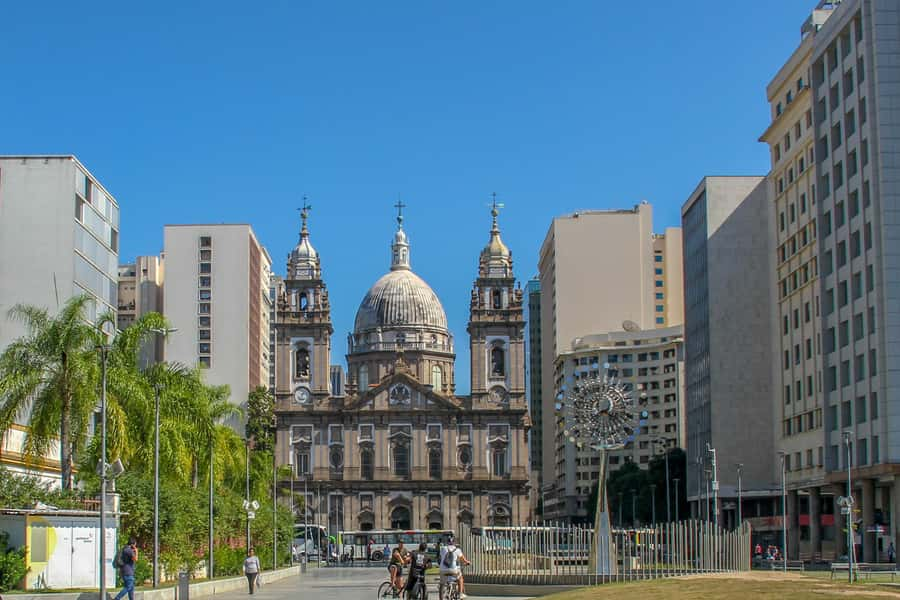
The tour’s route brings you to Candelária Church, one of the most prominent landmarks near the end. It’s the kind of stop that makes you pause, not because the guide rushes, but because the building demands a few slow minutes.
This is also a practical finish line. Once you’ve seen Candelária, you have a strong sense of where you are in the city center. After that, you head back to your hotel by subway, which helps you avoid the tired end-of-day scramble.
Think of this portion as your “anchor” stop. Without it, downtown Rio can blur. With it, you leave with one clear memory that your brain can use to file everything else.
How the guide turns landmarks into a story you can use
The tour stands or falls on the guide, and the strongest signal here is how often guides are praised for depth and clarity. Names that come up include Lucien, Monique, Ernani, and Mathilda, each highlighted for being prepared, answering lots of questions, and giving detailed cultural and historical commentary.
That’s exactly what you want in a downtown walking tour. Downtown landmarks can look impressive, but they can also feel random if nobody connects them. A good guide helps you see patterns, like which buildings serve civic roles versus religious roles, and how the French-influenced elements show up in the streetscape.
Language coverage is also a real plus. You can get live guiding in Spanish, English, or Portuguese, which reduces the awkwardness of trying to piece together history on your own. And since it’s a small-group tour, questions are easier to work into the pace.
If you like slightly nerdy but understandable context about politics, economy, and daily life in the city center, this tour is tuned for that. It’s also flexible in a good way, with guides described as able to follow what people want to see while still hitting the key stops.
Price and value: what $79 buys you in 4 hours
At $79 per person for a 4-hour experience, the question is not just price. It’s what you’re buying.
You’re getting:
- entrance fees included
- a professional guide
- a small-group format
- subway transport
That package is often better value than booking a few separate entry tickets and trying to coordinate transit yourself. You also avoid paying for multiple guides or a taxi strategy for short hops, especially since the route is designed around walking sections.
What you do pay extra for is simple: drinks and meals are not included. So if you know you’ll want a drink or a snack during the walk, factor in a budget.
Also, remember you’re buying time. Four guided hours in downtown Rio can save you a full afternoon of map checking and stop-start wandering. If you’re only in Rio for a limited number of days, this structure is a practical way to see more without burning energy.
Who should book this tour, and who should skip it
This is a strong fit if you want to understand downtown Rio through walking and architecture. If you like churches, civic plazas, and historic interiors, you’ll appreciate the balance between grand landmarks and street-level scenes.
It’s also a good fit if you travel with questions. Guides are praised for answering plenty of questions and offering detailed cultural and historical commentary. Even if history is not your favorite subject, the tour’s layout keeps things concrete because you’re always looking at something specific.
Skip this tour if mobility is an issue. It is not recommended for walking difficulties, and it is not suitable for wheelchair users. The itinerary includes walking through downtown streets, and it also includes a cobblestone segment at Travessa do Comércio.
Also skip if you prefer very slow sightseeing. This is a structured 4-hour walk with multiple stops. You will have pauses, but it is not built for long sit-down time at every location.
Should you book the Rio Historical Walking Tour?
Book it if you want a guided way to see central Rio without guessing. The subway start, the concentration of landmarks, and the inclusion of entrance fees all point to solid value for a first pass through downtown.
Don’t book it if walking is hard for you. This one is built for feet, not comfort-first pacing. And if you need lots of meal breaks, remember drinks and meals are on you.
If you’re the type who enjoys architecture and wants context you can actually remember, this tour is likely to land well. You’ll walk away with a clearer picture of how downtown Rio looks, how it’s organized, and why those famous buildings matter.
FAQ
FAQ
How long is the Rio Historical Walking Tour?
The tour lasts 4 hours.
What is included in the price of $79 per person?
The price includes entrance fees, a professional guide, a small-group tour, and transport by subway.
Does the tour include meals or drinks?
No. Drinks and meals are not included.
Where does the tour start and end?
One listed starting option is Av. Atlântica 1702, Copacabana Palace, A Belmond Hotel, and the tour finishes there as well. The exact meeting point may vary depending on the option booked.
What subway route does the tour use?
You travel by subway to downtown and arrive at Cinelândia Station, then you return by subway afterward.
Which languages are available for the live guide?
The live tour guide is available in Spanish, English, and Portuguese.
Is the tour suitable for wheelchair users or mobility impairments?
No. It is not recommended for people with walking difficulties, and it is not suitable for wheelchair users.
Is there free cancellation?
Yes. You can cancel up to 24 hours in advance for a full refund.
Everything Else We Rated in Rio De Janeiro
More Tour Reviews in Rio De Janeiro
More Tour Reviews in Rio De Janeiro
Latest from our Rio De Janeiro notebook
- Unforgettable Boat Party★ 5.0 · 3 reviews
- Tijuca National Park and all its wonders!★ 5.0 · 3 reviews
- Rocinha Jeep Tour: A Journey into the Soul of the Favela!★ 3.8 · 3 reviews
- Rio: Favela Walking Tour of Rocinha with a Resident Guide★ 4.7 · 3 reviews
- Rio: Private, Custom express, Main Attractions!★ 5.0 · 3 reviews
- Rio: Museum of Tomorrow, Yup Star & Olympic Boulevard★ 3.7 · 3 reviews
Historical Tours, compared.
 ★ 4.4Historic Rio and Santa Teresa Half-Day TourFrom $47228 reviews
 ★ 4.9Downtown Historical Bike TourFrom $85191 reviews
 ★ 4.0Scenic Train ride to historical cities of Morretes and AntoninaFrom $128188 reviews
 ★ 4.9Little Africa Heritage Walking TourFrom $40177 reviews
 ★ 4.4From Foz do Iguazu: Triple Frontier Landmark TicketFrom $24136 reviews
 ★ 5.0Explore Little Africa : Unveiling Afro Heritage in Rio de JaneiroFrom $8297 reviews
 ★ 4.8Historic Centre Walking Tour & Cachaça TastingFrom $1996 reviews
 ★ 5.0Downtown-Center History Walking Tour – in EnglishFrom $3191 reviews
Browse the lists this tour appears in