
REVIEW · SALVADOR & BAHIA TOURS
Salvador: Traditional Drumming and Percussion Workshop
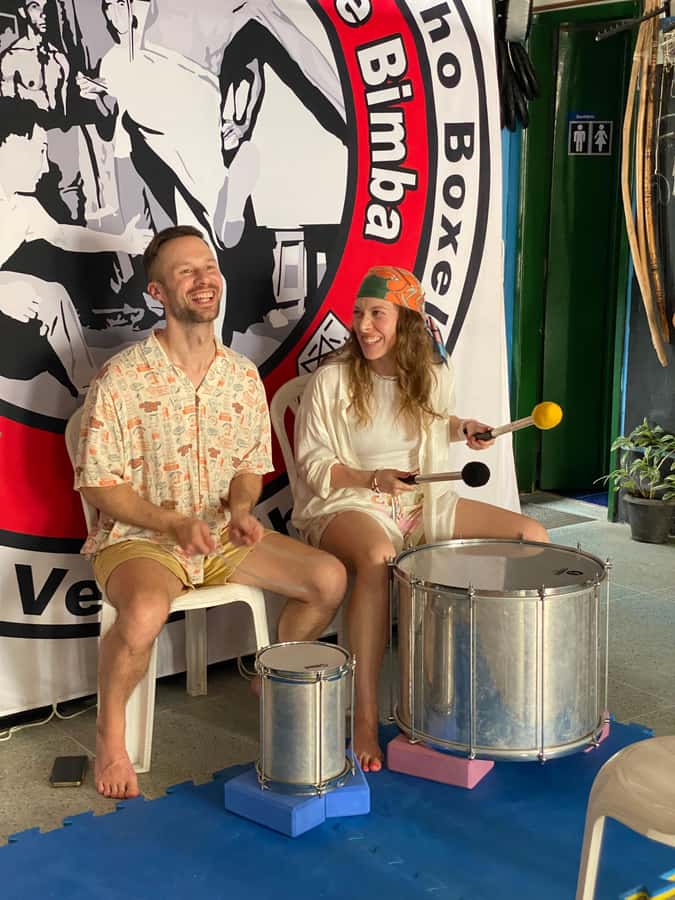
One hour can change how you hear drums. In Salvador, this Afro-Brazilian percussion workshop at Associação de Capoeira Mestre Bimba turns rhythm into something you can feel and understand, not just copy. You get taught beats and movements by instructors who share the cultural meaning behind them, including the story of the school as a Quilombo of resistance.
What I love most is the small group size and the hands-on way you learn, even if you have zero music background. The main caution is language: the class is listed with Portuguese and English, but one past booking reported an English shortfall, so it is smart to confirm language fit before you go.
In This Review
- Key things that make this workshop worth your hour
- Mestre Bimba’s School, a Quilombo of Resistance in Salvador
- What you actually do in the 1-hour drumming workshop
- The instruction style: patient teaching, plus real cultural context
- Where it happens: Associação de Capoeira Mestre Bimba near Largo do Terreiro de Jesus
- Price and value: $43 for hands-on rhythms and meaning
- What to watch for: language expectations and beginner-friendly pacing
- A simple game plan for making the most of your hour
- Who this workshop is best for
- Should you book this drumming workshop?
- FAQ
- Where is the meeting point for the workshop?
- Is hotel pickup included?
- How long is the drumming workshop?
- Do I need any prior music experience?
- How many people are in the group?
- What languages are used during the class?
- Is the workshop good for beginners?
- Can I get a refund if my plans change?
Key things that make this workshop worth your hour
- No prior music experience required, so you can jump in without feeling behind
- Small group of up to 10, which keeps the instruction direct
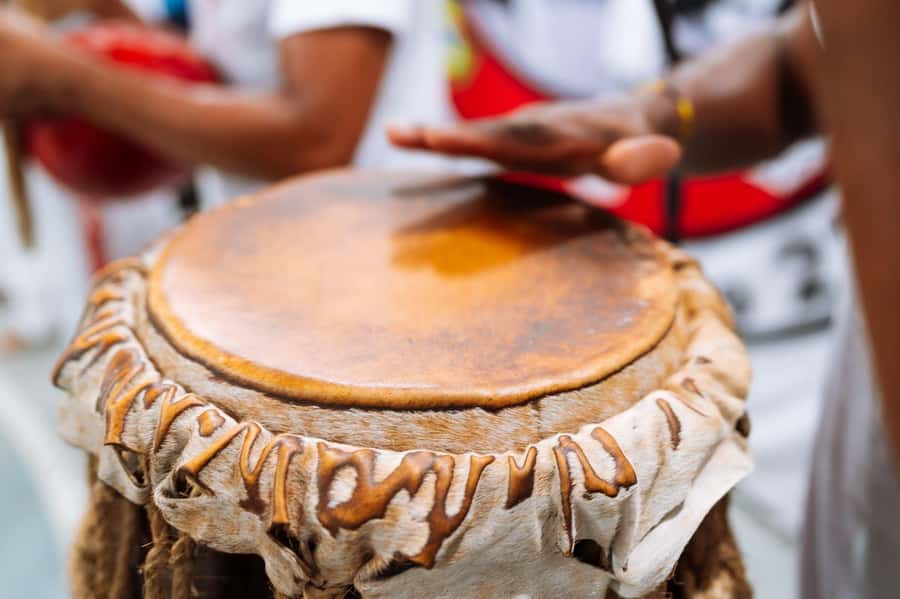
- Capoeira percussion focus, meaning you learn rhythms tied to Afro-Brazilian tradition
- Instruction includes cultural and historical context, not just counting beats
- A school framed as a Quilombo of resistance, adding weight to what you practice
- Convenient meeting point near Pelourinho landmarks, easy to combine with sightseeing
Bahia beyond the Pelourinho
Mestre Bimba’s School, a Quilombo of Resistance in Salvador
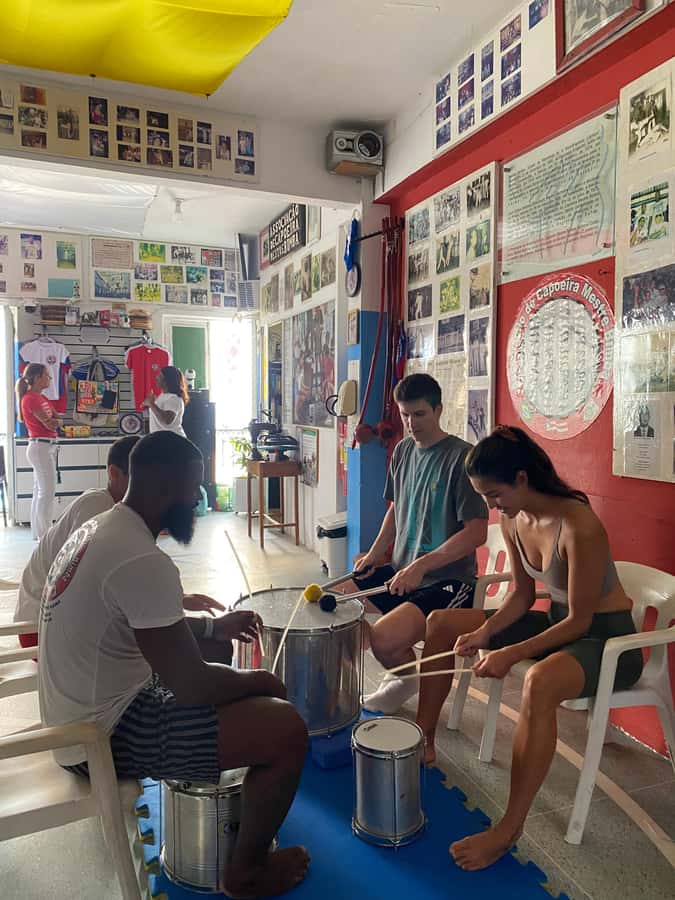
If your idea of learning percussion is just hitting a drum and hoping it clicks, this experience is built differently. It starts with setting the rhythms inside a living cultural space, the Associação de Capoeira Mestre Bimba, described as Mestre Bimba’s First Ever School and a Quilombo of resistance. That framing matters because it changes what the class feels like.
Brazilian Afro-diasporic arts, especially capoeira, samba, and drumming, were treated with suspicion and often criminalized in the late 19th century. Here, you are invited to understand how those practices moved from persecution to becoming symbols of national identity. When an instructor gives you a pattern to repeat, you are also learning why people fought to keep these traditions alive.
This is one reason the workshop is more than a fun activity. You are practicing rhythm, yes, but you are also learning how communities carried identity through sound, body movement, and repetition. That is the kind of context that makes your time in Salvador feel less like checkboxes and more like understanding.
What you actually do in the 1-hour drumming workshop
The class is one hour, and it is designed so you are not standing around watching. You join in from the start, because the goal is that you leave able to play a few rhythms and repeat them with confidence, not just memorize what someone told you.
You will work on beats and movements with professional instruction. The teaching style is hands-on, including guidance on posture and the physical basics of making the percussion sound the right way. One past participant from France specifically praised how the teacher took time to show the correct gestures and postures, plus how you can produce different rhythms using the same general ideas.
A practical way to think about the hour is like this:
- You learn the basics of the pattern and how your body fits the rhythm.
- You practice in a way that connects timing with movement.
- You get cultural notes while you are working, so the history sticks better.
Even better, the workshop is built for beginners. The format does not assume musical training, so you can focus on listening first, then joining in. The result is you get the satisfaction of making real sounds quickly, without needing to decode notation or music theory.
The instruction style: patient teaching, plus real cultural context
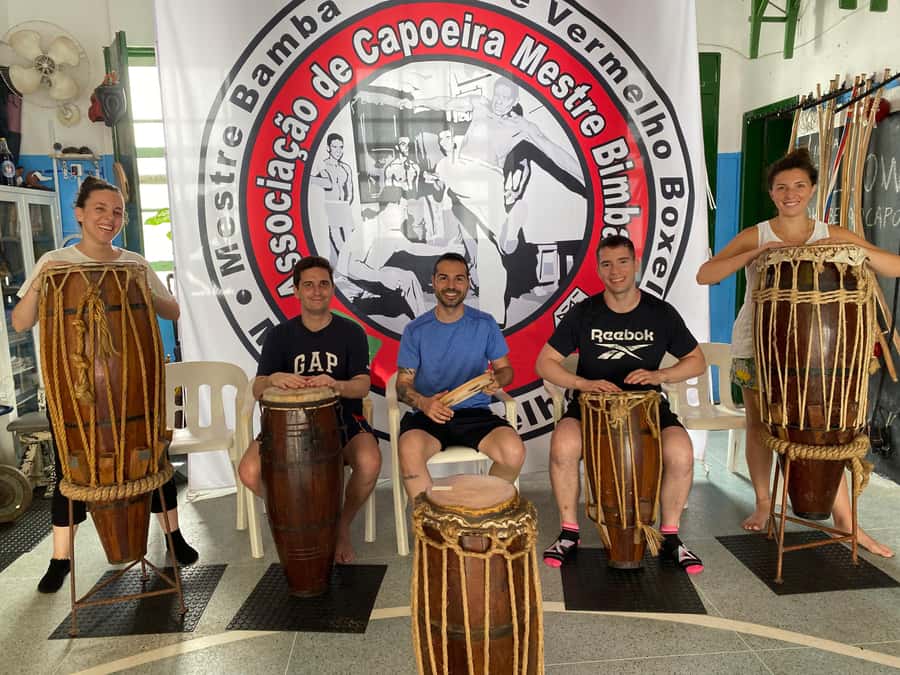
One of the clearest strengths here is the teacher approach. In one booking, a participant described a thoughtful, attentive 1:1 style of instruction with Yasmin, focused on Brazilian capoeira percussion instruments and drumming. They expected to fail and still ended up playing a variety of percussion instruments with help that stayed patient and kind.
Another participant loved that the instructor showed multiple ways to do the percussion and highlighted different rhythms. That suggests the teaching is not just one rigid pattern. Instead, it sounds like you get enough variety to notice how rhythm changes with technique and timing.
Here is how that translates into value for you:
- You can progress within a single hour, because instruction is responsive to what you can do.
- You learn more than one beat pattern, so you do not leave with just one memory.
- The history and cultural explanations make the drumming feel purposeful, not random.
For me, this is the difference between a demo and a workshop. A demo can be entertaining. A workshop changes your understanding of what rhythm means in the first place.
Hands-on sessions around Salvador Brazil
- Salvador: Capoeira Class at Mestre Bimba’s 1st Ever School.
★ 4.9 · 34 reviews - Salvador: 3-Hour Percussion Class
★ 4.9 · 10 reviews - Salvador: Traditional Drumming and Percussion Workshop
★ 4.4 · 10 reviews - BOXE CLASS – EX BAHIAN CHAMPION (SALVADOR-BA)
★ 5.0 · 7 reviews
Where it happens: Associação de Capoeira Mestre Bimba near Largo do Terreiro de Jesus
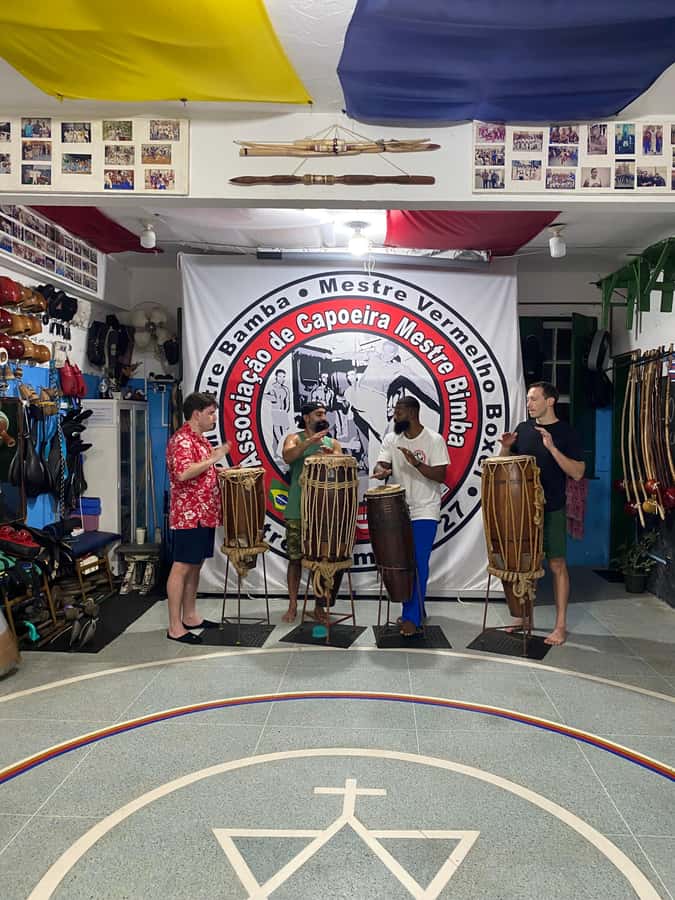
You meet at Associação de Capoeira Mestre Bimba. The operator does not offer hotel pickup, so you will plan to arrive on your own.
To make that easy, anchor yourself using well-known nearby spots. Two helpful landmarks are:
- Ó Paí Ó Restaurante
- São Domingos Gusmão Church, in Largo do Terreiro de Jesus
Those names matter because they help you navigate around Pelourinho and the historic center area without guessing streets. And since one past booking noted the location is in Salvador’s historic center and convenient for sightseeing, you can treat this like a “real activity” between visits, not like a separate expedition.
If you are combining it with other Pelourinho plans, the timing is especially friendly. Because the class is only one hour, you can slot it into your afternoon when the light and crowds are moving around. You also have a built-in cultural stop that is not just walking past monuments.
Price and value: $43 for hands-on rhythms and meaning
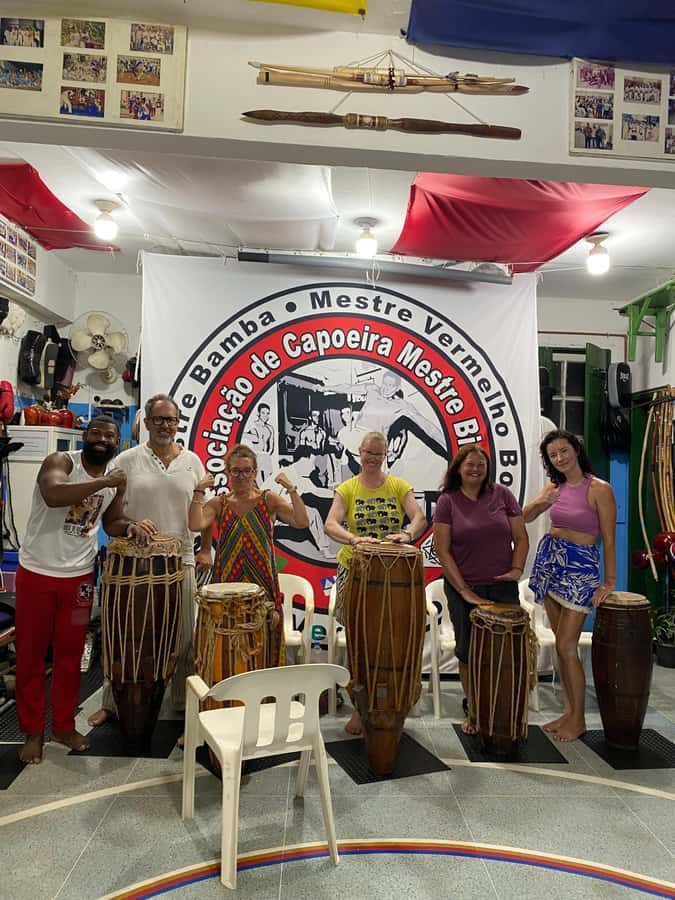
At $43 per person, you are paying for direct instruction in a small group, plus cultural and historical context. The price is not just covering a drum circle vibe. It is paying for time with an instructor who guides you through technique, beats, and movement.
A fair way to judge value here is to compare the components:
- Duration is short, which keeps it accessible.
- Group size is limited to 10 participants, which tends to mean more attention per person.
- The included elements are practical: the workshop itself and an instructor.
You do not get meals or beverages included, so you should not plan to treat this as your whole food plan. But that is also part of why it can be good value. You can eat before or after, then spend this hour focused on drumming and context.
If you want a high-impact cultural experience that does not require musical background, and you are okay learning through repetition, this price can make sense fast. You are paying for participation, not observation.
What to watch for: language expectations and beginner-friendly pacing
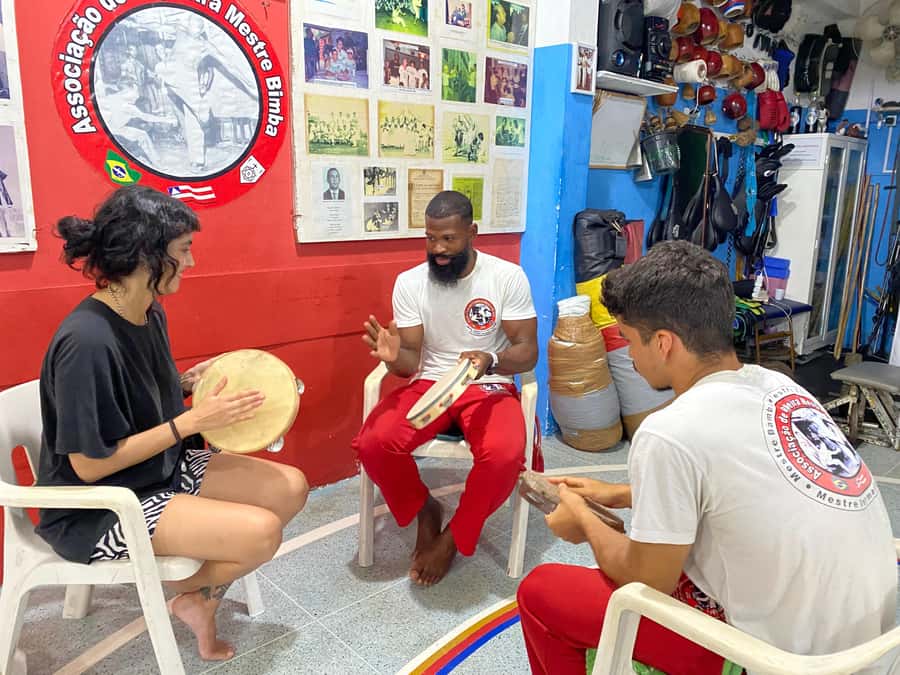
Everything about the setup is beginner-friendly: no music experience is required. That is great, especially if you worry about embarrassing yourself.
The one caution I would flag is language consistency. The class is listed with Portuguese and English instruction. Still, one verified booking reported that the teacher could not speak English despite English being requested. That does not mean it is common, but it is enough that you should treat language fit as worth confirming.
Here is how to handle it calmly:
- If you are an English-only speaker, it is worth double-checking that English will be available at your time slot.
- If you speak Portuguese at all, even basic phrases, you will likely feel more comfortable interacting.
Other than that, the pace seems built for people learning on the spot. One participant praised how the instructor kept showing good gestures and postures to help you succeed. That is a strong sign the workshop is structured for real learning, not just enthusiasm.
A simple game plan for making the most of your hour
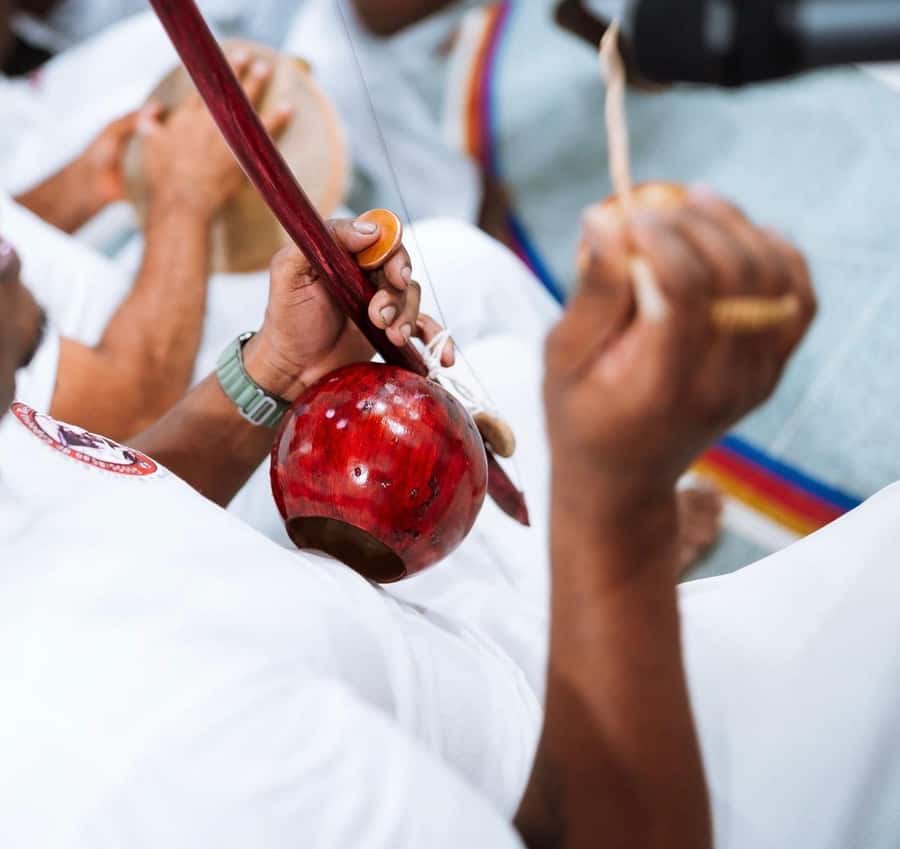
You do not need musical experience, but you will get better results if you come ready to do three things: listen, repeat, and ask for clarification.
Start by watching the instructor’s body cues. In rhythm-based teaching, posture and gesture often communicate timing. The workshop includes teaching beats and movements, so your body language matters. If the instructor shows how to hold and strike with correct form, copy it closely, even if it feels awkward at first.
Second, expect to be actively involved. The class is interactive, so you will likely take turns and practice together. If you get thrown off, that is normal. You are not being tested, you are being taught.
Third, pay attention to the cultural explanations while you are playing. One participant highlighted that the instructor shared rich history and cultural tradition, and that it helped them understand what they were doing. Even short notes can make the difference between a fun hour and an hour that stays with you.
If you are visiting during major seasonal moments like Carnaval, this kind of workshop can also help you experience the city beyond the street noise. One booking mentioned it was easy to mix with sightseeing during Carnaval celebrations, turning one afternoon into two kinds of experiences: cultural practice and local atmosphere.
Who this workshop is best for
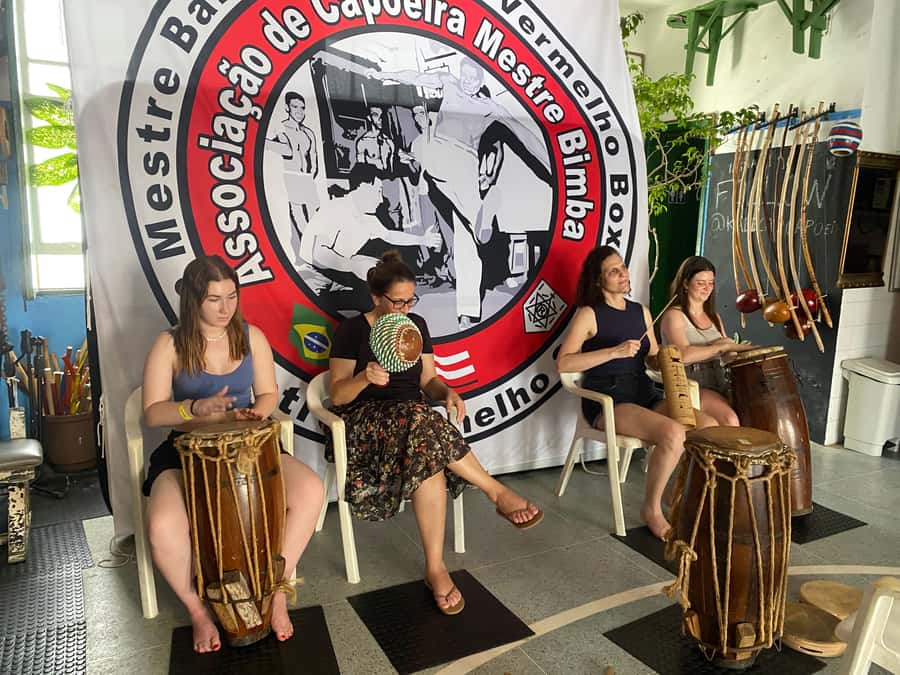
This is a smart fit if you want:
- A beginner-friendly way to experience Afro-Brazilian percussion in Salvador
- Hands-on instruction, not just watching from the sidelines
- A short time commitment (one hour) that still has cultural context
- A small-group class with up to 10 participants
It can be especially good if you are already exploring Pelourinho and want one memorable, meaningful stop that connects sound to history. If your travel style is learning by doing, this hour is built for you.
Should you book this drumming workshop?
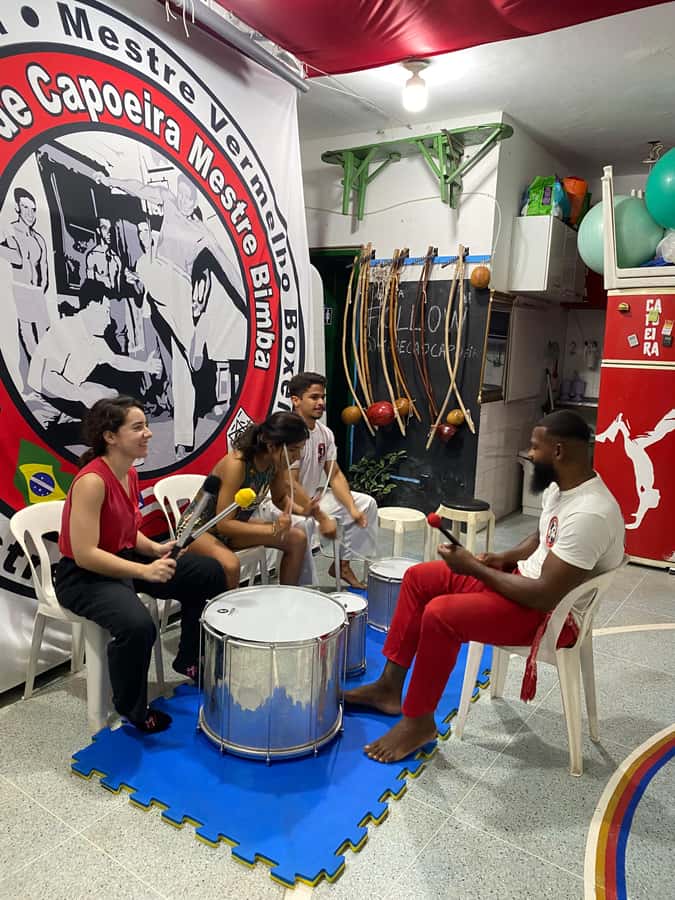
Yes, I think you should book it if you want a small-group, beginner-friendly way to learn capoeira percussion rhythms and understand where they came from in Salvador. The best part is that you are not just hearing stories, you are practicing the patterns while the instructor explains the cultural meaning.
I would hesitate only if you strongly depend on English instruction and you cannot tolerate a chance of language mismatch. In that case, confirm language support before you lock it in.
If your plan is one short, high-participation cultural activity near historic center landmarks, this workshop fits the bill well. Go prepared to move, listen closely, and give yourself permission to learn in real time. That is where the value shows up fast.
FAQ
Where is the meeting point for the workshop?
The meeting point is at Associação de Capoeira Mestre Bimba.
Is hotel pickup included?
No. Hotel pickup and drop-off are not included, and there is no pickup service.
How long is the drumming workshop?
The workshop lasts 1 hour.
Do I need any prior music experience?
No music experience is required.
How many people are in the group?
The group is limited to 10 participants.
What languages are used during the class?
The instructor provides instruction in Portuguese and English.
Is the workshop good for beginners?
Yes. The activity explicitly says you do not need any prior musical experience.
Can I get a refund if my plans change?
Yes. You can cancel up to 24 hours in advance for a full refund. There is also a Reserve now & pay later option so you can book first and pay later.
More Tour Reviews in Salvador Brazil
Bahia, Past the Old Town
More Tour Reviews in Salvador Brazil
Latest from our Salvador Brazil notebook
- From Salvador: Quilombo Heritage Daytrip with Lunch★ 3.4 · 3 reviews
- From Salvador: Schooner Tour to Frades Island★ 3.9 · 3 reviews
- Salvador: Caipirinha Masterclass with Unlimited Drinks★ 4.2 · 4 reviews
- Salvador: Schooner Cruise with Pickup and Itaparica Stop★ 3.8 · 5 reviews
- BOXE CLASS – EX BAHIAN CHAMPION (SALVADOR-BA)★ 5.0 · 7 reviews
- Salvador by Night: Pelourinho & Old Town Tour★ 4.3 · 8 reviews
Salvador & Bahia Tours, compared.
 ★ 3.9Schooner Tour to Frades Islands and ItaparicaFrom $3998 reviews
 ★ 4.7Afro-Brazilian Roots Private City Tour in SalvadorFrom $15088 reviews
 ★ 5.0Trekking the valley of the pat 3 days/ GUIDE TUTY CHAPADA DIAMANTINAFrom $42178 reviews
 ★ 5.04 FASCINATING DAYS! Reservations from 2 people -Chapada Diamantina by ZenturFrom $32371 reviews
 ★ 5.0Private City Tour in Porto SeguroFrom $11870 reviews
 ★ 5.02 AMAZING DAYS! Booking from 2 people – Chapada Diamantina by ZenturFrom $13363 reviews
 ★ 4.8Salvador Historic Walking Tour – Pelourinho62 reviews
 ★ 4.5Salvador de Bahia African Culture Tour60 reviews
Browse the lists this tour appears in